

Vietnam is long. That sounds like a boring fact until you are on hour eleven of a sleeper bus, and then it becomes the single most important thing about the country. Sixteen hundred and fifty kilometres, top to bottom, and the two ends have different weather, different food and very nearly a different accent.
That length is also the whole point. You start in the north with mist on the mountains and a jumper on, and you finish in the south sweating on a beach. In between: an old imperial capital, a coast road that motorbike magazines write poems about, caves the size of cathedrals, and a city with fourteen million people and roughly that many scooters.
It is cheaper than Thailand, harder work than Thailand, and most people who have done both will tell you Vietnam is the one they think about afterwards. Beer for under a euro. A bowl of pho for a euro fifty. And a mountain loop in the far north that half of this route exists to get you to.



Why Vietnam?
Because it packs more into one country than anywhere else on this route, and it does it for about €25 a day. Mountains, caves, cities, coast, and a food culture that runs on plastic stools.
- The Ha Giang Loop, which nobody ever describes calmly
- Two enormous cities that feel nothing like each other
- Pho, banh mi, bun cha, and coffee with condensed milk
- Three thousand kilometres of coast, most of it empty
- Caves, karst and rice terraces you can walk into
- Mountain passes made for two wheels
And because it is genuinely cheap. A hostel bed is €6, dinner is €1.50, and a beer on a street corner in Hanoi costs less than the bus you took to get there.
Best time to visit Vietnam
There is no single answer, and anyone who gives you one has only been to half the country. Vietnam has three climate zones stacked on top of each other, and they are rarely all behaving at once.
November to April is the window if you are doing the whole country. The north is dry, the centre has stopped flooding and the south is at its best.
Two things worth knowing before you book a flight you cannot move. The north has actual winter: Hanoi in January can sit at seventeen degrees under a grey drizzle that lasts for days, and Sapa is colder still. And the centre, around Hue and Hoi An, has its wet season from September to November (in Hue until December), exactly when the north is at its nicest.
If you only came for the rice terraces in the north, come in September and October, or from March to May. September and October is when the terraces are gold and about to be cut, March to May is when they are flooded and full of sky.
Practical information
It depends entirely on your passport, and Vietnam is the country where the fourteen passports on our visa page differ most. British, German, French, Spanish, Italian, Swedish, Dutch and Swiss travellers walk in visa free for 45 days. Irish, American, Canadian, Australian, New Zealand and Austrian travellers apply for an e-visa first at evisa.gov.vn, and get 90 days for it. Either way you need to be able to show you are leaving again, so sort an onward ticket before you get to the check in desk.
Vietnamese dong, and the zeros will get you. The 20,000 and the 500,000 note are both blue and roughly the same size, which is a twenty-five times mistake waiting to happen. Count before you hand anything over, especially at night.
Vietnamese, which is tonal and genuinely hard. English is common in hostels and tourist places and rare outside them. Learn "xin chào" and "cảm ơn" and watch how much further you get.
Very safe for a country this size. What costs backpackers money here is not crime but confusion: unagreed prices, bag snatches from a passing scooter in the big cities, and scooter accidents. Use Grab, keep your phone out of your hand on the pavement, and read the rental paperwork.
Nothing is required to enter. Most travel clinics will want you covered for hepatitis A, tetanus and typhoid. Malaria tablets are not part of the conversation on this route: repellent is. What you need and how far ahead to book it is on our vaccinations page.
Our daily budget is an average over the whole country, with the transport between stops in it, so the stops on their own come in under it: Ninh Binh and Hue are the cheapest, Hanoi sits at about €20 and Ho Chi Minh City at €22. The Ha Giang Loop is its own line in the accounts: roughly €25 a day if you ride yourself, and with an easy rider about €45 a day all-in, your food and homestays included.
Backpacker budget: around €25 a day
- €6hostel bed
- €1.50local meal
- €0.80beer
- €10sleeper bus
Guide prices from our own trips. Add a night out or a dive and it climbs fast.
Vietnamese culture
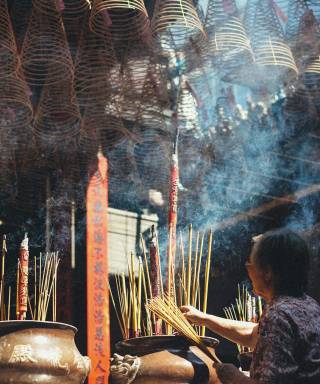
A thousand years of China, a century of France, a war that everyone outside the country named after itself, and a rebuild that is still going. All of it is visible on one street: a Chinese temple, a French balcony, a communist banner and a phone shop.
What surprises people most is how young it feels. More than half the country was born after all of it, and they are far less interested in the history than the visitors are. What they are interested in is you sitting down and eating something.
Nobody here is going to argue with you. They will just quietly stop helping.
Losing your temper is the one real mistake. Face matters, and raising your voice in public costs you far more than whatever you were arguing about. Stay pleasant, smile at the thing that went wrong, and watch it get sorted anyway.
- Take your shoes off and cover your shoulders at temples and pagodas
- Say "xin chào". A greeting in Vietnamese opens doors nothing else does
- Haggle at markets, calmly and with a smile. It is expected, not rude
- Take and give things with both hands, especially to anyone older
- Touch anyone's head, or point at anything with your feet
- Lose your temper in public. It ends the conversation, not the problem
- Toss money or a ticket onto the table. Hand it over
- Photograph military buildings, uniforms or checkpoints
Vietnamese food
For a lot of people this is the reason to come back. Vietnamese food is herby, fresh and light in a way the rest of the region is not: piles of raw greens on the side, fish sauce instead of heat, and almost nothing deep fried.
It is also strictly regional. The north is saltier and more restrained, the centre is spicy and fussy about detail, the south is sweet and loud. A bowl of pho in Hanoi and a bowl of pho in Saigon are not the same dish, and people will tell you so.
One rule sorts most of it: in Vietnam a stall sells one thing. If the sign says pho, get the pho. A place with a laminated menu of forty dishes is a place for tourists.






And the coffee. Vietnam is the second biggest coffee producer on earth and drinks it like nowhere else: robusta, dripped through a little metal filter, poured over condensed milk and ice. It costs about eighty cents and it will take the top of your head off. In Hanoi they beat egg yolk into it. In Da Lat they grow it.
From north to south
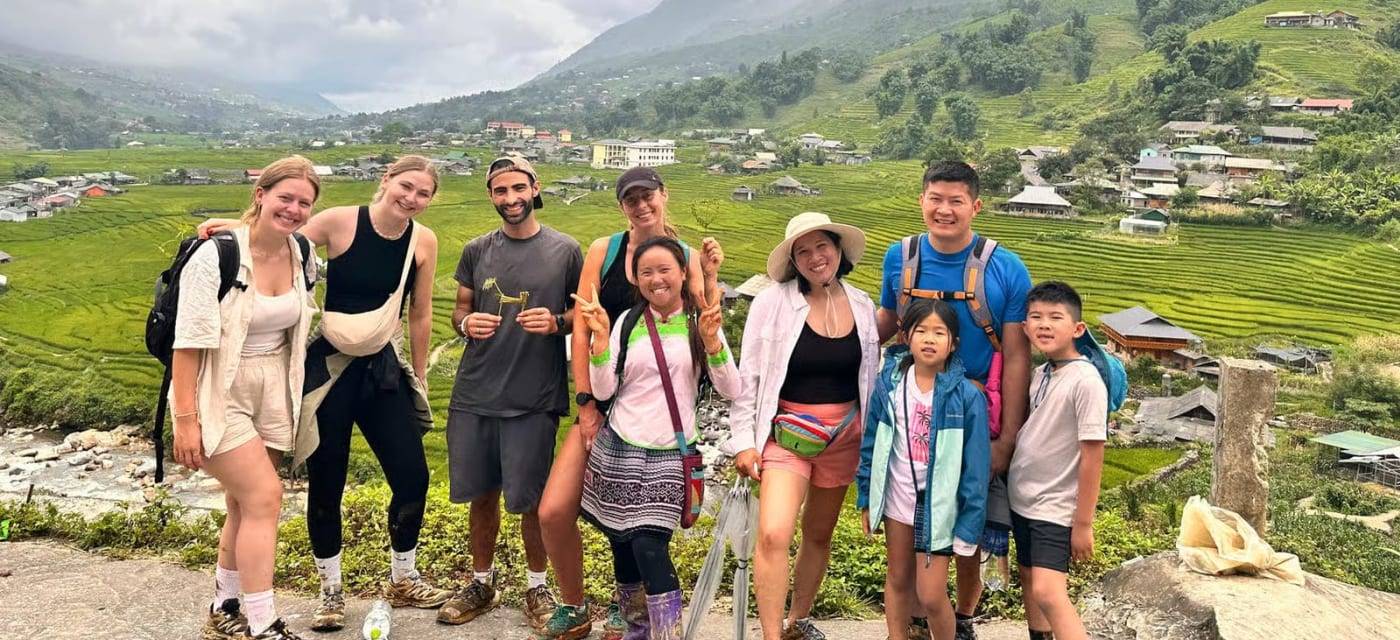
Almost everyone travels Vietnam in a line, and the only real decision is which end you start at. North to south means you do the hard, cold, spectacular bit while you still have energy, and end on a beach. South to north means the opposite, and it is what you do if your flight out is from Hanoi.
The north is Hanoi, the limestone bays at Cat Ba and Ninh Binh, the rice terraces of Sapa and the motorbike loop at Ha Giang. It is the most beautiful part of the country and the coldest.
The centre is Phong Nha’s caves, the tombs and citadel at Hue, the lantern-lit old town of Hoi An and the coast road between them. Shortest stretch, densest in things worth stopping for.
The south is Nha Trang, Da Lat in the hills, the dunes at Mui Ne, Ho Chi Minh City and the island of Phu Quoc. Hotter, flatter, faster, and where the trip usually ends.
Three weeks is the honest minimum for all of it. Two weeks means picking a half. Six weeks means you get to stop when you like something, which is the version everyone wishes they had booked.
Getting around Vietnam
The country is set up for exactly this trip, which is why the route is so well worn. Every stop on this page connects to the next one by sleeper bus, train or a forty-minute flight, and you can usually book it the evening before.
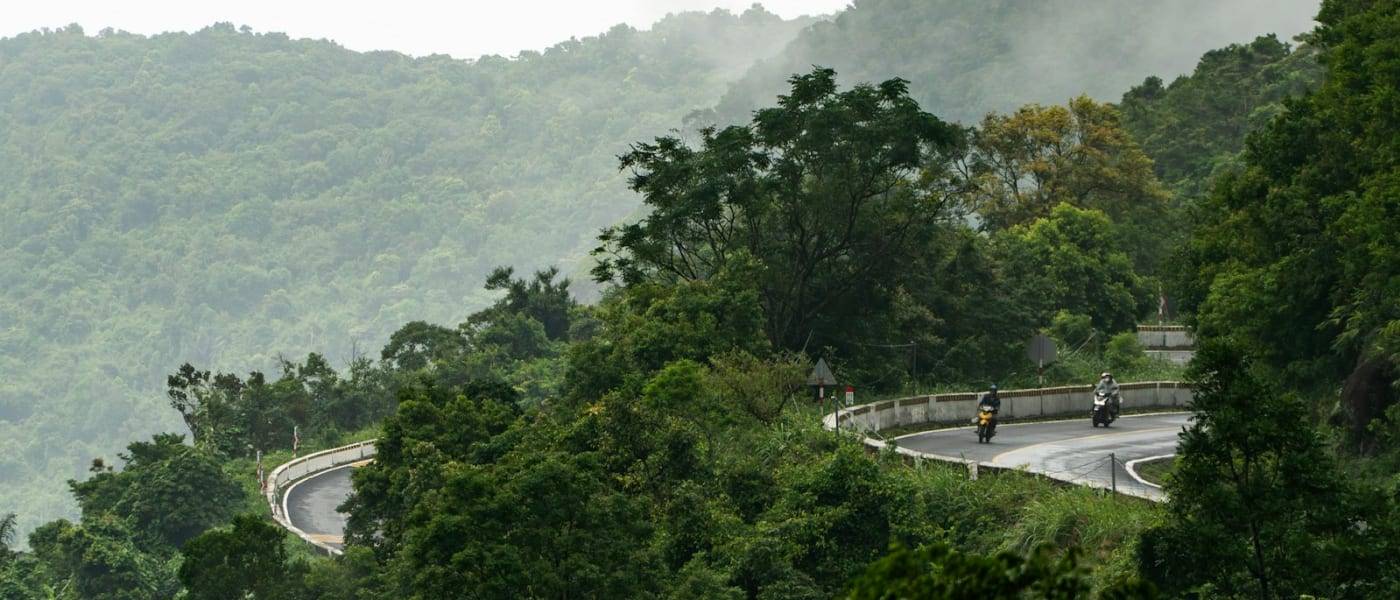
The sleeper bus is the backpacker default: a flat bed rather than a seat, about €10 for an overnight leg, and it saves you a night’s accommodation. The reunification railway is slower, more comfortable and far better for looking out of the window, particularly the stretch between Hue and Da Nang that runs along the sea. Domestic flights start around €30 and turn a fifteen-hour night into an hour.
In cities, use Grab. Car or motorbike, the price is in the app before you get on, and it removes the entire argument.
Then there is the motorbike, which for a lot of people is the whole reason they came. The Hai Van Pass between Hue and Da Nang, the Ha Giang Loop up on the Chinese border, the road out of Da Lat. Two things before you get on one: Vietnam only recognises the 1968-convention international driving permit, and almost every bike you can rent is over 50cc, which makes it legally a motorbike. If your licence does not cover it, neither does your travel insurance, and that is the single most expensive mistake available in this country.
- Sleeper busA bed, not a seat. About €10 a night leg
- TrainSlower, comfier, and the coast road beats the bus
- PlaneFrom about €30. Buys back a whole night
- MotorbikeHai Van Pass, Ha Giang. Check your licence first
- GrabIn every city. Price agreed before you get on
Vietnam for every traveller
Vietnam rewards people who are up for something. It is not a country you drift through, and the stops that people rate highest are almost always the ones that involved effort.
About €25 a day, a route so well trodden you keep meeting the same people, and hostels built entirely around that. Hard to do badly.
Motorbike loops, caves you abseil into, canyoning at Da Lat, kayaking under limestone cliffs. This is the best country on the route for it.
An imperial citadel, tunnels you can crawl through, and museums that tell the story from the other side. Uncomfortable and worth it.
Three thousand kilometres of coast and an island in the south. Not Thai-island pretty, far quieter, and a fraction of the price.
Doable, but the distances are long and the traffic is a lot. Pick one region rather than the whole line.
Travelling alone works well here. The north-to-south route is so standard that you will recognise faces three towns later, hostels run their own buses between the stops, and the Ha Giang Loop in particular turns eight strangers into a group by the end of day one.