
Backpacking the Ha Giang Loop
Ask anyone who has backpacked Vietnam what the best bit was and you will get the same answer often enough to be suspicious of it. Then you do it, and you give the same answer.
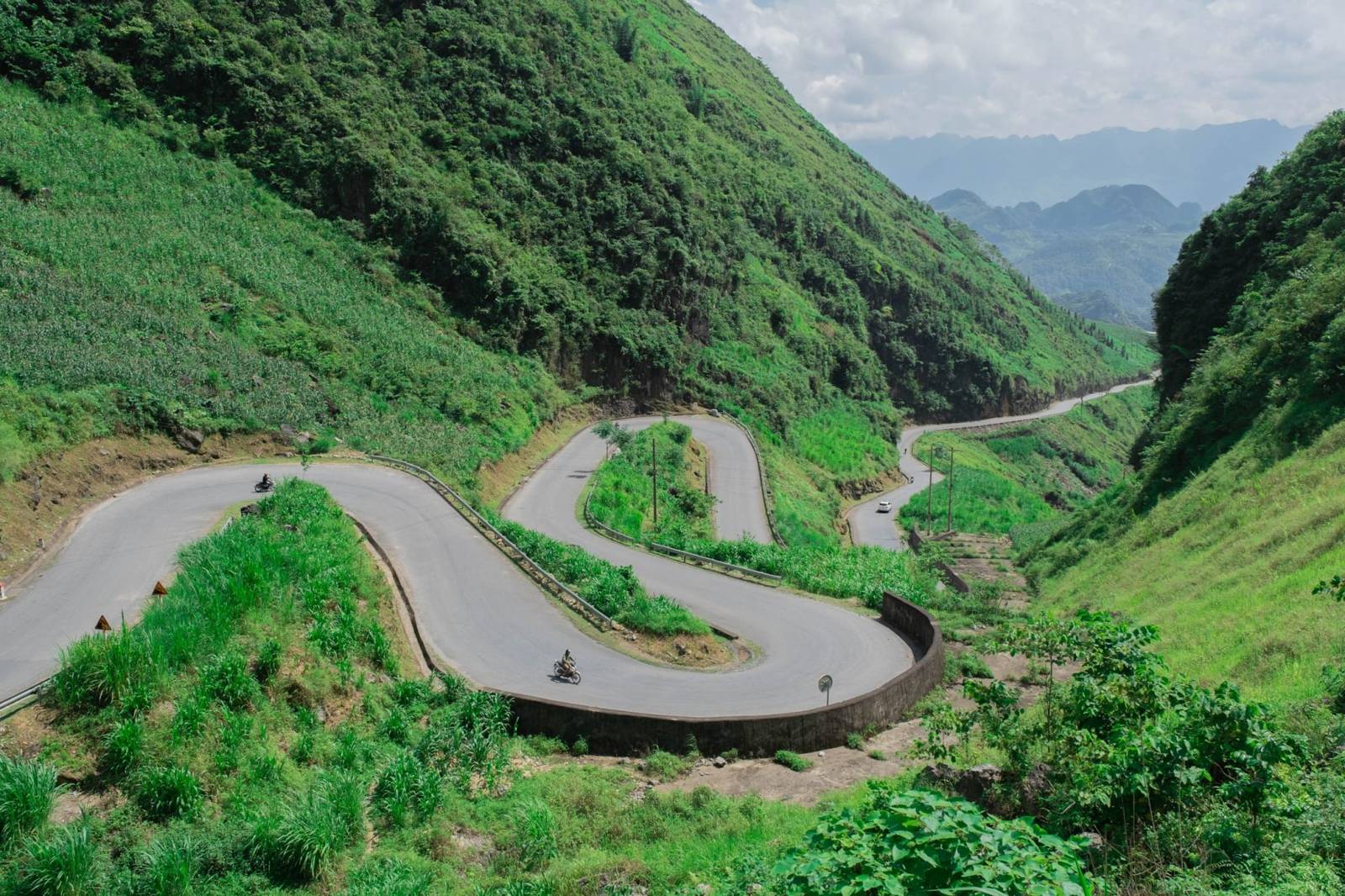
The loop is roughly 350 kilometres of mountain road in the far north, right up against the Chinese border, done over three or four days on a motorbike with a group and a guide. Limestone towers, hairpins stacked six deep on the hillside below you, villages where the Hmong, Tay and Dao have farmed the same slopes for centuries, and a pass above a turquoise river eight hundred metres down.
It is also the most social thing you will do on this trip. You leave Ha Giang on the first morning with eight strangers and get back on the third evening with a group chat. Nobody plans that part and everybody talks about it afterwards.
Why the Ha Giang Loop is popular with backpackers
- One of the great motorbike roads anywhere, not just in Asia
- The Ma Pi Leng Pass, which is the photo you have already seen
- Nights in homestays with everyone eating from the same table
- Villages that see traffic but do not run on it
- Meals, homestays and entry fees usually come with your tour
- You do not need to be able to ride: sit on the back
Best time to visit the Ha Giang Loop
You ride this outside, for six hours a day, on two wheels. The weather is not a detail here, it decides whether this is the best or the hardest ride of your trip.
Riding it yourself? Look at the actual forecast for the days you will be out. After heavy rain, sections of the Ma Pi Leng Pass can be shut for days by a landslide, and the detour is long.
Backpacker budget: around €25 a day
- €5hostel bed
- €2.50local meal
- €0.60beer
- €45easy rider, all-in per day
Guide prices from our own days in Ha Giang Loop. Add a tour or a night out and it climbs fast.
Best things to do on the Ha Giang Loop
The loop is not a list of sights, it is three days of road with things happening beside it. That said, these are the parts people come back talking about, and the two operators we send readers to.
Riding the loop with Mama’s Homestay
Our own pick

The loop with Mama's Homestay
One of the best-known operators in Ha Giang, and the safe first choice: experienced easy riders, bikes that are actually maintained, and a hostel full of people about to do the same thing as you. Meals, homestays and entry fees are included, and you get a bed in Ha Giang before and after the ride.
Reader discount with the voucher REBELSONTHEROAD. Mention it when you book, because nobody applies it for you.
See Mama's HomestayOur partner in Ha Giang
Pick this one if you are travelling alone and want the social version. You meet your group the night before over dinner, which turns the first morning from awkward into fun.
Riding the loop with Tiem Tours
Our own pick

The loop with Tiem Tours
Groups of eight to ten, with riders and guides who grew up on these roads. You choose how you do it: ride yourself, sit on the back, or take the car, over three days or four, in a dorm or a private room every night. All meals, the entry fees and the boat on the Nho Que are included, plus your first night in Ha Giang.
Reader discount with the code REBELSONTHEROAD. Put it in your first message to them, because without it you pay the standard rate.
See Tiem ToursOur partner in Ha Giang
Pick this one if you want to decide the shape of your own ride. The four-day version with a private room every night is the most comfortable way anyone does this route on a backpacker budget.
The Ma Pi Leng Pass
The reason the loop exists. A road cut into the side of a limestone wall, with the Nho Que river a turquoise line about eight hundred metres below you and nothing much between the tarmac and the drop. Most groups stop three or four times along it because nobody can keep riding past that.
A boat through the Tu San gorge
From the bottom of the pass you can get on a small boat and go up the Nho Que into the Tu San gorge, the deepest canyon in Southeast Asia, with walls seven hundred metres high on both sides. An hour, and it changes the scale of the whole thing: from up on the road you saw it, from down here you feel it.
Nights in the homestays
Long low buildings, a wood fire, a table with fifteen dishes on it and everybody sitting around it. This is where the loop stops being a motorbike trip. You eat with your group, your guides and the family, someone brings out the rice wine, and by the second night you know everyone’s story.
Lung Cu and the northern tip
The flag tower at Lung Cu marks the northernmost point of Vietnam, with China starting a few fields away. It is a detour, a climb up a few hundred steps, and a strange feeling standing at the top of a country you have been travelling up for three weeks.
How to plan your days on the loop
Three days is the classic route, four if you want it at a human pace with a swim in the middle. Pick how long you have.
Ha Giang to Yen Minh. Straight up out of the valley over the Bac Sum pass and through Heaven's Gate, past the Twin Mountains and into the first villages. The day you find out how your hands feel about six hours on a bike.
Tonight: homestay in Yen Minh, everyone eating from the same table, rice wine after.
Yen Minh to Dong Van. Past the Hmong king's palace and up to the flag tower at Lung Cu, the northernmost point of the country. The road narrows and the villages get smaller the further you go.
Tonight: Dong Van old quarter, a stone and timber market town that feels much older than the rest of the route.
The Ma Pi Leng Pass. The best day: the pass above the Nho Que with the gorge dropping away below you, and the option of an hour on a boat through Tu San at the bottom.
Tonight: Meo Vac, or straight back to Ha Giang if your bus south leaves tonight.
Back via Du Gia. The long way round, greener and much quieter, with a waterfall halfway where the whole group gets in. Less traffic than anything you have ridden so far.
Tonight: back in Ha Giang. Night bus to Hanoi, or straight across to Sapa.
Food and drink on the loop
You eat what the homestay cooks, and it is the same shape every night: a table covered in small dishes that everybody shares. Tofu in tomato, morning glory, fried chicken, a soup, sticky rice, and always more than the group can finish.
On the road the options thin out to whatever is at the side of it. Carry water and something to eat, because between two villages there can be an hour of nothing.




The rice wine comes out at every homestay. It is stronger than it tastes, and you are back on a mountain road in the morning.
Getting there and onward
Ha Giang town is a starting line rather than a place. You arrive on the night bus and leave for the mountains after breakfast.
From Hanoi. The night bus takes six to seven hours and gets in around five in the morning. Almost every operator lets you keep sleeping until breakfast, and that is usually included.
Riding yourself, or sitting on the back. With an easy rider you sit behind a local driver, which costs about €45 a day all-in, with homestays and food included, and means you get to actually look at the view. Riding yourself is cheaper and is the better trip if, and only if, you have real experience of mountain roads and a semi-automatic bike. Vietnam recognises only the 1968-convention international driving permit, and without the right category your travel insurance does not cover you for any of this.
Onward. Most people go back to Hanoi. You can also cut straight across to Sapa, about six hours by local bus via Lao Cai, which saves a backtrack.
- Night busHanoi to Ha Giang, 6 to 7 hrs
- Easy riderAbout €45 a day all-in, you sit on the back
- Riding yourselfFrom about €10 a day, with experience only
- Tu San gorgeBoat on the Nho Que, about an hour
- Across to SapaAbout 6 hrs via Lao Cai
Staying safe on the loop
This is the part of Vietnam where backpackers get hurt. Not through crime: through a motorbike on a mountain road they were not ready for. None of what follows is meant to put you off. It is meant to get you round.
- Take an easy rider unless you have hundreds of kilometres of real scooter experience
- Check what your travel insurance covers for riding in Vietnam, and from which licence category
- Look over your brakes and tyres every morning, and say something the moment anything rattles
- Wear gloves, long sleeves and a proper helmet, even when it is warm
- Drink at lunch and then ride on to the next stop
- Ride after dark. There is no street lighting and there are animals on the road
- Reach for your camera while moving. Stop, it takes ten seconds
- Book a tour that promises the whole loop in two days. That is not a holiday, that is a transfer
Since 2023 the police in Ha Giang province actively check licences. Without a valid international driving permit in the right category you are also uninsured, however small the accident turns out to be.
Rebels on the Road tip
Everyone takes the same forty photographs at the same viewpoints. Almost nobody gets up early. Ask your guide or your homestay to wake you before sunrise on the night you are in Dong Van or Meo Vac. While the rest of the groups are still asleep, the light comes over the ridges and the fog sits in the valleys in layers, and the whole place looks like something out of a different century. Twenty minutes, a cup of coffee, and it is the thing you will still be describing to people next year.
Frequently asked questions
What is the Ha Giang Loop?
A 350-kilometre circuit through the mountains of the far north of Vietnam, done over three or four days on a motorbike, almost always with a local guide and a group. You ride past gorges, rice terraces, mountain passes and villages, and sleep in homestays along the way.
How many days does the Ha Giang Loop take?
Three or four. Three covers the whole route including the Ma Pi Leng Pass. Four adds the Du Gia road on the way back, a waterfall to swim in, and shorter days in the saddle.
Do I need to be able to ride a motorbike?
No. Most people sit on the back with an easy rider, and it costs about €45 a day all-in, with homestays and food included. If you do want to ride yourself, you need genuine experience with mountain roads and a semi-automatic, plus a 1968-convention international driving permit.
Is the Ha Giang Loop dangerous?
It is mountain roads with sharp bends and a lot of drop on one side, and accidents happen most often to inexperienced riders going too fast. With an easy rider, or at a sensible pace with a guide, it is something thousands of travellers do every month without incident.
What does the loop cost?
An easy rider costs about €45 a day all-in, and a tour usually includes your guide, your meals, the homestays and the entry fees. Riding yourself is cheaper, from about €10 a day, but only with real experience. Our daily budget of about €25 is for riding yourself, with your bed and your food in it. With an easy rider you pay about €45 a day all-in instead, and your meals and your homestay are already in that.
What is the best part of the loop?
The Ma Pi Leng Pass, on day three, and it is not close. Most people also say the homestay evenings, which is not what they expected to say before they went.
When is the best time to ride it?
March to May and September to November. Dry roads, clear air and long views, and from late October into November the buckwheat is in flower. June to August is the rainy season with a real risk of landslides, and December to February is cold and often inside the cloud.
Sapa or Ha Giang, if I can only do one?
Ha Giang if you want to ride and want the group. Sapa if you want to walk and want to meet people in the villages. Ha Giang is the bigger landscape; Sapa is the closer contact. They are six hours apart by bus, so doing both is easier than people think.