
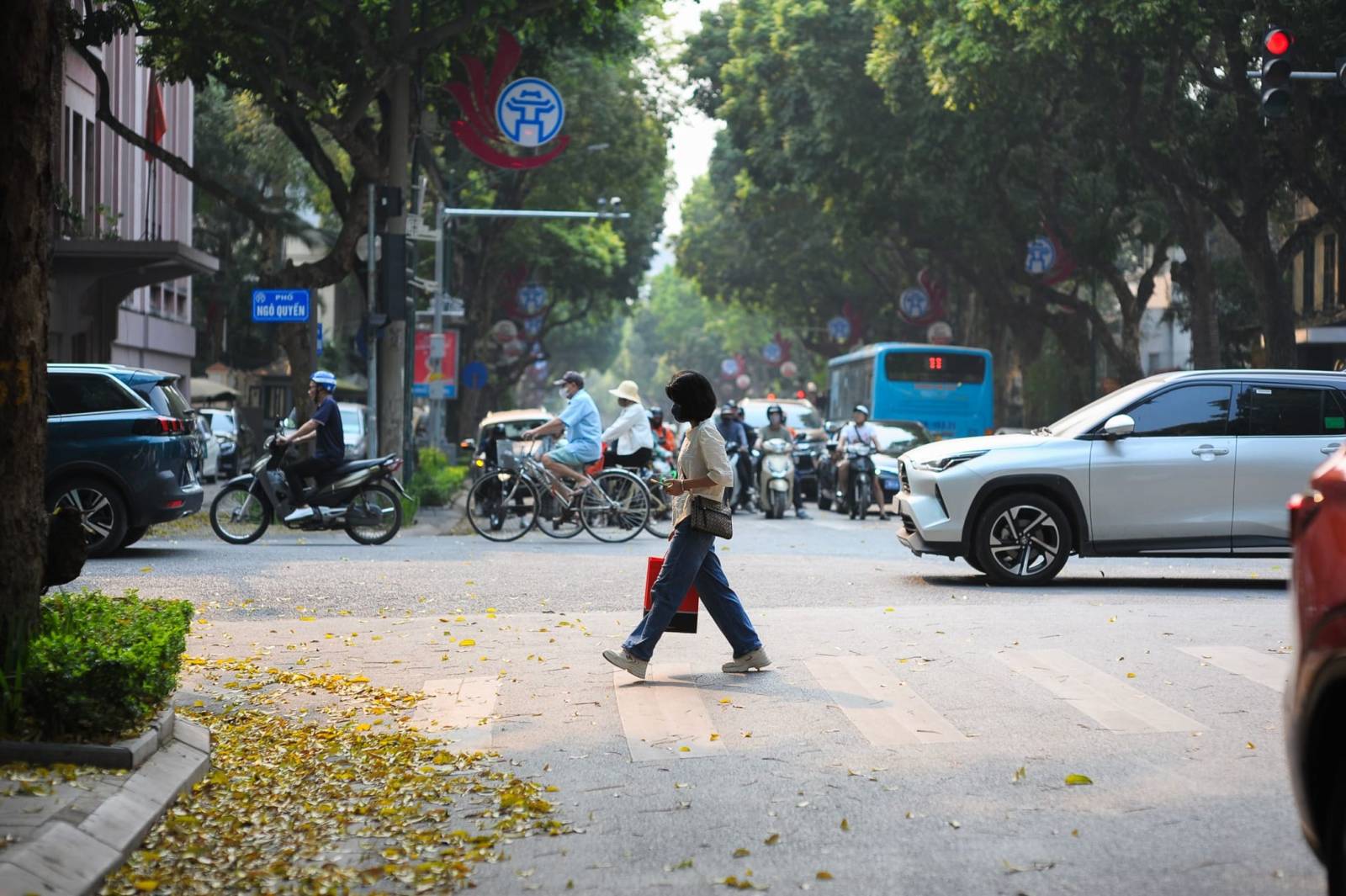
From day one, Vietnam feels like a country where anything goes. Scooters ride on the pavement, a food stall sets up right in the road and at six in the morning half the city is already on a stool eating pho. That energy is exactly what you came for, but it tells you very little about how the country actually works.
Under the chaos is a culture built on respect, calm and face. Get that, and doors open for you in Vietnam that stay shut for the tourist in a hurry. Miss it, and before you know it you are shouting at a market vendor who will not lift a finger for you afterwards.
Below are the unwritten rules that make your trip easier, and the few written ones you really need to know. What to eat and drink while you are there has its own page: our guide to food in Vietnam.
Face: why nobody gets angry
The most important rule in Vietnam is not on any sign: do not lose your temper in public. Losing face is a big deal here, for you and for the person in front of you. A traveller who raises their voice because the bus is late or the bill is wrong loses not only their own face at that moment but the other person’s too, and with it any chance the problem still gets solved.
What does work is the exact opposite. Stay calm, smile, ask the question again. You haggle at the market with a laugh, not a frown. And you never criticise someone in front of other people. Keep that up and you will find Vietnamese people remarkably friendly and curious, and easy to connect with.
Xin chào and both hands
A greeting in Vietnamese opens doors. “Xin chào” is enough, and you do not have to pronounce it perfectly. Give it a go and you almost always get a smile back.
Give and receive things with both hands: money, a ticket, a cup of coffee. Never toss money or tickets carelessly onto the table, not even at a stall when you are in a hurry. It is a small gesture that says a lot in Vietnam about how you see the other person.
Head high, feet low
The head is the highest part of the body, literally and figuratively. So never touch anyone’s head, not even a child’s, however cute they are. The feet are the lowest part: do not point them at anyone, do not put them up on a chair, and in a temple never point them at the statue.
Temples and pagodas
Vietnam is full of temples and pagodas, and they are still in use. Shoes come off before you go in, and your shoulders and knees are covered. Keep a thin scarf or long trousers in your daypack and you will never have to turn back at the door.
Inside, you keep quiet, walk around people who are praying and do not touch the statues. That also goes for places that feel like a sight: the pagodas of Hue, the temples of Hanoi and the Cham temples near Hoi An are not a museum to the people who come there.
Haggling, prices and the tailor
At the market haggling is part of the deal, calmly and with a smile. At a stall without a price board you agree the price up front, and for a ride you use Grab, because then the price is fixed and there is nothing to negotiate. What costs backpackers money in Vietnam is almost never theft, it is confusion about the price afterwards. There is more on that on our Hanoi page.
A few situations where you want to be clear up front. With the tailors of Hoi An you fix the fabric, the price and the number of fittings before anything is cut, and you do not order a suit on your last day. On a little boat on the river you ask whether the tip for the boat woman is already in the price, and with the rowers of Ninh Binh you agree that tip before you set off, usually a couple of euros per boat. With seafood you ask the price per kilo and have them show you the weight on the scales. And a cyclo offering you a tour for almost nothing is one you can let go by.
Traffic: crossing the road is a skill
The traffic in Hanoi and Saigon is the biggest culture shock for a lot of travellers, and it has its own rule: you cross at a calm, steady pace, and the traffic steers around you. Do not run, do not hesitate, do not stop halfway. That is exactly when it gets unpredictable.
By the road, keep your phone in your pocket. Snatch theft from a passing scooter really happens, especially in Saigon and Hanoi, so carry your bag on the side away from the road with the zip against your body. The same goes in an open tuk-tuk or on the back of a Grab bike. At Train Street in Hanoi you stay behind the line and follow the staff’s timings.
The scooter and the law
A scooter is the best way to see Vietnam and also where things go wrong most often. A few things the law says, and your insurance says too. Vietnam only recognises the 1968-convention international driving permit, and almost every bike you can rent is over 50cc, which legally makes it a motorbike. Without a valid permit in the right category you are not insured, however small the accident, and in Ha Giang province the police have been actively checking for it since 2023. Whether your own licence and your travel insurance cover it is worth sorting before you fly. A helmet is compulsory and they do check, from Hue to Nha Trang. Riding after a few beers is a bad idea, not least because the police in Nha Trang actively check for alcohol.
On the practical side: never hand over your passport as a deposit at a rental place, a copy is enough. Take photos of the scooter with all its existing scratches before you ride off, because the argument when you return it is a well-known problem. And if you have never ridden a scooter before, Hanoi, Saigon and the Ha Giang Loop are the worst possible places to learn. Take an Easy Rider there and enjoy the view. How that works is on our Ha Giang Loop page.
Photos: what not to photograph
Do not take photos of military buildings, uniforms or checkpoints. In Vietnam that is not a question of manners but of the law, and you do not want to explain why you were photographing a barracks.
With people, just ask first. And watch where you are standing: the yellow walls with flower boxes in Hoi An are the fronts of people’s houses, so do not pose there uninvited. In Sapa, women from the villages sometimes walk along with you all day. That is hospitable, but at the end they expect you to buy something from them. Say a clear yes or no right at the start, which is better for everyone. Do not buy anything from children who walk along with you, however hard that is. More on the villages is on our Sapa page.
At the homestay
On the Ha Giang Loop and in the villages around Sapa you sleep in people’s homes, and that works differently from a hostel. You eat what the family cooks that evening: a table full of little dishes that everyone shares, and everyone takes a bit of everything. In the evening the rice wine comes out. It is stronger than it tastes, and you are back on a scooter the next morning, so one glass is a good time and three is a problem.
It is simple there, and cold at night, especially in the mountains. That is nothing to complain about, it is exactly what you came for.
The attitude that gets you everywhere
Stay calm, smile, use both hands, shoes off, price first. Remember those five and you do not need to learn the rest by heart. Vietnam is a country where people love connecting with travellers who make the effort, and that effort is small: a greeting, a bit of patience and knowing that you are the guest here.
And step off your plan now and then. Stop at that little restaurant without an English menu, have a chat with the vendor, get off in a village where hardly any tourists go. The best memories of Vietnam are rarely made at the famous highlights, but on the way between them.
What to do in each city, where to sleep and what a day costs are all on our Vietnam page.
How do you know what is okay in Vietnam?
Watch the people around you and do what they do. Are the shoes lined up by the door? Then yours come off too. Is everyone waiting calmly? Then you wait too. Is the woman in front of you haggling with a laugh? Then so do you.
When in doubt, always pick the calm option: voice low, hands visible, a smile on top. In Vietnam almost nothing is a problem as long as you stay calm, and almost everything becomes one the moment you start shouting. The only hard lines are the law: the right licence on a scooter, the helmet and no photos of anything military. Remember those three and you will pick up the rest as you go.


