
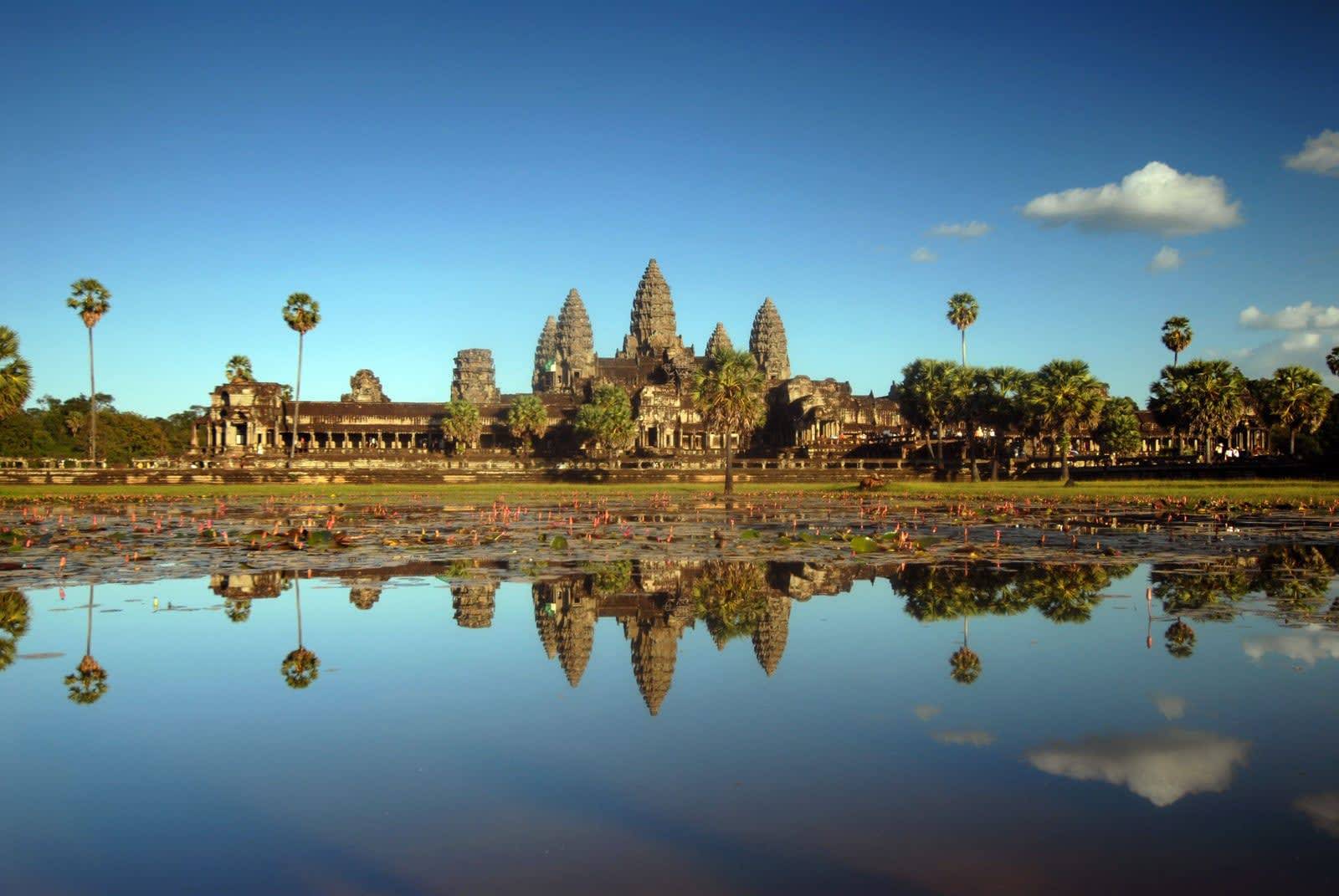
Everybody comes to Cambodia for Angkor, and Angkor is worth it: four hundred square kilometres of temple park, the largest religious monument ever built, and roughly a thousand smaller temples scattered through the forest around it. You could spend a week there and not finish.
What nobody warns you about is the other half. Cambodia is also the country where the twentieth century happened hardest, and where a quarter of the population died inside four years. That is not history you read on a plaque here; it is a conversation with the person driving your tuk-tuk, whose parents were in it. It is also, somehow, one of the friendliest countries on this whole route.
Five stops, about ten days, and roughly €25 a day. Siem Reap for the temples, Battambang for the countryside, Phnom Penh for the recent past, Kampot to slow down and Koh Rong to stop entirely.
Why Cambodia?
Because it packs more contrast into ten days than anywhere else here. You walk through a thousand year old temple at dawn and you are on a beach with glowing plankton by the end of the week, and in between you get a country that has not been polished for visitors.
- Angkor: the largest religious monument on earth, and hundreds more around it
- Recent history told honestly, in the places where it happened
- Islands with white sand, no roads and plankton that lights up at night
- Markets, street food and the best pepper in the world
- Flat green countryside made for a bicycle or a scooter
- People who are extraordinarily warm given what they have been through
And because it is cheap even here: €5 for a bed, €2.50 for dinner, €0.60 for a beer, and a bus to the next stop for €8.
Best time to visit Cambodia
Tropical, flat and hot, with a dry season and a wet one. November to February is the window everybody aims for and it earns it.
Two things the calendar decides for you. The famous reflection of Angkor Wat needs water in the moat, and the water is highest at the end of the rainy season, roughly September to November: go in March and you get the temple without the mirror. And the islands run on a different clock from the temples, with June to October bringing wind, rough crossings and a lot of closed doors on Koh Rong.
Practical information
Everybody needs one, on all fourteen passports on our visa page. Apply for the e-visa in advance at evisa.gov.kh, or get a visa on arrival at the airports and the main land borders. Either way it is 30 days and it costs money. For the border version, bring clean US dollar notes and a passport photo. What it costs on your own passport is on our visa page. Ignore the sites that look official and charge you three times as much for exactly the same document.
Two currencies at once. Prices are in US dollars, you pay in dollars, and anything under a dollar comes back as Cambodian riel. Cash machines dispense dollars, so take out larger amounts less often and bring notes that are clean and untorn, because damaged ones get refused.
Khmer, which is unrelated to Thai or Vietnamese and has its own alphabet. English is widely spoken wherever travellers go, and French turns up in the older generation. "Suostei" for hello and "arkun" for thank you get you a long way.
Generally safe. Two specific things: bag snatching from passing scooters in Phnom Penh, which is why you carry your bag on the pavement side, and unexploded ordnance and landmines in the countryside in the west, which is why you stay on surfaced roads and marked paths. Both are avoidable and neither should keep you away.
Nothing is required to enter. Travel health services put typhoid on the list for most travellers here, a step up from Thailand, alongside the usual hepatitis A and the tetanus, diphtheria and polio combination. No malaria tablets are advised anywhere in the country, and Phnom Penh has no risk at all, but dengue bites in daylight so repellent still does the work. It is all on our vaccinations page.
Our daily budget is for the country as a whole, so it also covers the buses between the stops and the activities. On the ground Siem Reap, Phnom Penh and Koh Rong come to €20 a day and Battambang and Kampot to €17, and the Angkor pass is its own line in the accounts.
Backpacker budget: around €25 a day
- €5hostel bed
- €2.50local meal
- €0.60beer
- €8bus ride
Guide prices from our own trips. Add a night out or a dive and it climbs fast.
Khmer culture
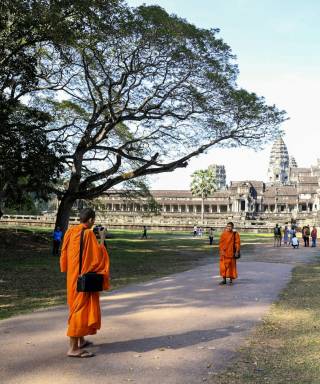
Cambodian culture runs on Theravada Buddhism and on Khmer traditions that predate it by centuries, and the two have been comfortably tangled together for about a thousand years. You see it in the temple on every corner, in the ceremonies that spill onto the street, and in the spirit house outside almost every building.
The thing that actually strikes travellers, though, is how warm people are here. Given the last fifty years that is not something you would predict, and it is the first thing almost everyone mentions afterwards.
Almost everyone over fifty here lost family in the seventies. Nobody will bring it up with you, and a lot of people will answer if you ask carefully.
The greeting is the sampeah: palms together, a small bow, and the higher your hands the more respect you are showing. At temples, shoulders and knees covered, shoes and hats off inside, and never touch a Buddha image or turn your back on one for a photo.
- Cover shoulders and knees at any temple, Angkor Wat very much included
- Take your shoes and hat off inside a temple building
- Greet with the sampeah: palms together, a slight bow
- Keep small notes on you for tuk-tuks and markets
- Touch a Buddha image, or pose with your back to one
- Touch anyone's head, or point at anything with your feet
- Be flippant about the Khmer Rouge years. Ask, or leave it alone
- Give money to children begging. Support a local project instead
Khmer food
Khmer cooking is the least famous in the region and the one people are most surprised by. It is milder than Thai and less sweet than Vietnamese, and nearly everything is built on kroeung, a paste of lemongrass, turmeric, galangal and kaffir lime pounded together before anything else happens.
Start with amok trey: fish in a coconut curry, steamed in a banana leaf until it sets like a savoury custard. Then lok lak, beef seared hard and served with a dipping sauce of lime juice and black pepper, which in Kampot means the best pepper in the world.
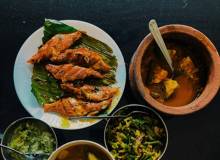
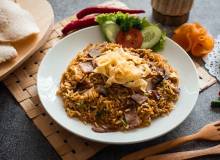

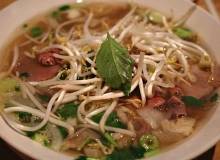
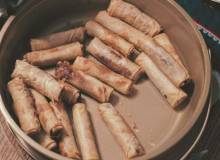
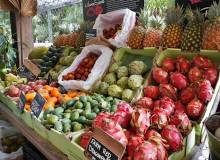
And breakfast is nom banh chok: rice noodles under a green fish curry with a pile of raw herbs on top, sold on the street before eight in the morning by a woman with two baskets on a pole, for about a euro.
Angkor and the temples
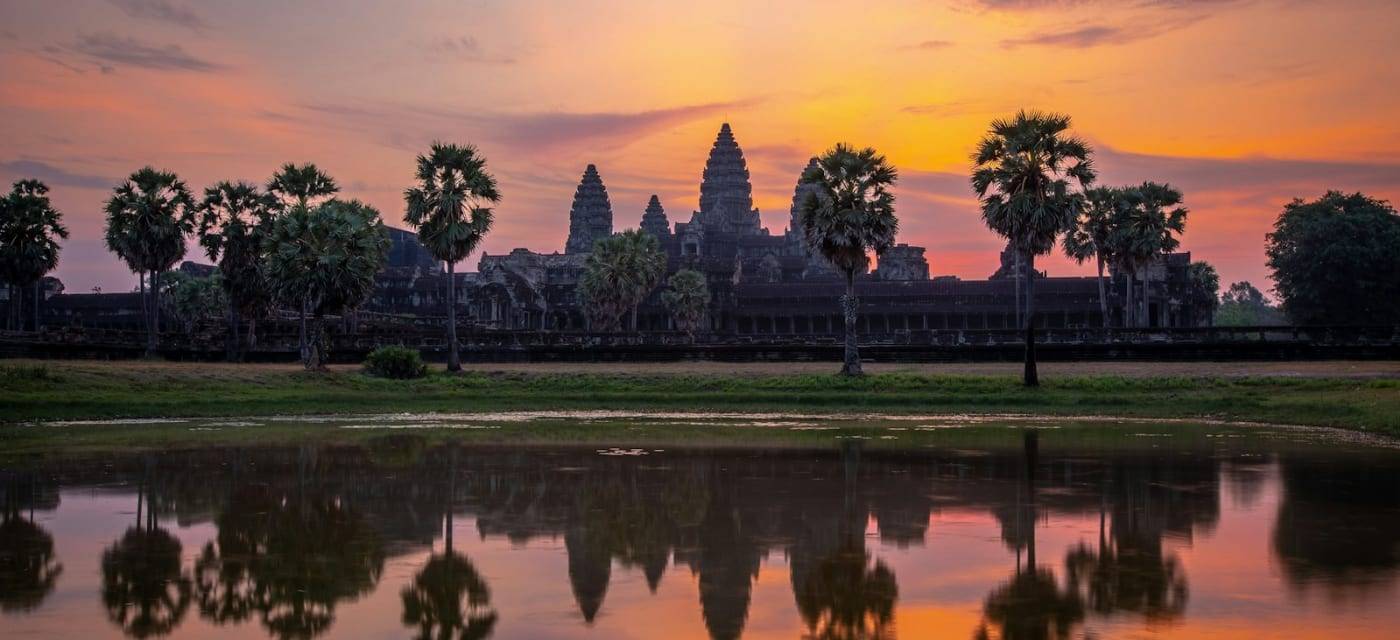
Angkor was the capital of an empire that ran most of mainland Southeast Asia for six hundred years, and at its height it was probably the largest city on earth. What is left is four hundred square kilometres of temples, reservoirs and causeways in the forest north of Siem Reap.
Angkor Wat is the one on the flag, and the sunrise over its five towers is the photograph everybody takes. But Bayon, with two hundred and sixteen carved stone faces looking out in every direction, and Ta Prohm, where fig roots have grown straight through the walls and are now holding them up, are just as good and considerably quieter.
The park is big enough that three days is normal and seven is not excessive. The pass comes in one, three and seven day versions, and three is the right size for almost everyone.
Getting around Cambodia
Cambodia is small and flat, which makes it one of the easier countries here to move through. Buses and minivans run between all five stops, roads have improved enormously, and nothing is more than six hours from anything else.
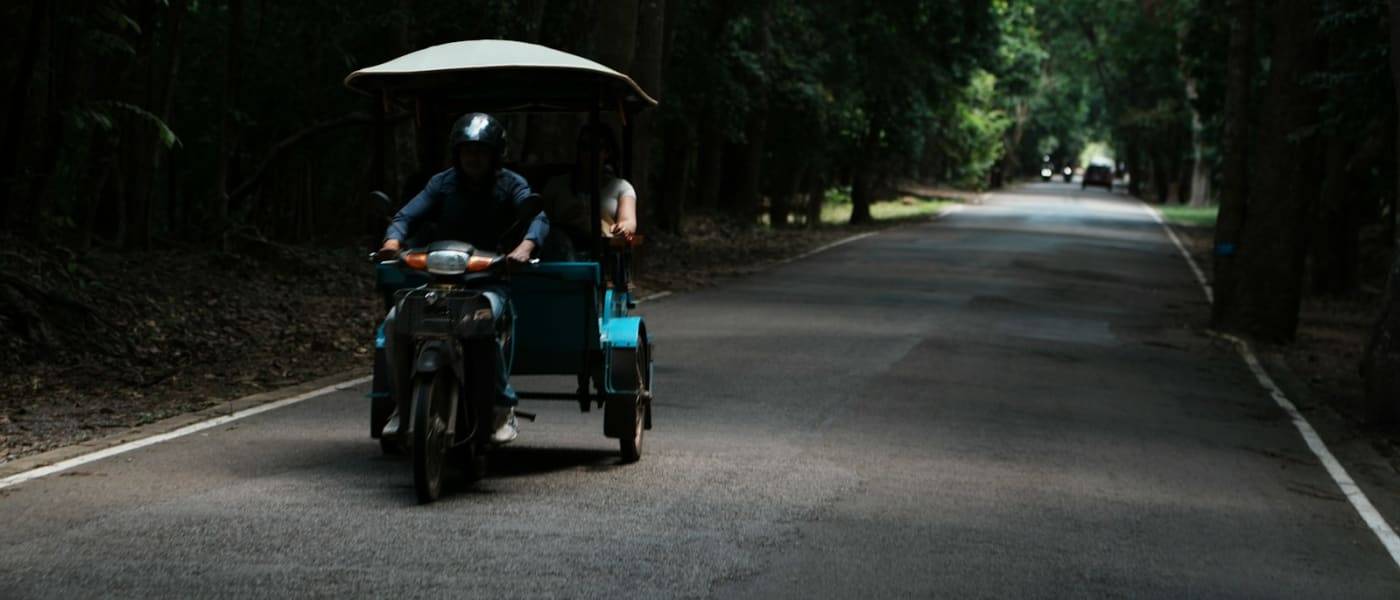
The tuk-tuk is the everyday vehicle and in Phnom Penh you hail one with an app: PassApp or Grab, with the price set before you get in, which removes the entire negotiation. Outside the capital you agree a day rate, and for the temples at Angkor that is about €12.
There is also a train, which is slow, comfortable and runs a few times a week down to the coast, and cheap domestic flights for the long hops.
One warning that applies here and nowhere else on this route. Cambodia is the only one of our five countries where your own licence plus an international permit is not enough to ride a scooter: you need a Cambodian licence, which you get on the spot, and you apply for it with the 1949 international permit. Without the right paperwork your travel insurance is not riding with you.
- Bus & minivanBetween all five stops, from €8
- Tuk-tukEveryday transport, and a temple day for €12
- FerryTo Koh Rong, 45 minutes from the coast
- TrainPhnom Penh to the coast, a few times a week
- PlaneFor the long hops, and in and out of the country
Cambodia for every traveller
Five stops, short distances and hostels where you are talking to someone within the hour. It is one of the easiest countries here to travel alone in.
Cheap, compact and sociable. Five stops in ten days, some of the best hostels in Asia, and €25 a day covering all of it.
A thousand years of empire in one forest, and the twentieth century told plainly in the places where it happened.
Kayaking mangrove tunnels, cycling the rice plains, a mountain with an abandoned casino on it, and jungle paths across an island.
Koh Rong and Koh Rong Sanloem: white sand, no roads, and water that lights up when you swim in it at night.
Distances are short and everyone is doing the same five stops in the same order, so you keep running into the same faces. It is an easy country to arrive in on your own.


