
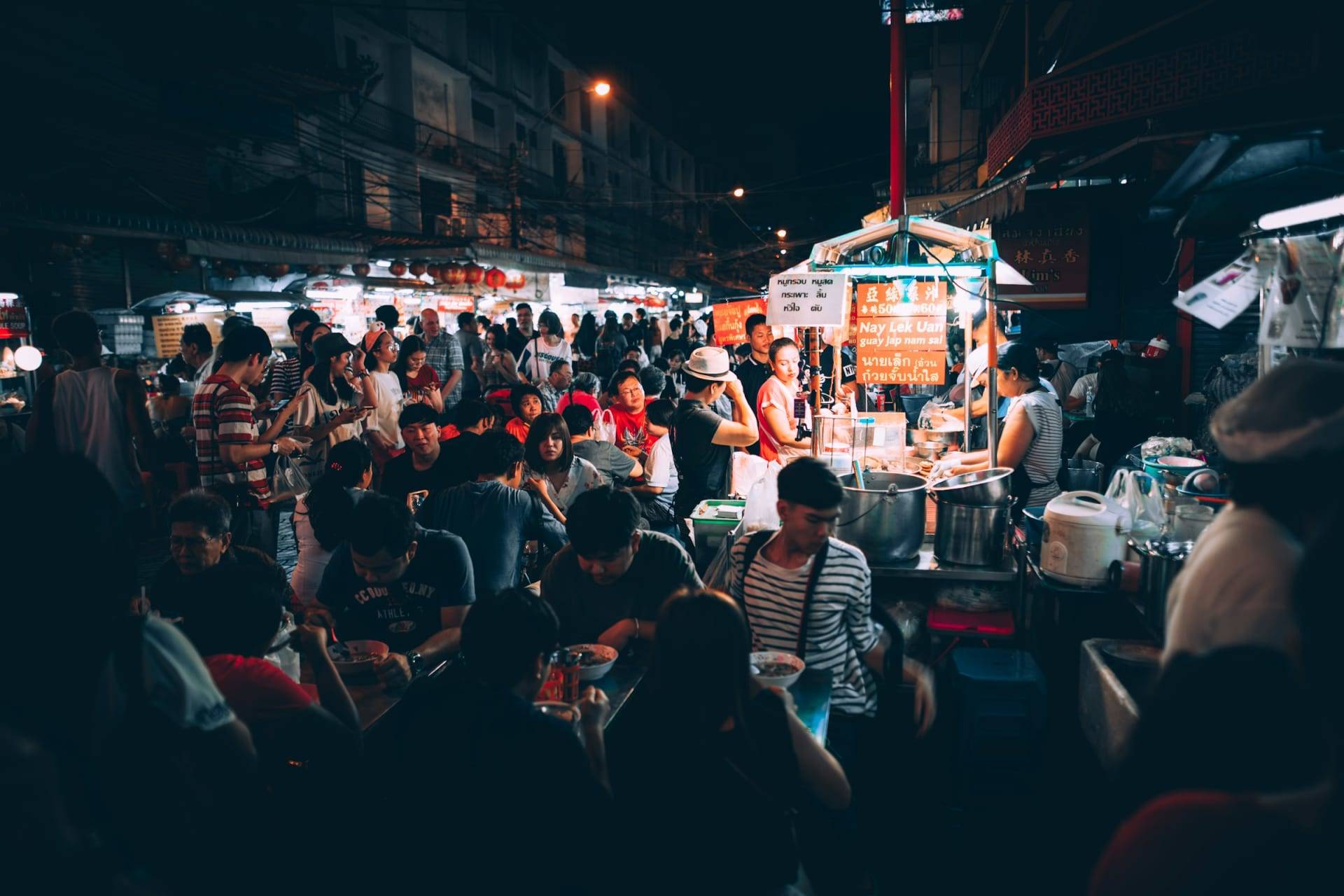
A night market in Thailand with food stalls lit up after dark

Before you go · step 6

Stop paying to touch your own money

You saved for months. Then you hand a slice of it back in exchange rate markups and withdrawal fees without ever seeing a bill for it. Here is exactly where that money goes, what the machine charges in each country, and which card keeps the most of it in your pocket.

Night market in Thailand

The real rate the mid-market rate, nothing added on top
€7 once for the physical card, digital is free
40 currencies, one app baht, dong, kip, riel and pesos beside your euros
A ping for every payment and one tap to freeze it when it goes missing
Where it goes

Four places your money quietly disappears

None of these show up as a line on your statement saying what they are. That is the whole problem: you cannot avoid a cost you never see. So here they are, out in the open.

Every transaction

Your bank’s cut on the rate

Most banks add a percentage to the exchange rate the moment you pay or withdraw outside the eurozone. You will not find it as a separate line anywhere, because it is baked into the rate itself. In Ireland that runs from 1% to 3% depending on who you bank with, a big Spanish bank charges 4.5%, and some cards charge nothing at all. Look yours up before you go, because the gap between those two ends is real money.

Every withdrawal

A fee every time you withdraw

On top of the rate, plenty of banks charge a flat amount per cash withdrawal abroad, often a couple of euros, sometimes with a minimum that bites hardest on small amounts. Withdraw twenty times in three months and you have handed over a night or two of accommodation for the privilege.

You always pay this

The machine itself

220 baht in Thailand, 250 pesos in the Philippines, 4 to 8 dollars in Cambodia. That one lands on you with any foreign card, ours included. There is no card on earth that dodges it. The only defence is arithmetic: take bigger amounts out less often.

The priciest button

“Would you like to pay in euros?”

Say no. Every time. Choose euros and the machine or the shop does the conversion itself, at their rate and with their markup on it. Pay in baht, dong, kip, riel or pesos and your own card does the maths instead, which is almost always cheaper.

Sources: the published card charges of Irish and Spanish banks, and the ATM fees per country further down this page. All amounts checked on 13 September 2026.

Do the maths

What is this trip costing you in fees?

Four questions and you will see what your own card costs you against what ours does. We ask what your bank charges rather than guessing, because that number is wildly different in Dublin, Madrid, Berlin and Paris. Look it up on your bank’s fee page if you are not sure, it takes a minute and it is the whole answer.

1 How long are you going?
2 What do you spend a week?
3 How do you pay out there?
4 What does your bank charge abroad?

Not sure? Search your bank’s site for “foreign transaction fee” or “currency conversion charge”. If you cannot find it in two minutes, pick the last option: banks that charge nothing tend to say so loudly. Where those percentages come from

What we are working with
  • Your bank’s percentage on everything you spend or withdraw outside the eurozone, taken from your answer above.
  • €150 per withdrawal on average. Thailand and Cambodia let you take more at once, Laos and Vietnam often much less.
  • €4.50 in local ATM charges per withdrawal, averaged across the five countries. You pay that with any foreign card, so it never counts as a saving.
  • Wise: spending is free at the mid-market rate, cash is free up to €250 a calendar month and 2.69% on the part above that.
  • Any fixed fee your own bank adds per withdrawal is not in here, because it varies too much to guess. If yours charges one, your real number is higher than what you see.

It is an estimate, not a quote. Check your own bank’s fee sheet for the exact figures. Checked on 13 September 2026.

The card we carry

What Wise does, and what it costs

We have paid our way through five countries with this card. It is not magic and it does not solve everything, so here is the whole of it: what it does, what it costs, and the bit it does not fix.

Spending: free

At the mid-market rate, in 40 currencies. Hold the right currency on your account and nothing comes off. We move part of our budget into baht before we fly.

The card: €7 once

That is the physical one, paid once. No subscription, no monthly fee. The digital card is free and works in Apple Pay and Google Pay straight away, which is handy while the real one is still in the post.

Cash: free up to €250 a month

Go over that in a calendar month and Wise charges 2.69% on the part above the line, not on the whole thing. That is the reason to pay by card where you can and save your cash for where you must.

Swap currency whenever you like

See a rate you like and you move euros into baht or dong in the app, ready to spend. Converting carries a small fee that starts at 0.2% and Wise shows it before you confirm. You then know exactly what rate you are travelling on.

Freeze it with one tap

Left it in a hostel, or on a food stall counter? Freeze it in the app and switch it back on when it turns up. No phone call to a bank at three in the morning.

A throwaway card for the sketchy sites

Booking a bus on a website that looks like it was built in 2009? Make a single use digital card for it and bin it afterwards. Your real number never touches the place.

One thing to know before you compare: Wise charges according to the country your account is registered in, not the country you are standing in. Every figure on this page is for an account in euros. Open yours somewhere else and check their pricing page, because your numbers will be different.

Source: the Wise card pricing and fees pages. Checked on 13 September 2026.

Banknotes from several countries laid out side by side on a wooden table

Per country

Per country

What the machine charges where you are going

This is the fee you cannot dodge, the one the local bank charges for its own machine. It lands on you with any foreign card. The trick everywhere is the same: fewer withdrawals, bigger amounts.

Thailand

Currency Thai baht (THB) €1 gets you about 38 baht
The machine charges 220 baht about €5.75 a time
Maximum Usually 20,000 to 30,000 baht at a time

Where cards work. 7-Eleven, supermarkets, malls, hotels and the better restaurants all take cards. Markets, street kitchens, tuktuks and songthaews do not. That is cash, every time.

Our tip. Take the maximum out in one go. That 220 baht is a flat fee per withdrawal, not a percentage, so four trips of 5,000 baht cost you four times what one trip of 20,000 does.

Read up on Thailand

Vietnam

Currency Vietnamese dong (VND) €1 gets you about 30,000 dong
The machine charges 22,000 to 66,000 dong about €0.75 to €2.20 a time
Maximum Usually 2,000,000 to 5,000,000 dong at a time

Where cards work. In the cities and the tourist towns you increasingly pay by card or by scanning a QR code. Out in the countryside, up in the mountains and at the small eateries it is all cash.

Our tip. Watch the zeros. A 500,000 note and a 20,000 note look alarmingly alike, so count what the machine gives you and count what you get back.

Read up on Vietnam

Laos

Currency Lao kip (LAK) €1 gets you about 26,000 kip
The machine charges 20,000 to 40,000 kip about €0.80 to €1.55 a time
Maximum Usually 2,000,000 to 2,500,000 kip at a time

Where cards work. Laos is the most cash based of the five. Assume your hostel, your minibus and your dinner are all cash, including in places where you would expect otherwise.

Our tip. Outside Vientiane, Luang Prabang and Vang Vieng there are few machines and they are empty more often. Never set off for Nong Khiaw, Thakhek or Don Det on an almost empty wallet.

Read up on Laos

Cambodia

Currency US dollars, with riel as change $1 is about 4,000 riel
The machine charges $4 to $8 about €3.45 to €6.90 a time
Maximum Usually $500 to $1,000 a day

Where cards work. Hostels, tours and the better restaurants take cards. Markets, tuktuks and the small eateries price in dollars, and anything under a dollar comes back to you in riel.

Our tip. Machines love handing out 50s and 100s, and a tuktuk driver can do nothing with those. Ask for an odd amount, 90 dollars say, and you get smaller notes. Torn or written on dollars get refused, so check what you are given.

Read up on Cambodia

the Philippines

Currency Philippine pesos (PHP) €1 gets you about 73 pesos
The machine charges 250 pesos about €3.45 a time
Maximum Usually 10,000 to 20,000 pesos at a time

Where cards work. In Manila, Cebu and the bigger resorts you can pay by card. On the small islands, in the bangkas and on the tricycles it is cash for everything, your hostel included.

Our tip. Stock up before you go island hopping. On places like Port Barton and Malapascua machines are scarce and regularly out of cash, and that is a spectacular view to be broke in front of.

Read up on the Philippines

Converted at the rates on the day we checked. Fees and limits vary by bank and by machine: the screen always tells you the cost before you confirm. All amounts checked on 13 September 2026.

A cook working at a street food stall
Cash or card

What you pay for in cash, and what you can tap

Roughly, and it shifts as you go: Thailand takes cards almost everywhere, Laos takes them almost nowhere. Plan on carrying more cash than you would at home.

Cash, always

  • Street kitchens, night markets and anything that comes out of a pan on a cart
  • Tuktuks, songthaews, tricycles, bangkas and the scooter place on the corner
  • Entry to temples, waterfalls and national parks
  • Hostels in Laos and on the smaller islands
  • Laundry, haircuts, massages and the boat to the next island

Card is fine

  • Hostels and hotels you book online beforehand
  • Tours and tickets you sort through an app or a website
  • 7-Eleven, supermarkets, pharmacies and the big malls
  • Flights, trains and the buses you book online
  • Dive courses, gyms and the better restaurants
A lit up currency exchange booth on the street with a BETTER RATE sign

Watch for these

Watch for these

Four moments it goes wrong

At the machine “Would you like to be charged in euros?” Read what to do

What happens. The machine or the card reader offers to bill you in euros, with a tidy number attached. It feels reassuring: you know exactly what it costs.

What to do. Say no and pick the local currency. Say yes and the machine or the shop converts it themselves, at their rate with their markup. It is called dynamic currency conversion and it is almost always the more expensive of the two.

Watch out. The right button usually says something like “continue without conversion”. Sometimes the expensive choice is big and green and the cheap one is small and grey. That is not an accident.

Sort this before you fly Your card gets refused Read what to do

What happens. You are at the machine, the card goes in, and nothing comes out. No money, no explanation, just a queue forming behind you.

What to do. Try a machine belonging to a different bank first: they refuse each other’s cards fairly often with nothing actually wrong. Still nothing? Check your app for a blocked payment and make sure you hold a balance in the right currency.

Watch out. Turn on withdrawals outside Europe in your banking app before you leave. Plenty of banks have that switched off by default and you find out on day one.

On the road The machine eats your card Read what to do

What happens. You hesitate a second too long at the screen, the machine pulls your card in, and that is the last you see of it.

What to do. So use a machine attached to an actual bank branch, during opening hours. Then you walk in and usually have it back the same day. At a standalone machine down an alley at eleven at night, it is gone.

Watch out. Freeze it in the app straight away and reach for your second card. This is exactly why you carry two, and why they do not live in the same bag.

On the street The exchange desk with the amazing rate Read what to do

What happens. “BEST RATE!” in blue and orange above the counter, and the number on the board genuinely does look good.

What to do. Compare that board with the real rate in your app. The difference is rarely in the rate itself, it is in the commission underneath, printed a lot smaller than the rate is.

Watch out. Never change money at the airport and never at your hotel: those rates are reliably the worst you will see. At a machine you at least know the cost before you press yes.

Carry two cards, always

One in your wallet, one in your bag or the hostel locker, and never both in the same place. Machines eat cards, banks block accounts after a transaction they find odd, and an island cash machine takes Mastercard on the day you only brought Visa. With one card you are stuck. With two you walk to the next machine and carry on with your day.

Before you fly

The list you tick off

Nine things, most of them five minutes each, all of them a nightmare to sort out from a hostel in Bangkok. Your browser remembers where you got to.

Someone paying contactless with a bank card
Straight up

Why we point at Wise

Because it is what is in our own wallets, and has been across every country on this site. The rate is the real one, the fees are printed where you can find them, and the app does the two things that actually matter on the road: it tells you instantly what just left your account, and it lets you kill the card the moment it goes missing.

We also earn a small amount if you open an account through our link, at no cost to you. That is how this site pays for itself, and you should know it before you read another word of this page.

What it does not do: it does not touch the local machine’s fee, which you pay regardless, and it is not a bank. Your money there is not covered by the deposit guarantee that protects savings at a normal bank up to €100,000. Wise has to hold customer money separately from its own, at large banks or in government bonds, which is not the same thing. Treat it as your travel wallet, not your savings account, and leave the rest where it is.

Get the card we use

Some links on this site are affiliate links. They cost you nothing extra and they are what keep us writing. Read how we handle that

One more thing

The questions we get

What does the card actually cost?

The physical card is a one off €7 and the digital one is free. A replacement is €4. No monthly fee, no subscription. Spending is free at the mid-market rate as long as you hold that currency. Cash is free up to €250 per calendar month, and above that Wise charges 2.69% on the part over the line, not on everything. Converting currency carries a fee that starts at 0.2% and is shown to you before you confirm.

Is Wise a bank?

No, and it matters. Wise is a payment institution. Your money there does not fall under the deposit guarantee scheme that protects savings at a normal bank up to €100,000. Instead Wise is required to keep customer money separate from its own, held at large banks or in government bonds. In practice: use it as the wallet you travel on, keep your savings where they are.

Do I still need a normal bank account?

Yes. You top up your Wise account from your existing one, so you need it either way. This replaces the card you pay with abroad, not your bank.

Does it work everywhere in Southeast Asia?

At any machine or card reader that takes the logo on your card, which is most of them. Thailand, Vietnam, Cambodia and the Philippines are all straightforward. Laos is the most cash based of the five, so there you use the card mainly at the machine and pay for the rest of your day in kip.

Do I have to swap currency in advance?

You do not. If you have no baht, Wise converts automatically when you pay. Doing it yourself has one advantage: you pick the moment, so you know exactly what rate you are travelling on.

Why two cards?

Because something always happens. A machine swallows one, a bank blocks another after a transaction it finds suspicious, an island ATM takes Mastercard on the day you only packed Visa. One card and your trip stops for two days. Two cards and it is an inconvenience. Keep them in different places.

How much cash should I bring from home?

A hundred to two hundred euros or dollars as an emergency reserve, in clean notes without tears. Withdraw the rest as you go: that is nearly always better than an exchange desk at home, and you are not walking around with an envelope.

What is that question about paying in euros?

That is dynamic currency conversion. The machine or the shop offers to do the conversion for you, at their rate with their markup on top. It looks helpful and it is almost always more expensive. Always pick the local currency: baht, dong, kip, riel or pesos.

Is Wise better than Revolut?

They do roughly the same job and both work fine out there. We use Wise as our main card because we find the rate and the fees easiest to actually locate. The honest answer is to carry two cards from two different providers, and then the order barely matters.

My bank charges nothing abroad. Do I need this at all?

Then you already have the expensive part solved, and a second card will not save you much. Take one anyway as a backup, because the failure you are guarding against is not a fee, it is being stuck without access to your money on a Sunday in a town with one machine.

A street of food stalls and plastic stools in the evening in Thailand

Night market in Thailand

Before you fly

Sort the card, not the airport kiosk

The physical card arrives by post, so this is a job for now rather than for the week you leave. Order it, put the digital one on your phone, move a bit of your budget across, and the money side of this trip is done.