
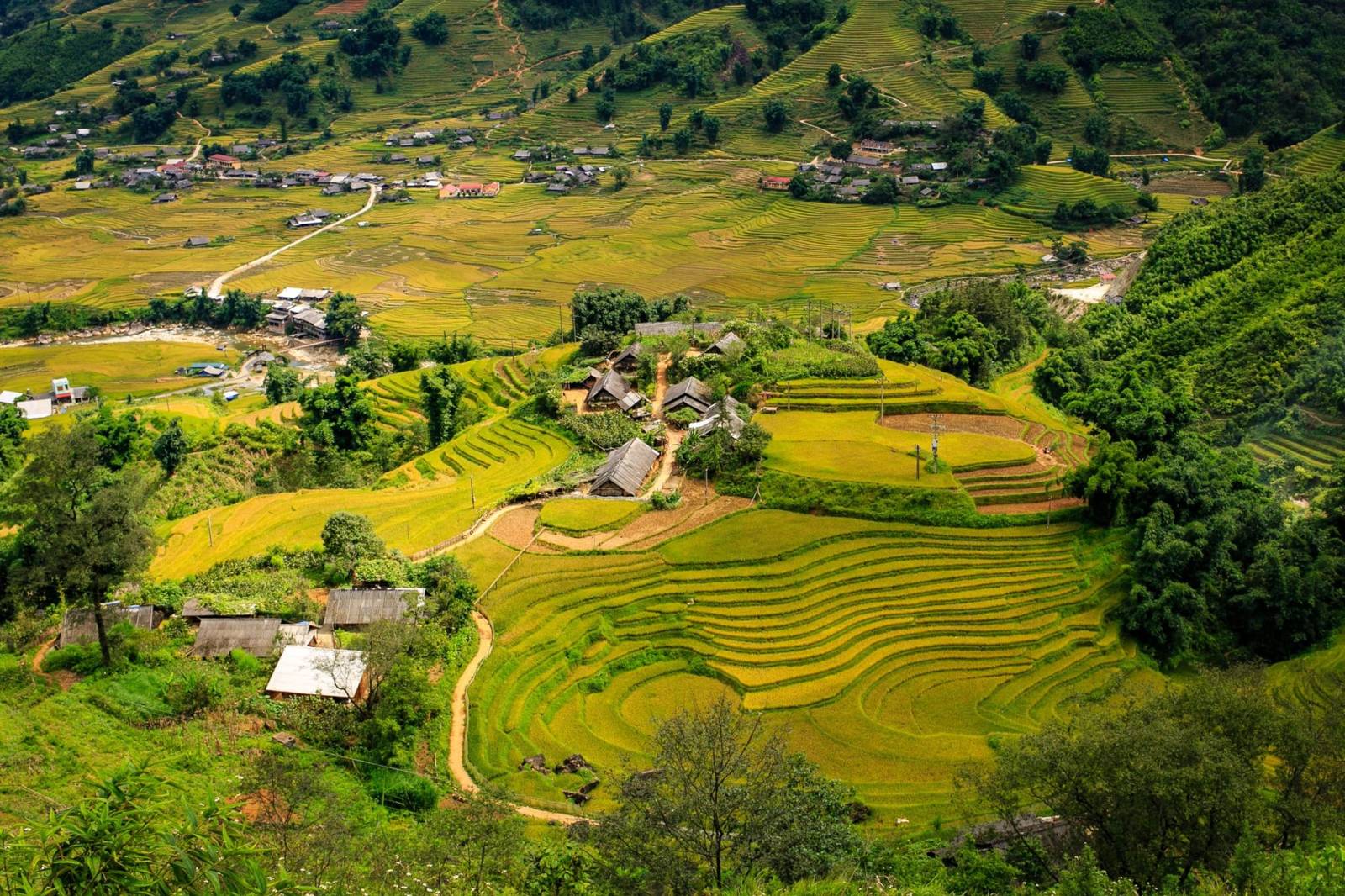
Vietnam is the only country on our route where “when should I go” has no single answer. The country is so long that the north and the south have almost nothing to do with each other: in January you can be sitting in Hanoi under a grey drizzle at seventeen degrees while Ho Chi Minh City is dry and thirty-two. In July it is rainy season in the south and misty and slippery in Sapa, but the sun is shining in Nha Trang.
That sounds more complicated than it is, and mostly it is good news: there is hardly a month when the weather is bad everywhere in Vietnam. You fit your route to your month instead of your month to your route.
Below, region by region: when each one is at its best, which months work across the whole country, and which stretches of the year suit one region better than another.
The north: Hanoi, Sapa, Ha Giang, Ninh Binh and Cat Ba
The north has four seasons and you feel it. In Hanoi, October, November, March and April are the nicest months: mild, dry and clear, at around twenty-five degrees. December to February is cool and grey, with a fine drizzle that can last for days and temperatures around seventeen degrees, and May to September is hot and humid with heavy afternoon downpours.
In the mountains it is sharper. For Sapa and the Ha Giang Loop, September and October are the best: clear and dry, with the rice in Sapa gold and being harvested. On the Ha Giang Loop that good weather runs on through November, and in late October and November the buckwheat fields there are in pink flower. March to May is the second good window, fresh and mostly dry, with the terraces of Sapa flooded and mirroring the sky. June to August is rainy season, with fog, slippery paths and a chance of landslides. After that it gets cold and the mountains are often inside the cloud: in Sapa from November to February, with the occasional bit of snow, and in Ha Giang from December to February, with nights close to freezing.
Ninh Binh runs on its own schedule again: May and June are the most beautiful months there because the rice turns gold, and September to November is mild and clear, perfect cycling weather. Cat Ba is at its best in April, May and October, when the water is warm enough and the bay is not sitting in fog.
Our verdict: September and October are the most beautiful months for the north, with March to May as a second choice
Central Vietnam: Phong Nha, Hue, Hoi An and Da Nang
The centre has the shortest good season in the country, and it falls exactly outside the months when most people go. February to April is the best time here: dry and pleasant, with every cave in Phong Nha open, the Citadel in Hue comfortable to walk around and cycling and beach weather in Hoi An. Da Nang stretches that to the end of May.
May to August is hot, up to thirty-five degrees in Hue, but dry. That is the time for the beaches and the warmest sea of the year, and inside the caves of Phong Nha it is wonderfully cool.
September to December is the tricky part. This is the wettest season in all of Vietnam: in Hue there is a chance of flooding, in Hoi An the old town floods regularly, in Phong Nha the caves close, and along the coast there is a risk of typhoons. Want to see this region? Plan it outside those months.
Our verdict: February to April for central Vietnam, and in autumn give your days to the north instead
The south: Nha Trang, Da Lat, Mui Ne, Ho Chi Minh City and Phu Quoc
The south is the simplest: dry from roughly November to April, wet after that. In Ho Chi Minh City, December to March is the most pleasant, dry and marginally less sticky. April and May are the hottest months, regularly over thirty-five degrees, and June to November is rainy season with short, heavy downpours in the afternoon.
On the coast it runs a little differently. Nha Trang has the longest good season in the country: February to June brings a calm sea and clear water, and in July and August the sea is at its warmest. Phu Quoc is at its best from December to March, April is hot there but still mostly dry, and in the rainy season from May to November the boat trips stop running. Mui Ne is all about the wind: from November to April a steady wind blows from the northeast, which is exactly what kitesurfers are after; in May and June the sea is flat as a pond instead.
Da Lat is the exception up in the hills: December to March is dry and clear there, with cold mornings and evenings and days around twenty degrees.
Our verdict: the south is good everywhere from December to April, and it is the easiest region to plan
The months that work across the whole country
Two stretches come back as good or nearly good in all three regions.
March and April are the best months for a trip from north to south: Hanoi is mild and clear, central Vietnam is at its driest and the south has not hit rainy season yet. Only the mountains are not quite at their most beautiful.
October is excellent in the north, with the best month of the year for Sapa and Ha Giang, and the south is drying out by then. What October does not give you is central Vietnam, because that is right in the middle of its wettest season.
The trickiest months: September to December if you want to see the centre, and December to February if you want the north without a grey sky.
By place: when is each one at its best?
- Hanoi: October, November, March and April
- Sapa: March to May, September and October
- Ha Giang Loop: March to May and September to November
- Ninh Binh: May, June and September to November
- Cat Ba: April, May and October
- Phong Nha, Hue and Hoi An: February to April, and in Phong Nha the dry season runs on to August
- Da Nang: February to May
- Nha Trang: February to August
- Da Lat and Ho Chi Minh City: December to March
- Mui Ne: November to April
- Phu Quoc: December to April
How to plan your route around the weather
First look at which region is best in your month and start there. Travelling in March or April? The classic route from north to south works best. Travelling in September or October? Give the north the most days and keep central Vietnam short. Travelling in December or January? Start in the south.
Whatever you do, give yourself enough time. Vietnam looks narrow on the map, but the distances are bigger than most travellers expect. How the route and the night buses work is in our Vietnam itinerary and in our guide to getting around Vietnam.
Which side of the country works best in your month, and where to sleep there, is on our Vietnam page.
What is the best month for the whole of Vietnam?
April, if you have to pick one. Hanoi is mild and clear, central Vietnam is still dry with every cave open, and the south has not been caught by its rainy season yet. Only the mountains are not at their very best then, and in Ho Chi Minh City the heat is building.
March comes close and is a bit nicer in the mountains. Want Sapa and the Ha Giang Loop at their most beautiful? Then October is your month, but keep central Vietnam short or save it for another trip.
If you remember one thing: autumn is gorgeous in the north and hard work in the centre, and winter is exactly the other way round. There is no month that gets everything right at once, and that is no problem as long as you build your route around it.


