
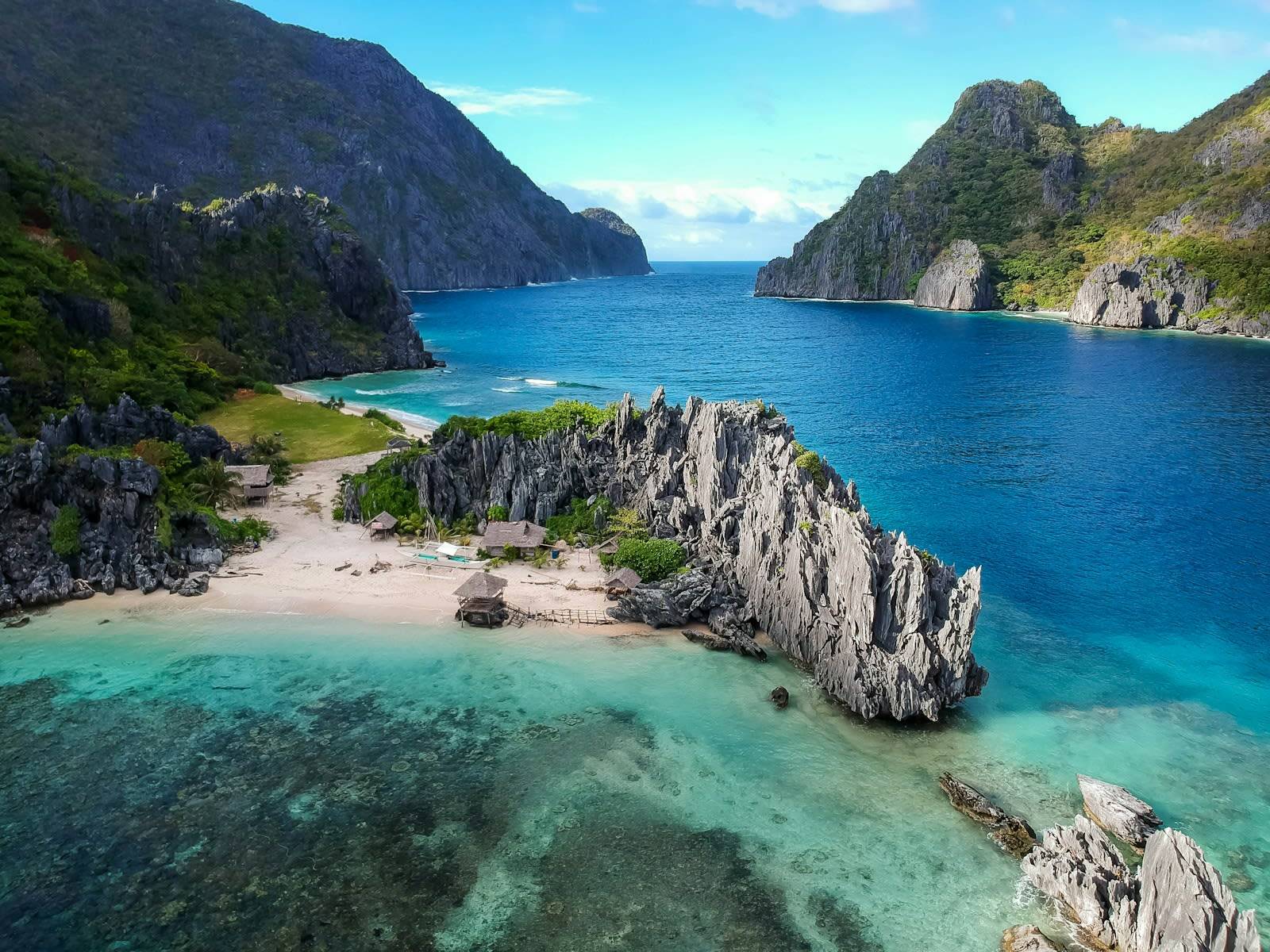
The Philippines is not a country you travel through, it is a country you fly around. Seven thousand six hundred and forty one islands, thirty six thousand kilometres of coastline, and no road that joins any of it up. Every leg of your route is a boat or a plane, and that is the single thing that makes this country different from everywhere else on this site.
It is also, for a lot of people, the best of the five. The lagoons on Palawan are the ones from the photographs, the diving sits inside the Coral Triangle and is genuinely world class, Siargao has the surf, and almost everybody speaks English, which makes it the easiest country here to arrive in without a plan.
Our route is eleven stops: Manila, then Palawan from Puerto Princesa up to El Nido and Coron, Boracay, and the Visayas through Moalboal, Siquijor, Bohol and Malapascua before finishing on Siargao. Reckon on €35 a day, which is more than the mainland because you are constantly buying a ferry ticket or a flight.
Why the Philippines?
Because nothing else on this route looks like it. Limestone islands standing in water you can see thirty metres down through, a wall of sardines five metres off a beach, thresher sharks at dawn, and an island for whatever kind of day you want.
- White sand and turquoise water, and rather a lot of both
- World class diving: wrecks, walls, sardines and thresher sharks
- Waterfalls, canyons and jungle you can jump into
- Fishing villages and islands with no road on them
- People who are relentlessly friendly, and English almost everywhere
- Surf, canyoneering and caving for anyone who cannot sit still
And because it is the easiest country on this route to travel in without speaking a word of the local language.
Best time to visit the Philippines
Tropical, with a dry season and a wet one, and a typhoon season on top of that. December to May is the broad answer and the islands do not all agree with it.
Two things that matter more here than anywhere else on this route. Siargao runs the opposite calendar: its driest months are May to July and its best surf is August to November, so it works when the rest of the country does not. And typhoons cancel flights in bulk, so if you are travelling between July and October, always keep a spare day before your flight home. Nobody regrets that day.
Do not fill every day either. Ferries and domestic flights slip, and a schedule with no slack in it turns a good trip into an anxious one.
Practical information
All fourteen passports on our visa page get 30 days visa free on arrival, extendable in the country. You do have to fill in the eTravel registration within 72 hours before you fly, and you must be able to show an onward ticket at check in, which here is asked for more often than anywhere else in the region. The detail per passport is on our visa page.
The Philippine peso. Cards work in the cities and the bigger islands, and the smaller ones run on cash. Machines charge a fee of around 250 pesos per withdrawal on top of whatever your own bank takes, so take out larger amounts less often, and take cash with you to Port Barton and Malapascua where the machines are unreliable or absent.
Filipino and English are both official, and English is spoken almost everywhere, including on small islands. That makes this the easiest country on this route to travel in. A few words of Tagalog or the local language still opens doors: "salamat" for thank you, "po" as a mark of respect.
Generally safe for travellers, and the risks are practical rather than criminal: boats without enough life jackets, scooters on broken roads, and the weather. Watch your belongings in Manila, follow official travel advice, and take the coastguard seriously when it keeps the boats in.
Nothing is required to enter. Travel health services put typhoid on the list for most travellers here and add cholera for some, which they do not do in Thailand, Vietnam, Laos or Cambodia. Malaria is a rural, low altitude risk below 600 metres on Luzon, Mindanao, Mindoro and Palawan, with no risk on Boracay, Bohol, Cebu or Leyte. Dengue bites in daylight and lives in towns, so repellent works harder here than tablets do. It is all on our vaccinations page.
Our daily budget is an average across the country, and it is higher than the mainland for one reason: transport. Beds and food are cheap, and the ferries and domestic flights between eleven islands add up.
Backpacker budget: around €35 a day
- €7hostel bed
- €3local meal
- €1.20beer
- €10boat trip
Guide prices from our own trips. Add a night out or a dive and it climbs fast.
Filipino culture
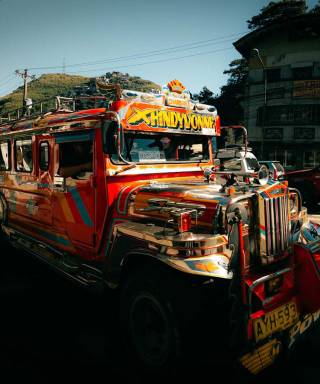
The Philippines does not feel like the rest of Southeast Asia and there is a reason: three hundred and thirty years of Spain, then fifty of America, on top of what was already Asian. That produces Catholic churches next to rice terraces, Spanish surnames, basketball hoops on every village wall, and a country that is majority Christian in a Buddhist and Muslim region.
The thing every traveller mentions afterwards is how friendly people are. Hospitality here is not a service industry idea, it is a social obligation, and being invited to eat by somebody you met twenty minutes ago is completely normal.
Getting visibly annoyed is the one thing that goes badly here. Losing your temper makes the other person lose face, and after that nothing gets solved.
Two words worth learning. “Po” and “opo” are politeness markers you add when speaking to anyone older, and they cost nothing. And “Filipino time” is real: things start late, boats leave when they leave, and fighting that is a waste of a holiday.
- Say hello and smile. Filipinos genuinely like a conversation
- Use "po" and "opo" when speaking to anyone older than you
- Accept an invitation to eat. It is meant, and refusing is odd
- Be patient. Filipino time is a real thing and it is not going to change
- Get angry or impatient in public. It costs you more than it costs them
- Criticise somebody in front of other people. Face matters here
- Refuse anything bluntly. A friendly "maybe later" works far better
- Assume English everywhere. On the small islands a few local words help
Filipino food
Filipino cooking is the most underrated in the region and the least like its neighbours. It is barely spicy, it is built on sour and salty rather than hot and sweet, and vinegar does the work that chilli does elsewhere.
Start with adobo, meat braised in vinegar, soy and garlic, which is as close as the country has to a national dish and is different in every household. Then sinigang, a soup made sour with tamarind, and lechon, a suckling pig roasted whole over coals for hours, which Cebu in particular is famous for.
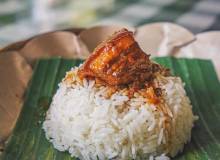
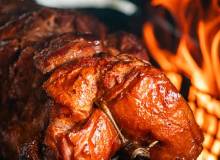
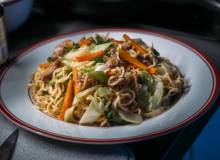


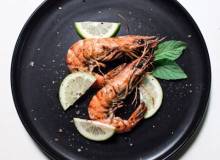
On the islands you eat fish that was landed that morning, usually grilled whole and sold by weight, with rice and a dish of vinegar with garlic and chilli in it. That little dish arrives with almost everything and it is not decoration: it is what makes the plate work.
Island hopping
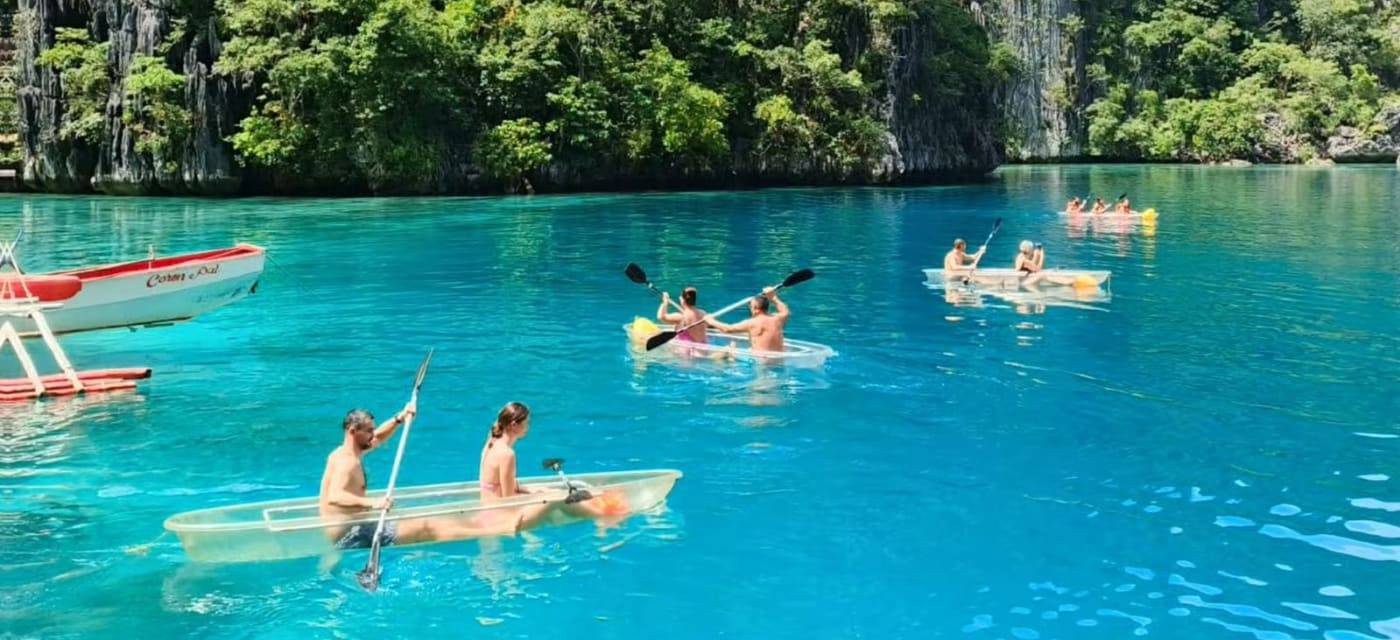
This is the country that invented the phrase as far as most travellers are concerned. A day of island hopping here means a wooden outrigger, four or five stops, snorkelling at two of them and lunch grilled on a beach, for somewhere between €15 and €25.
Palawan is where the famous version happens. El Nido runs four numbered tours lettered A to D through Bacuit Bay, and Coron has the lakes and the wrecks. Between them there is a four day boat expedition that sleeps on islands along the way.
The quieter version is better value: Port Barton, three to four hours south of El Nido, does the same thing for half the price with turtles thrown in, and Coron’s southern islands see a fraction of the boats.
Diving and snorkelling
The Philippines sits inside the Coral Triangle, which holds more marine biodiversity than anywhere else on earth, and the diving here is the reason a lot of people come back.
Four of them are on our route. Coron has ten Japanese wrecks sunk in 1944, some shallow enough to snorkel over. Moalboal has millions of sardines five metres off the beach, free, all year. Malapascua has thresher sharks at Monad Shoal at dawn, which almost nowhere else offers on a recreational dive. And Bohol has the wall at Balicasag with turtles on it.
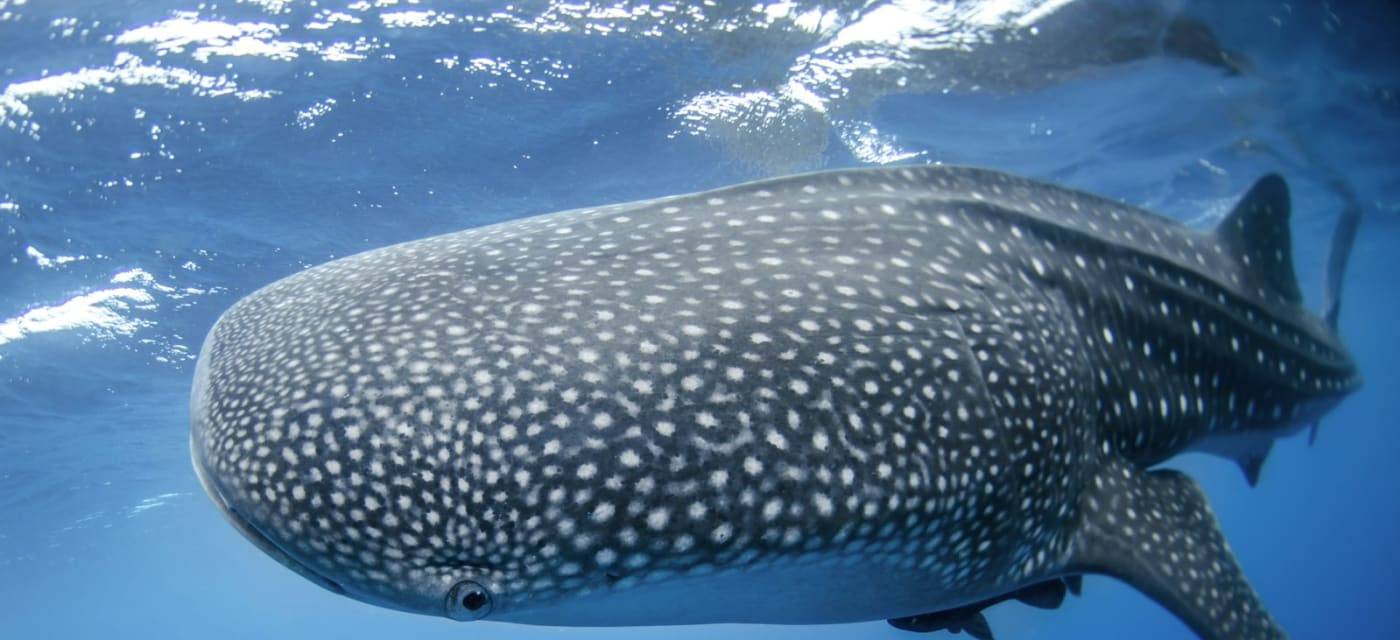
One honest note on whale sharks. At Oslob on Cebu they are fed from boats to keep them in the bay, which is why sightings there are reliable. Off Puerto Princesa on Palawan they are wild, nobody feeds them, and nobody can promise you anything. Both are on offer and they are not the same thing: pick with your eyes open.
Getting around the Philippines
There is no overland route through this country, so every leg is a boat or a plane, and that takes more planning than anywhere else on this site.
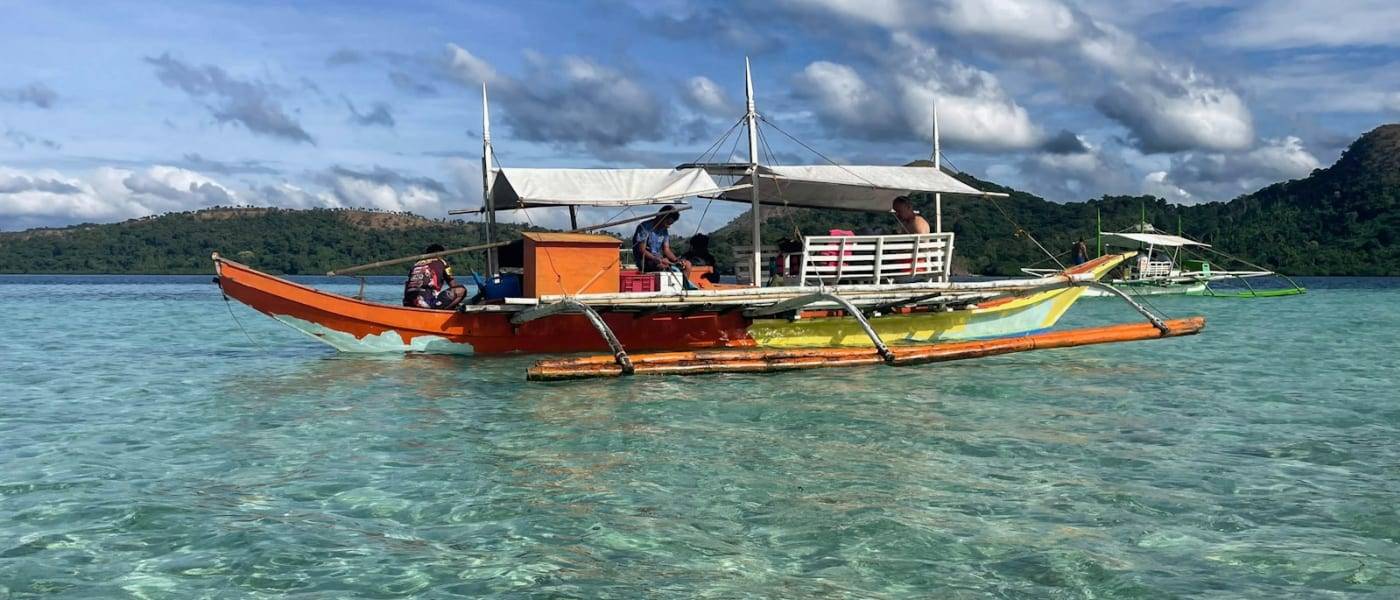
Domestic flights are the backbone. Manila and Cebu are the two hubs, most island hops are an hour or so, and booked a few weeks ahead they are cheap. Booked the day before, they are not.
Ferries connect the islands that sit near each other: Cebu to Bohol in two hours, Dumaguete to Siquijor in one, El Nido to Coron in four. Long distance ferries exist and take days rather than hours, which is rarely the trade you want.
On land it is the jeepney, a converted American army truck with benches in the back, at about twenty cents a ride, and the tricycle for everything shorter. In Manila you use Grab, which sets the price before you get in.
For the islands themselves, rent a scooter: Siquijor, Siargao and Bohol are all built for it. The Philippines accepts the international driving permit of either the 1949 or the 1968 convention alongside your own licence, and it is checked on Bohol and around Puerto Princesa. Without it your travel insurance will not cover you.
- Domestic flightThe backbone: 1 hour between most islands
- FerryCebu to Bohol 2 hrs · El Nido to Coron 4 hrs
- BangkaThe outrigger that does every island hopping day
- JeepneyAbout €0.20 a ride, and the national icon
- ScooterFrom €6 a day, and the best way round most islands
The Philippines for every traveller
More variety than any other country on this route, because every island is doing something different. The trick is choosing which four or five you actually have time for.
The Coral Triangle: wrecks at Coron, sardines at Moalboal, thresher sharks at Malapascua and a wall at Bohol. Few places anywhere come close.
36,000 kilometres of coastline and 7,641 islands. Nacpan, White Beach, Kalanggaman, and plenty with nobody on them at all.
Canyoneering at Kawasan, surfing Cloud 9, an eight kilometre underground river, and a cliff scramble above El Nido.
Excellent hostels and easy company, at a slightly higher daily cost than the mainland because you are always buying a ticket to the next island.
English everywhere makes this the easiest country here to travel alone in: you can arrive somewhere with no plan and have one by dinner. It is also the one where a route needs booking ahead, because a full flight is a full flight.