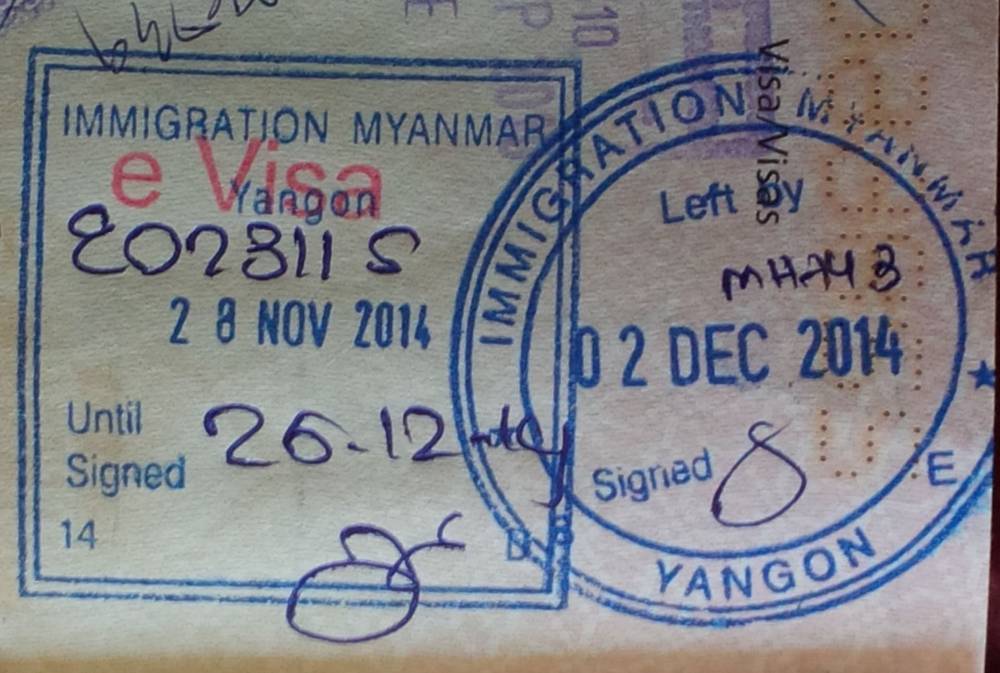
Travellers queuing at the immigration desks of a border post

Travel prep · step 1

Visas for Asia

For most of these passports it is easier than you think: half of Asia you simply walk into. But every country has its own length of stay, its own form and its own way of making you pay. Below is what actually applies to your passport, with the official site next to it.

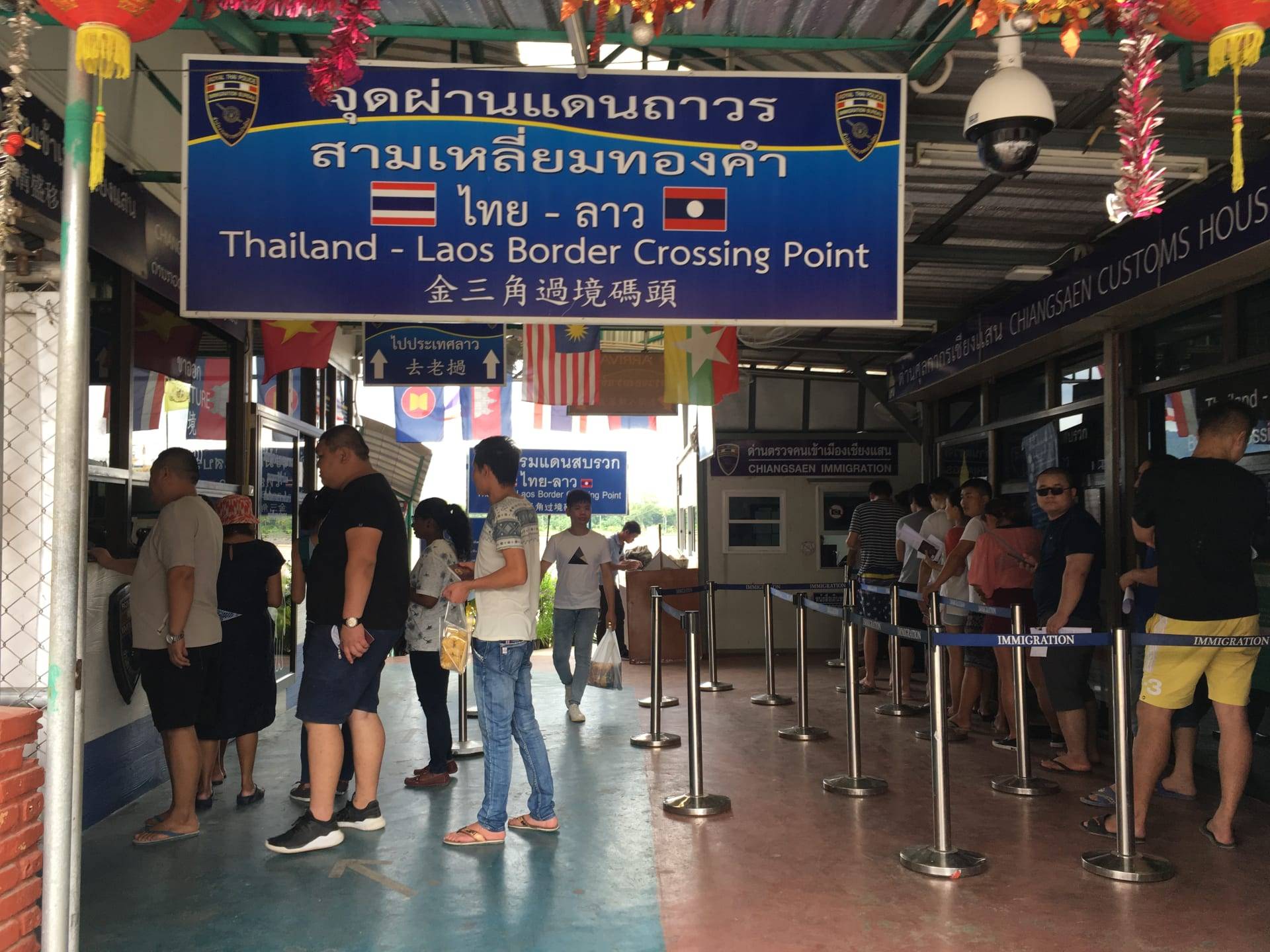
Border post at Chiang Saen, Thailand into Laos

  • Straight from the official advice copied per country, never invented
  • 13 destinations from Thailand to Japan
  • Arrival card first compulsory in most countries
  • $0 to $50 always paid to the government itself

Which passport are you travelling on?

Visa rules hang on your nationality, not on the language you happen to be reading this in. Everything below does the maths with your choice, and we remember it for next time.

Choose your passport
Route checker

What do you actually need?

Tick the countries you are doing and roughly how long you are staying. We put next to each one whether you need a visa, what it costs and which form you have to fill in beforehand. Stay somewhere longer than the standard rule allows and we say so.

1 Where are you going?

Not sure yet? A rough guess is plenty. What matters is whether you go over a limit.

The official rules

Every country in a table

Everything below comes from the travel advice that applies to your passport and from the visa portals of the countries themselves. The last column is the only address you need: straight to the government, with nobody in between.

Country Visa Max stay Cost Arrival card Official site
Thailand our guide No visa 30 days Free Thailand Digital Arrival Card (TDAC) www.thaievisa.go.th www.immigration.go.th
Vietnam our guide No visa 45 days Free Digital arrival form evisa.gov.vn
Laos our guide Visa needed 30 days $50 for the e-visa on every passport on this page, plus a bank charge when you pay online Lao Digital Immigration Form (LDIF) laoevisa.gov.la immigration.gov.la
Cambodia our guide Visa needed 30 days $30, and online there is usually a few dollars of processing on top Cambodia e-Arrival Card www.evisa.gov.kh
Philippines our guide No visa 30 days Free eTravel registration etravel.gov.ph
Indonesia Visa needed 30 days 500,000 rupiah, around $30 Electronic arrival card evisa.imigrasi.go.id
Malaysia No visa 90 days Free Malaysia Digital Arrival Card (MDAC) imigresen-online.imi.gov.my/mdac/main
Singapore No visa 90 days Free Singapore Arrival Card (SGAC) eservices.ica.gov.sg/sgarrivalcard
Myanmar E-visa first 28 days $50 Not needed evisa.moip.gov.mm
India E-visa first 30 days $25 for 30 days ($10 from April to June), $40 for a year, plus a 3% bank charge E-Arrival Card indianvisaonline.gov.in/evisa
Nepal Visa needed 30 days $30 for 15 days, $50 for 30 days, $125 for 90 days Not needed nepaliport.immigration.gov.np
Sri Lanka Travel authorisation 30 days Free Not needed eta.gov.lk
Japan No visa 90 days Free Visit Japan Web www.vjw.digital.go.jp

Source: the travel advice from the Foreign Office, topped up with the rates on the official visa portals. Checked on 13 September 2026. Visa rules change more often than you would think, so have a quick look yourself just before you fly.

Where these numbers come from 13 countries

For these countries we went to the government of the destination itself. Every link below states the length of stay or the amount that is in the table, in black and white.

How it works

Four ways in

Every country in Asia does it slightly differently, but it comes down to four variants. Know which box your country falls in and you know what to do.

No visa

You apply for nothing and pay nothing. On arrival someone stamps your passport with the date you have to be gone by. Almost all of these countries do want you to fill in a digital arrival card beforehand.

  • Thailand
  • Vietnam
  • Philippines
  • Malaysia
  • Singapore
  • Japan

Travel authorisation

Not a real visa, but something you apply for online and that has to be approved before you leave. Often sorted within a day and sometimes free.

  • Sri Lanka

Visa needed

You can arrange it online in advance, or at the desk when you get there. Go for the desk and you need cash, usually US dollars, and a passport photo. Online costs a bit more but the queue is shorter.

  • Laos
  • Cambodia
  • Indonesia
  • Nepal

E-visa first

There is no desk option here. Without an approved visa you will not even be allowed on the plane. Apply well in advance, because processing takes a few working days.

  • Myanmar
  • India
Travellers with backpacks queuing for passport control
Passport control at Padang Besar, the train border between Thailand and Malaysia
The one tip that matters

Always arrange it yourself, with the government

Search for "Cambodia visa" and the first four results are full of sites that look like an official body. They are not. They fill in the same form for you and charge 40 to 100 euros on top. You get exactly the same piece of paper.

Entry and exit stamps on a passport page
The same stamp either way, whether you paid 30 euros for it or 130

How to spot a middleman

  • The address ends in .com, .org or .net instead of the government's own country code
  • There is a "service fee", a "processing fee" or a rush option in the checkout
  • The price is in euros, while governments charge in dollars or local currency
  • They promise "approval guaranteed", which no government on earth does
  • The site sits above the search results as an advert

These are the real addresses

Planning

When do you arrange what?

Almost all of it can be done at short notice, with one exception: your passport. So start there and the rest follows.

  1. 6 months out

    Look at your passport

    Nearly every country in Asia wants your passport to be valid for another six months. If yours runs out within a year, apply for a new one now. In high season the waiting times are real, and rushing it costs extra.

  2. 6 weeks out

    Apply for your e-visas

    For Myanmar and India it can only be done in advance. Laos, Cambodia and Indonesia can be done in advance too and that saves you a queue. Reckon on a few working days, and more around public holidays.

  3. 4 weeks out

    Decide about your onward ticket

    In Thailand, Vietnam, the Philippines and Malaysia you have to be able to show you are leaving again, and the check in desk often asks before you have even left home. Booking a real hop to the next country? Do it now. Renting a reservation instead, buy it the day before you fly: those are valid for 48 hours.

  4. 1 week out

    Sort your cash and passport photos

    Get a few twenty dollar notes, clean and untorn, and have two passport photos made. At the border in Laos, Cambodia and Nepal you will be glad you did.

  5. 3 days out

    Fill in the arrival cards

    Thailand, Malaysia, Singapore and India only let you fill them in three days ahead. Put it in your calendar, because this is the thing people end up doing at the airport more than anything else.

  6. On arrival

    Check your stamp

    Before you walk away from the desk, look at the date in it. A mistyped year or a shorter stay than you expected is fixed in seconds at the desk, and a problem later.

Passport check

Is your passport valid long enough?

The rule that catches most people out at the airport. Fill in your last day of travel and the date your passport expires, and you will see straight away whether you are fine. Every country on this page but one wants six months.

Fill in both dates. We add six months to your last day of travel and check whether your passport is still valid then.

In your hand luggage

What you need at the border

Nothing exotic, but all things you cannot sort once you are already standing in the queue.

Dollars in cash

Reckon on 40 to 60 dollars per visa country. Clean, unfolded notes: torn ones get refused at the border.

Two passport photos

For Laos, Cambodia and Nepal. You can have them made on the spot, but it costs you time and a few dollars extra.

Your onward ticket

On paper or as a screenshot, because the check in desk asks sooner than the border does.

The address of your first night

Every arrival form asks for it. Put it in your notes so you are not digging through your email without wifi.

Your arrival card QR

Screenshot it. The wifi at a border post is exactly as good as you expect.

A copy of your passport

Digital and on paper, and leave one with someone at home. Losing it on the road happens more than you think.

Queue at immigration and customs, with backpackers and suitcases
Immigration and customs on the Malaysian side of Padang Besar
Over land

The border crossings you are going to do

Flying is simple: the airline checks your papers for you. At a land border you are on your own. These are the four crossings that turn up on almost every route through Southeast Asia.

Thailand into Laos

Friendship Bridge at Nong Khai, or the slowboat from Chiang Khong to Huay Xai

You stamp out of Thailand, cross over and sort your visa on the Lao side. Cash in dollars, plus a passport photo. Outside office hours there is an overtime fee on top.

Thailand into Cambodia

Poipet, coming from Aranyaprathet

The best known border in the region and also the busiest. There are people walking around offering to arrange your visa for a fee. Walk on to the official counter.

Cambodia into Vietnam

Bavet to Moc Bai, on the road to Ho Chi Minh City

Whether this is a five minute stamp or a visa you had to apply for weeks ago depends entirely on your passport. Set the passport picker at the top of this page and the table will tell you which one you are.

Laos into Vietnam

Nam Phao to Cau Treo, or Nam Can near Vinh

Long bus rides through the mountains and border posts that are not open all day. Turn up well before closing time, or you are sleeping on the wrong side.

Sign at a border post reading Thailand Myanmar Border Crossing Point
Border post at Chiang Saen, Thailand into Myanmar. Most governments advise against large parts of Myanmar: read your own travel advice before you book anything here.
One more thing

Questions we get a lot

Do I need a visa for Thailand?

No, not on any of the fourteen passports on this page. You do have to fill in the Thailand Digital Arrival Card, from three days before you arrive. You get a 30 day stamp on arrival: up to and including 14 September 2026 that was still 60. Since then the exemption covers tourism only, not a few days of work or business.

What is the difference between a visa and an arrival card?

A visa is permission to enter the country, and it usually costs money. An arrival card is a digital form where you say who you are, where you are sleeping and how long you are staying. It is nearly always free, but it is compulsory. Without a completed card you can still be stopped at check in or at the desk, even when you need no visa at all.

Why does it matter which passport I choose?

Because in three of these thirteen countries it changes the answer completely. In Vietnam a British, German, French, Spanish, Italian, Swedish, Dutch or Swiss passport walks in for 45 days, while an Irish, American, Canadian, Australian, New Zealand or Austrian passport has to apply for an e-visa before flying. In Laos a Swiss passport gets 15 days without a visa, and everybody else needs one. In Sri Lanka the travel authorisation has been free since May 2026 for forty countries, and Ireland is not one of them. Being in the EU is not the deciding factor, which is exactly why you should not assume.

Can I not just use one of those visa websites?

You can, but you pay two to five times as much for exactly the same document. Those sites rank at the top of Google because they pay for advertising. The real addresses end in the government's own country code, like gov.kh, gov.la and go.th. This page lists the official address for every country, so you can click straight through.

How long does my passport have to be valid?

Six months across virtually all of Asia. What those six months are counted from varies: some countries look at your arrival date, others at the day you leave. So take the last day of your trip and add six months to that. Japan is the only exception here: there your passport only has to be valid during your stay.

What happens if I stay longer than my visa allows?

You pay a fine per day, and it adds up fast. In Indonesia that is 1 million rupiah a day. Overstay badly and you risk deportation and a ban on returning. Worse still: your travel insurance can refuse to pay out if you were not legally in the country at the time. Extending is possible almost everywhere and is always cheaper than the fine.

Do I really need to bring cash for my visa?

For Laos, Cambodia and Nepal you do if you are sorting it on arrival. There is often no card machine at the border, and paying in local currency usually works out dearer because the rate is poor. Bring US dollars in clean, untorn notes. Damaged money gets refused.

Why is there nothing here for my passport?

Because we have not checked it for that passport yet. We copy visa rules straight from the official advice and never add anything of our own. If we are not certain, we do not put a number there but send you to the official source for your country instead. That is more annoying to read and a great deal safer to travel on.

Where can I check this myself?

With your own government, and this page links to it for all fourteen passports: pick yours at the top and the source at the bottom of the table changes with it. That is where these numbers come from. If their text and ours ever disagree, theirs wins, because visa rules sometimes change from one week to the next.

Next step

Papers sorted. Now the fun part

Your paperwork is done. So this is where the actual trip starts: where you are going, and what you are doing when you get there.