
Backpacking Mui Ne
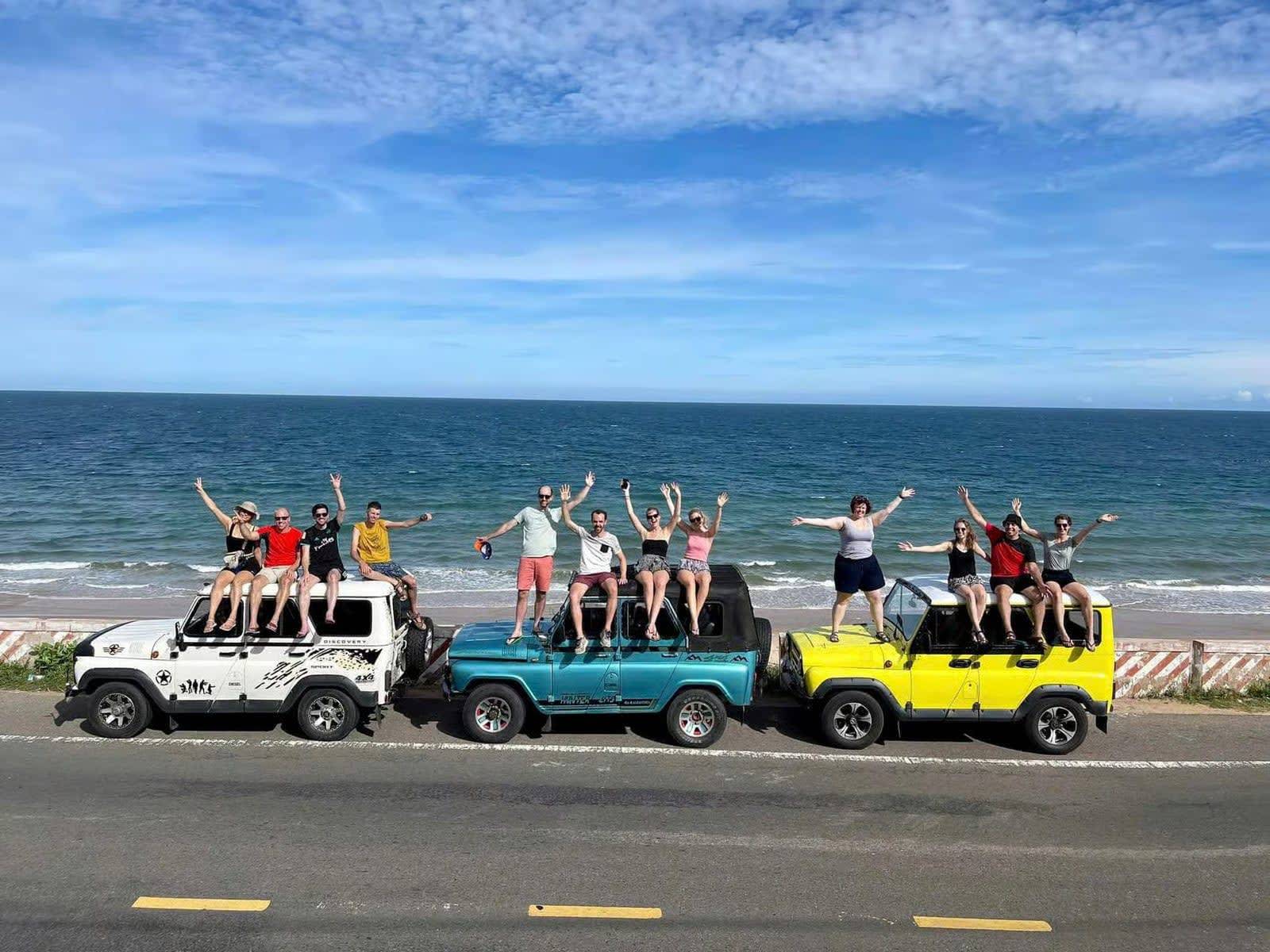
Two hundred kilometres up the coast from Saigon there is a desert. Actual dunes, orange and white, rolling for kilometres behind a fishing village, and you get taken out into them in a jeep at half past four in the morning so you are standing on top of one when the sun comes up. It looks like the Sahara and it is forty minutes from a beach.
That is the reason to come, and the second reason is wind. From November to April it blows here nearly every afternoon, which makes Mui Ne one of the best and cheapest places in Asia to learn to kitesurf.
Beyond those two things, Mui Ne is a fifteen-kilometre strip along one road with hostels, seafood and not much of a centre. Two days is right. Do the dunes, do the beach or the kite, and move on to the mountains or the city.
Why Mui Ne is popular with backpackers
- Real sand dunes, and a jeep out into them at sunrise
- One of the cheapest places in Asia to learn to kitesurf
- The Fairy Stream, which you walk up barefoot through the water
- A fishing village where hundreds of boats come in at dawn
- Beds from €5 and grilled seafood for about €3
- The natural halfway stop between Saigon and Da Lat or Nha Trang
Best time to visit Mui Ne
Mui Ne is one of the driest places in Vietnam, which is exactly why the kiting is so good. The wind decides the season here more than the rain does.
Coming to kite? December to March is the block: it blows hard enough almost every afternoon. Coming to swim? Then May or June is the opposite and better choice.
Backpacker budget: around €18 a day
- €5hostel bed
- €2local meal
- €0.60beer
- €5scooter per day
Guide prices from our own days in Mui Ne. Add a tour or a night out and it climbs fast.
Best hostels in Mui Ne
Everything is on one road, so what you are choosing is which stretch of it. The quietest stretches are at the western end.
iHome Backpacker Resort
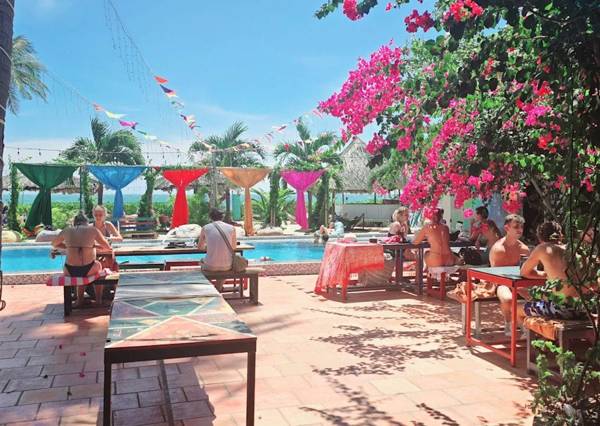
The backpacker address in Mui Ne: pool, bar, beach out the front and seventeen hundred reviews. Book here if you want people to do the sunrise jeep with.
EVA HUT Mui Ne Beach Hostel
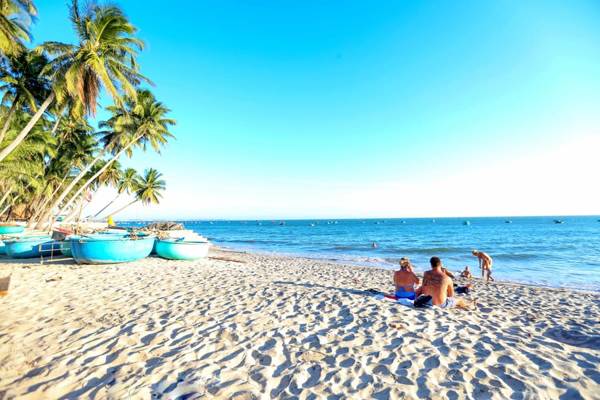
Right on the sand, bamboo huts, hammocks, and a nightly barbecue that turns into the evening. Simple rooms and a low score for them; people come for the setting and stay for the crowd.
Fairy Hills Hotel
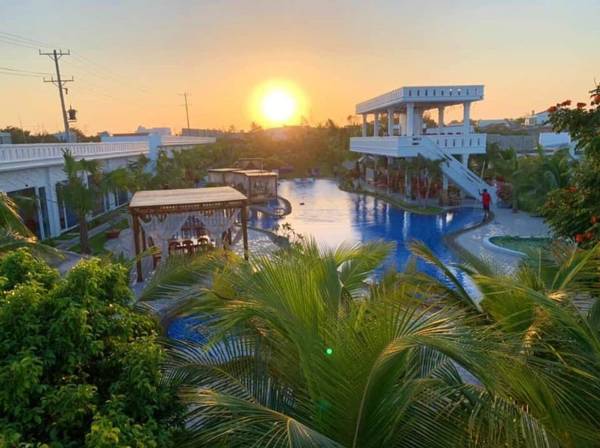
The quiet, comfortable option, close to the Fairy Stream. Private rooms at hostel prices and no bar underneath you, which after a week of party hostels has real value.
Best things to do in Mui Ne
The dunes at sunrise, in a jeep

Pick-up is at half four in the morning, you are on top of the White Dunes for first light, and then the jeep works its way back through the Red Dunes, the Fairy Stream and the fishing village. Four to five hours, done before the heat arrives, and the best-value organised thing in southern Vietnam.
Take the sunrise version, not the sunset one. The light is better, the dunes are empty, and the sand has not yet spent six hours cooking.
The Fairy Stream
A shallow red-orange stream that you walk straight up, barefoot, with sandstone cliffs eroded into towers on either side. It takes an hour there and back, the water is ankle deep the whole way, and it costs sixty cents.
Learning to kitesurf
Mui Ne is where a large share of Asia’s kitesurfers took their first lesson, because the wind is reliable, the water is warm and the schools are cheap. An intro lesson is about €45, which is roughly a third of what it costs in Europe.
Sunset on the Red Dunes
You do not need a tour for these. They are on the coast road towards the fishing village, free to walk into, and local kids rent out plastic sandboards for about a euro. Go an hour before sunset, when the sand turns properly orange.
The fishing village at dawn
Five kilometres up the bay, several hundred round basket boats and painted wooden trawlers come back in at about half five in the morning and sell the catch straight off the sand. Free, completely unstaged, and the best photograph in Mui Ne.
The coast road on a scooter
South of the strip the road runs along an empty coastline past dragon fruit fields to the Ke Ga lighthouse, which sits on a rock just offshore. Half a day, almost no traffic, and a good stretch of sea the whole way.
A day doing nothing
Some stops are for sights and some are for lying still. Mui Ne is the second kind. The beach is narrow and the surf is stronger than it looks, but a lounger is a euro fifty and nobody is going to bother you for six hours.
Best area for backpackers
The beach strip between Ham Tien and the village
There is one road and everything is on it: hostels, restaurants, kite schools and bars strung along fifteen kilometres between Ham Tien and Mui Ne village.
Because it is a strip and not a town, where you sleep decides how far you ride. Pick a place with the beach directly behind it and a scooter parked out the front.
Good to know about this area
- Hostels, kite schools and restaurants all on one road
- The quietest stretches of beach are at the western end
- Scooter hire everywhere, from about €5 a day, and close to essential
- Seafood a street back from the beach road at half the price
- Buses to Saigon, Da Lat and Nha Trang pick up from your door
- There is no real centre, so do not expect one
How to plan your days in Mui Ne
Two days: one for the dunes, one for the beach or the kite. Pick how long you have.
Dunes at sunrise. Leave around half four with a jeep for the White Dunes, so you are up there before the heat and the coaches. Then the Red Dunes, the Fairy Stream and the fishing village on the way back.
Tonight: an early one, or a beer along the beach road.
Beach, kite or scooter. Take an intro kitesurf lesson, or rent a scooter and ride the coast road south towards the Ke Ga lighthouse. The beach by the kite spots is narrow but the water is warm.
Tonight: sleeper bus to Ho Chi Minh City or up to Da Lat.
Food and drink in Mui Ne
A fishing village with a tourist strip attached, so the seafood is cheap and good, particularly one street back from the beach road.
You will also spot Cyrillic above the English on some menus, left over from the years when this was mostly a Russian resort. And the whole region is dragon fruit country: hectare after hectare of it, with lights strung over the plants at night to force them into flower, which from a night bus window looks like a landing strip.





The dragon fruit fields run for kilometres, and at night they are lit by strings of bulbs to force the plants to flower. From the bus it looks like an airport.
Getting there and onward
Mui Ne is a fifteen-kilometre strip along one road. There is no real centre, so where you sleep decides how much you ride.
Getting there. About five hours on the sleeper bus from Ho Chi Minh City. There is also a train to Phan Thiet with a half-hour bus to the coast after it.
Around here. Everything is on that one road. A scooter is about €5 a day and is close to essential, because walking between the stretches is further than it looks on a map.
Onward. Da Lat is four hours up into the mountains, Nha Trang five hours along the coast. Both are the obvious next stop.
- Sleeper busHo Chi Minh City 5 hrs · Da Lat 4 hrs · Nha Trang 5 hrs
- TrainTo Phan Thiet, then 30 minutes by bus
- ScooterFrom about €5 a day. Close to essential here
- Jeep to the dunesSunrise tour, 4 to 5 hours
- Kitesurf lessonIntro lesson from about €45
Staying safe in Mui Ne
Quiet and safe. What needs attention is the sea, the sun on the dunes and the trucks on the main road.
- Take water out to the dunes. There is no shade and no stall out there
- Watch the flags. The surf here has more in it than it looks like it does
- Pick a kite school affiliated to a recognised body
- Ride the main road in daylight. After dark it fills up with lorries
- Take a quad out on the dunes without a helmet. That goes wrong here regularly
- Walk the Fairy Stream in flip-flops. You are wading up the stream itself
- Go kiting with no experience on a day when it is really blowing
- Leave your things loose on the sand at the kite spots
Rebels on the Road tip
Everyone does the White Dunes on the organised tour and almost nobody gets up for the fishing village. Be there at half five: several hundred boats coming in, women wading out to meet them with baskets, the catch sold on the sand within twenty minutes and the whole beach empty again by seven. It costs nothing, it is completely unstaged, and it is the thing you will still be describing about Mui Ne when the dunes have blurred into every other desert photo you have seen.
Frequently asked questions
How many days do you need in Mui Ne?
Two. One for the dunes and the Fairy Stream, one for the beach or a kite lesson. Longer only if you are taking a full kitesurf course, in which case give it a week.
Mui Ne or Nha Trang?
Mui Ne is quieter, more spread out, and it has the dunes and the wind. Nha Trang is a proper city with islands, snorkelling and a night out. Mui Ne if you want to kite or switch off, Nha Trang if you want to be in the water and around people.
Is Mui Ne good for learning to kitesurf?
It is one of the best places in Asia for it: reliable wind from November to April, warm water, plenty of schools and an intro lesson at around €45. A lot of instructors elsewhere in Asia learned here.
Sunrise or sunset for the dunes?
Sunrise, without hesitation. Better light, empty dunes, cool sand, and you are back at your hostel by ten with the whole day still ahead of you.
Is Mui Ne expensive?
No. €18 a day. The jeep tour and a lounger are both cheap; the only real spend here is a kite course.
Do I need a scooter in Mui Ne?
More or less, yes. Everything is spread along fifteen kilometres of one road and there is no public transport on it. €5 a day solves the whole problem.
Is the beach any good?
It is narrow, and in kite season the wind and the surf mean it is more of a place to sit than to swim. May and June is when the sea goes flat and it becomes a proper swimming beach, which is exactly when the kiters leave.
When is the best time to visit Mui Ne?
November to April for dry weather and wind, with December to March the best of it for kiting. July to October is the wet season, though the showers here are short and mostly late in the day.
