

Backpacking Ho Chi Minh City
Everyone still calls it Saigon, including most of the people who live here. It is fourteen million people, it is the loudest place in Vietnam, and it is where your trip either starts or ends, which changes how you feel about it more than anything the city does.
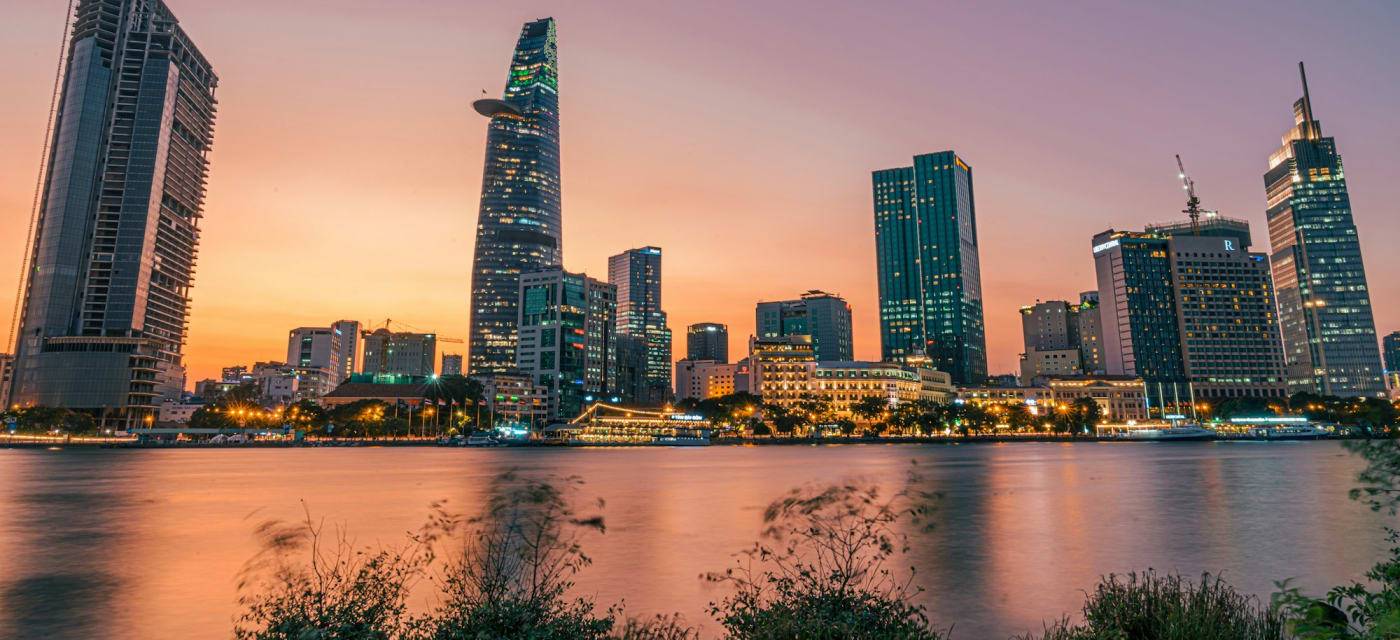
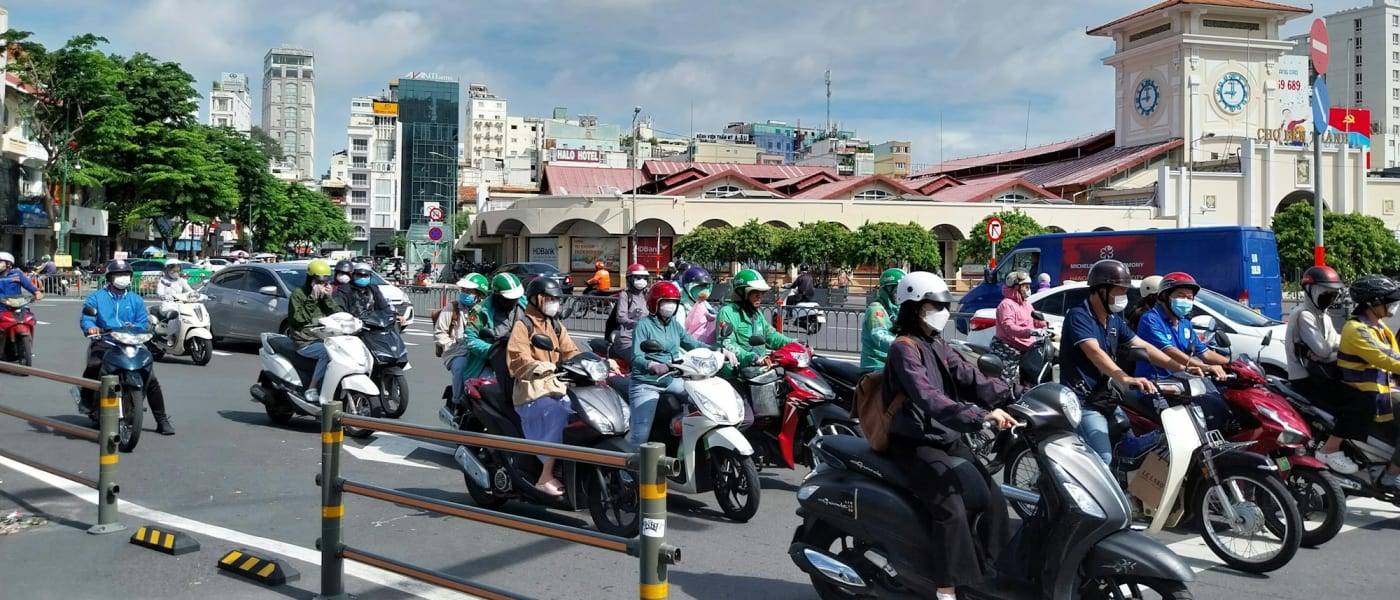
Where Hanoi is old and closed in, Saigon is fast and open and pointed at the future. Glass towers next to French colonial banks, specialty coffee roasters next to a war museum, and a stream of motorbikes that never actually stops. Step off the kerb at a steady pace and it parts around you, which is the first lesson and the only one that matters.
Two days covers the city. Four lets you add the Cu Chi tunnels and a day in the Mekong Delta, which are the two reasons most people give it more time than they planned.

Why Ho Chi Minh City is popular with backpackers
- Street food that people plan whole trips around
- Beds from €6 in hostels with rooftops on them
- The Cu Chi tunnels and the Mekong Delta, both day trips from here
- A war museum that changes how you read the rest of the country
- Nightlife that runs from a plastic stool to a bar on the fiftieth floor
- Everything connects from here: buses, trains, flights, all directions
Saigon does not stop
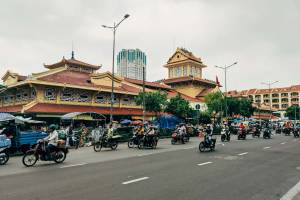
The first thing you notice is the noise. A permanent river of motorbikes that beeps, merges and folds around you the moment you step off the pavement. It looks like chaos and it has its own logic: walk at a steady pace and do not stop, and the traffic goes around you.
Around sunset the whole city changes character. The plastic stools come out onto the pavement, the grills get lit, and entire streets become open-air restaurants. From a rooftop bar you look down on the same chaos from fifty floors up with a beer in your hand.
That is what makes Saigon addictive: inside one block you go from a war museum to a specialty coffee shop to a stall where somebody has been making the same dish for thirty years.
Best time to visit Ho Chi Minh City
The south does not really have seasons the way you are used to: it is warm here all year. What changes is the rain and how heavy the heat feels.
December to March is the pleasant window for walking around. Coming in the rainy season is not a problem: the downpours usually last half an hour to an hour and then everything dries out fast. Just put your museum or your coffee at about three in the afternoon.
Backpacker budget: around €22 a day
- €6hostel bed
- €1.50local meal
- €0.80beer
- €2Grab ride
Guide prices from our own days in Ho Chi Minh City. Add a tour or a night out and it climbs fast.
Best hostels in Ho Chi Minh City
Sleeping is cheap in Saigon: a bed in a good hostel rarely costs more than six euros. These three come up again and again, and all three have over four thousand reviews.
Saigon Rooftops Hostel

A 9.9 from nearly five thousand reviews, which is about as good as Hostelworld gets. Rooftops, as the name promises, walking distance to Bui Vien, and staff who put a group together for you on your first evening.
Mobylette Saigon Hotel
Closer to a boutique hotel than a hostel, at not much more than hostel money. This is the place to book after three weeks of night buses, when what you need is a door that closes and a proper shower.
The Hideout
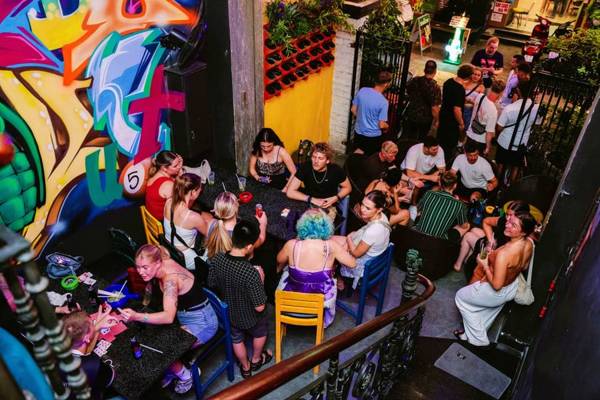
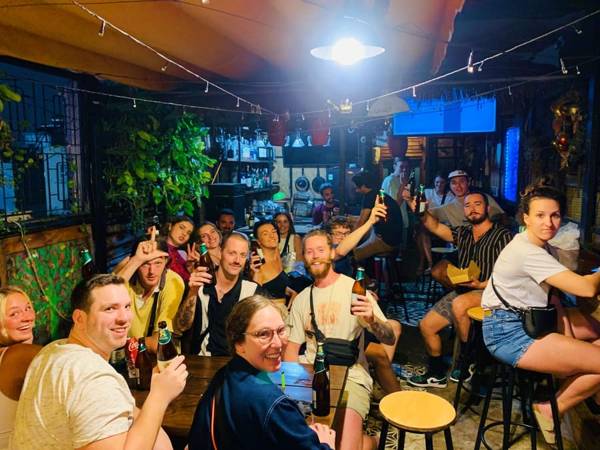
The social one, right in the backpacker district: bar downstairs, activities every night, and a crowd that arrived alone. Loud, and completely upfront about it.
Best things to do in Ho Chi Minh City
From a wartime tunnel network to a boat through the Mekong Delta: this is what backpackers come to Saigon for. Where you can simply walk in yourself, we say so.
The Cu Chi tunnels

Two hundred and fifty kilometres of hand-dug tunnels forty kilometres outside the city, where the Viet Cong lived, cooked, fought and treated their wounded through the war. You climb down into a widened section of it, which is still small enough to make most people reconsider halfway along. Nearly twenty-four thousand reviews, and the most-booked thing in Vietnam for a reason.
The tunnels and the Mekong Delta in one day

Short on time? This puts both of the big day trips into one, which is a long day (out early, back after dark) but gets you the tunnels in the morning and a boat through the delta in the afternoon. Fourteen thousand reviews say it works.
A food tour on the back of a motorbike

The single best thing to do in this city. You sit behind a local guide, cross the river into districts you would never have found, and eat five or six things at places with no sign and no menu. It also solves the traffic, because for three hours you are part of it rather than trying to cross it.
The Mekong Delta

A completely different Vietnam: narrow canals under palm cover, rowing boats, floating markets, coconut candy workshops and villages where the road is water. Two hours out of the city and about as far from it as you can get in a day.
The War Remnants Museum
The most visited sight in Saigon, and the hardest. Photographs, aircraft, tanks, and rooms on Agent Orange and on the journalists who covered the war. It is told from the Vietnamese side, which is exactly why it is worth your time. You can walk in yourself; a guide makes the photographs land differently.

Some of the photographs are genuinely hard to look at, and that is the point of them. Give yourself two hours and something to do afterwards that is not another museum.
Ben Thanh Market
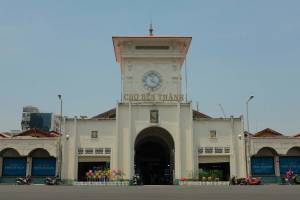
The covered market under the clock tower: fabric, coffee, souvenirs and a food court in the middle where you order by pointing. Walking in costs nothing, and at six in the evening the streets around it turn into a night market.

Want more than a look around? On this class you shop the market with the chef first and then cook what you bought.
Nguyen Hue walking street
The modern heart of the city: a wide pedestrian boulevard running down to the floodlit French colonial city hall, full of buskers, skaters and food stalls in the evening. Halfway down at number 42 is the Apartment Building, nine floors of a 1960s block where every flat is now a cafe or a bar.
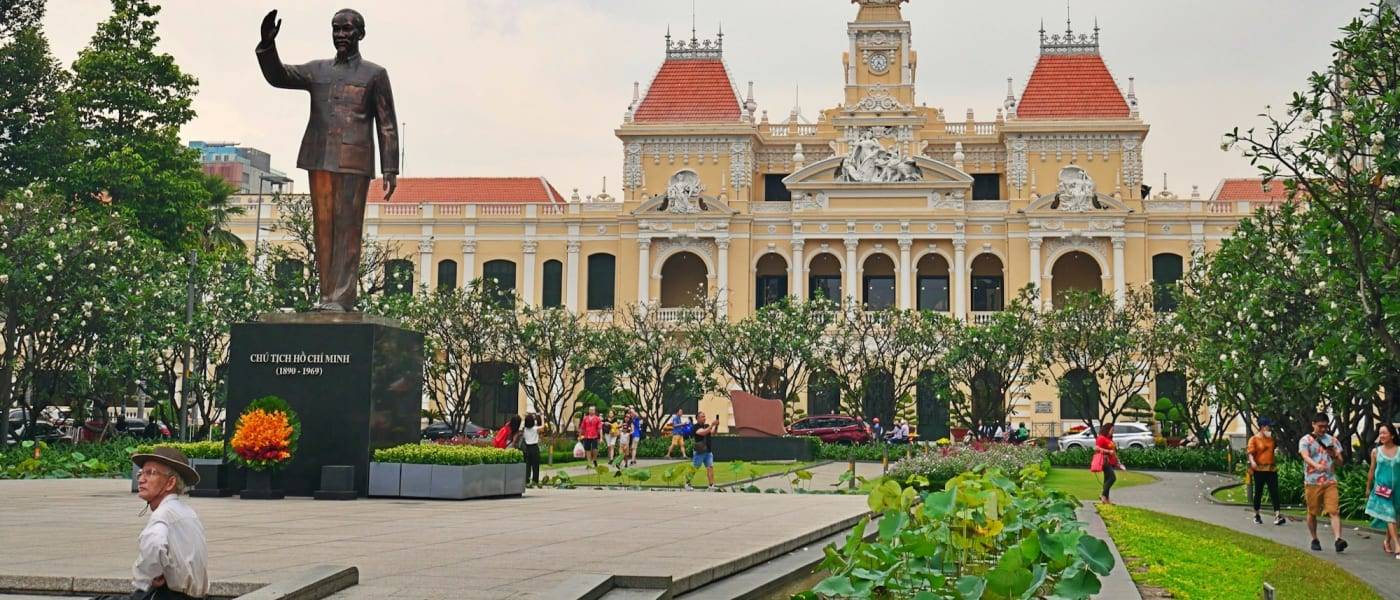

Rather walk it with someone who knows the stories? This covers the highlights of District 1 in a few hours, Nguyen Hue and the old post office included.
The Saigon Skydeck
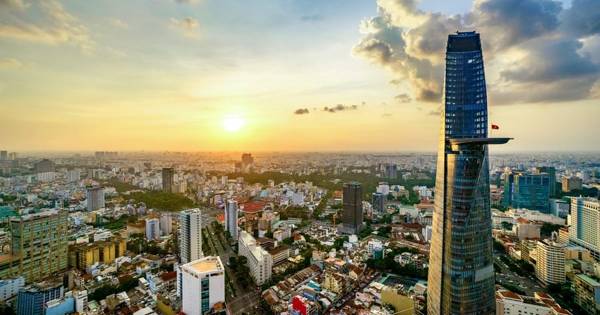
The forty-ninth floor of the Bitexco tower, and the easiest way to understand how big this city actually is: motorbike rivers, the Saigon river, and towers to the horizon in every direction. Go half an hour before sunset and stay for the lights.
Best area for backpackers
Saigon is enormous, but as a backpacker almost everything happens in and around District 1. From there you are either walking distance or a short Grab ride from most of it.
District 1, around Pham Ngu Lao and Bui Vien

The backpacker district, and it has been for thirty years. Hostels, tour desks, cheap food and the whole of Bui Vien Street, which from about nine at night is a wall of noise, neon and people selling laughing gas.
By day it is ordinary and convenient: twenty minutes’ walk to the War Remnants Museum, ten to Ben Thanh, and every bus and tour picks up from here.
Good to know about this area
- Nearly every hostel in the city is here
- Walking distance to Ben Thanh, the museum and Nguyen Hue
- Tours and sleeper buses pick up from the door
- Street food on every corner, most of it under two euros
- Bui Vien is loud until three. Ask for a room off the street
- Grab bikes everywhere, and almost nothing over two euros
District 3
Right next door and noticeably calmer and more Vietnamese. You sleep cheaper, you eat where locals eat, and the War Remnants Museum is a fifteen-minute walk. The pick if you would rather have the noise of Bui Vien at a distance.
Thao Dien, District 2
Green, quiet and full of cafes, coworking and western restaurants: this is the expat and digital nomad end of town. Too far out for a two-day visit, a good base if you are staying to work.
How to plan your days in Ho Chi Minh City
Most backpackers stay two to four days. Pick how long you have and see what fits.
History and the centre. Start at the War Remnants Museum, then walk to the Independence Palace, the Notre-Dame cathedral and the old post office. Finish at Ben Thanh Market.
Tonight: Nguyen Hue walking street, then a beer on Bui Vien.
The Cu Chi tunnels. Go in the morning, when it is cooler and quieter down there. Back in the city you still have an afternoon for coffee or the Apartment Building on Nguyen Hue.
Tonight: the Saigon Skydeck around sunset.
The Mekong Delta. A full day on narrow canals, past coconut villages and local markets. Completely different Vietnam from the city you slept in.
Tonight: eat somewhere quiet in District 3 or District 4.
Cholon and street food. Out to Saigon's Chinatown for temples, tea houses and markets where there are almost no tourists. Finish with a food tour on the back of a motorbike.
Tonight: a rooftop bar, or a plastic stool by the road. Both are correct.
Food and drink in Ho Chi Minh City
For a lot of people this is the reason to stay longer. The best food here is almost never in a restaurant: it comes off a cart, out of a stall, or from a two-square-metre kitchen where they have made the same dish for thirty years.
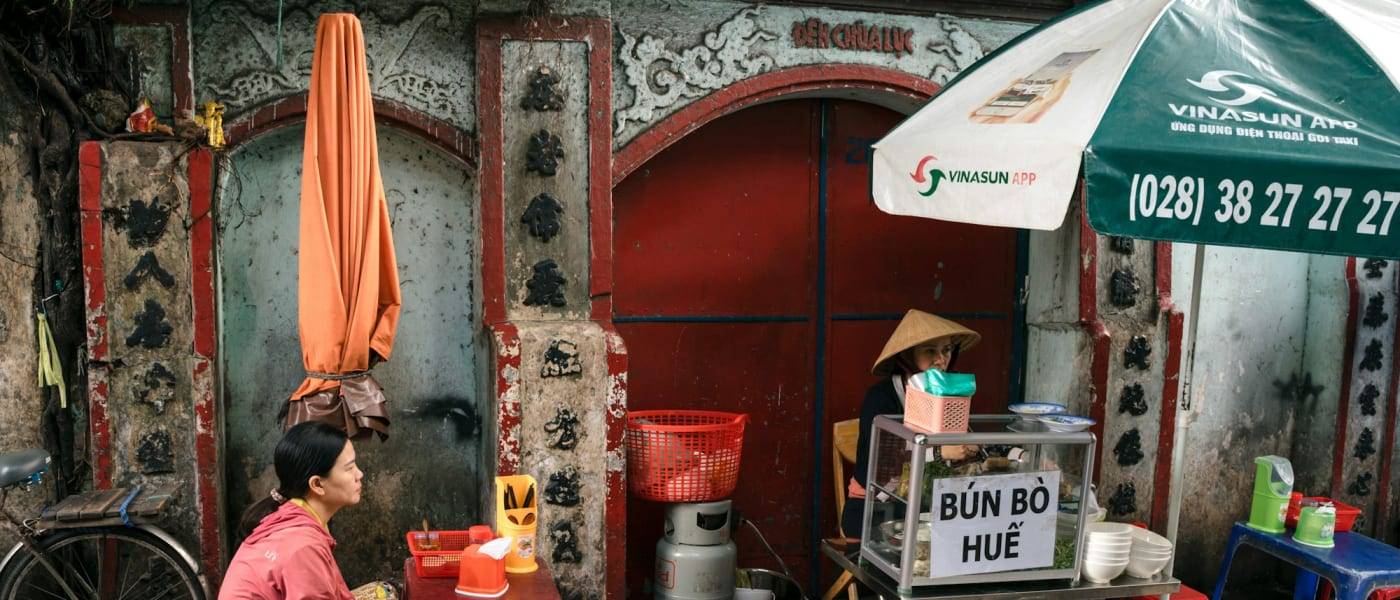
Southern food is sweeter and milder than the north, with piles of fresh herbs, lime and hot sauce on the side. One or two euros fills you up.






Is there a queue of locals? Join the back of it. That is the most reliable review you will get in Saigon.
Getting there and onward
Ho Chi Minh City is the transport hub of the south. Sleeper buses, trains and flights leave from here in every direction.
From the airport. Tan Son Nhat is only about seven kilometres from District 1. Grab takes half an hour and costs five to seven euros. Bus 109 does the same run to Pham Ngu Lao and Ben Thanh for under a euro.
Around town. Grab rules here: the price is fixed before you get on and there is nothing to argue about. For short hops take a Grab bike, which is cheaper again. Since late 2024 there is also a metro, from Ben Thanh out to Suoi Tien.
Onward. North, Mui Ne, Da Lat and Nha Trang are all sleeper bus distance. Going straight to central Vietnam, take the night train or a domestic flight.
- GrabCar or bike, price fixed in the app, citywide
- Metro line 1Ben Thanh to Suoi Tien, from about 25 cents
- Sleeper busMui Ne 5 hrs · Da Lat 7 hrs · Nha Trang 9 hrs
- Night trainTo Da Nang, Hue and further north
- PlanePhu Quoc in an hour, Hanoi in two
Staying safe in Ho Chi Minh City
Saigon is a safe city to walk around. The real risk is not violence, it is distraction: the traffic, and your phone.
- Cross at a steady, even pace. The traffic steers around you
- Use Grab instead of flagging a taxi, so the price is fixed before you get in
- Carry your bag in front of you with the zip against your body
- Withdraw cash inside a bank branch or a hotel lobby
- Hold your phone loosely beside the road. Snatches from a passing bike really happen
- Go with a "guide" who approaches you and steers you into a shop or a bar
- Get into a taxi with no meter, or one whose meter is "broken"
- Run or hesitate in the middle of the road. That is what makes it unpredictable
Renting a scooter? Only ride here if you already have experience, always wear a helmet, and check that your travel insurance covers it. Saigon is not the place to learn.
Rebels on the Road tip
Frequently asked questions
How many days do you need in Ho Chi Minh City?
Two for the city itself, four if you want both the Cu Chi tunnels and a day in the Mekong Delta. Most people arrive planning two and stay three.
Hanoi or Ho Chi Minh City?
Hanoi is older, denser and more atmospheric, with better street food and a thousand years of history in one square kilometre. Saigon is faster, more modern and more international, with better nightlife and better day trips. Most trips include both, at opposite ends.
Where should I stay in Ho Chi Minh City?
District 1, around Pham Ngu Lao, if you want everything on the doorstep. District 3 if you want the same location with less noise, and Thao Dien if you are staying to work.
Is Ho Chi Minh City expensive?
No. About €22 a day, which puts it among the pricier stops in Vietnam and still less than a night out at home. A hostel bed is €6 and a meal is €1.50.
Are the Cu Chi tunnels worth it?
Yes, and go in the morning. The tunnels themselves are a short crawl through a widened section, but standing at a hidden entrance the size of a shoebox explains more about that war than any museum room does.
Is the Mekong Delta worth a full day?
If you have four days here, yes. It is a completely different country from the city: water instead of roads, floating markets and villages under palm cover. If you only have two days, do the tunnels and keep the delta for next time.
How do I cross the road in Saigon?
Walk out at a steady, even pace and do not stop, do not run, and do not change direction. The motorbikes calculate where you will be and go around you. Waiting for a gap does not work, because there is no gap.
When is the best time to visit Ho Chi Minh City?
December to March, when it is dry and slightly less humid. June to November is the rainy season, but the downpours are short and the city dries out within the hour, so it is not a reason to stay away.
