
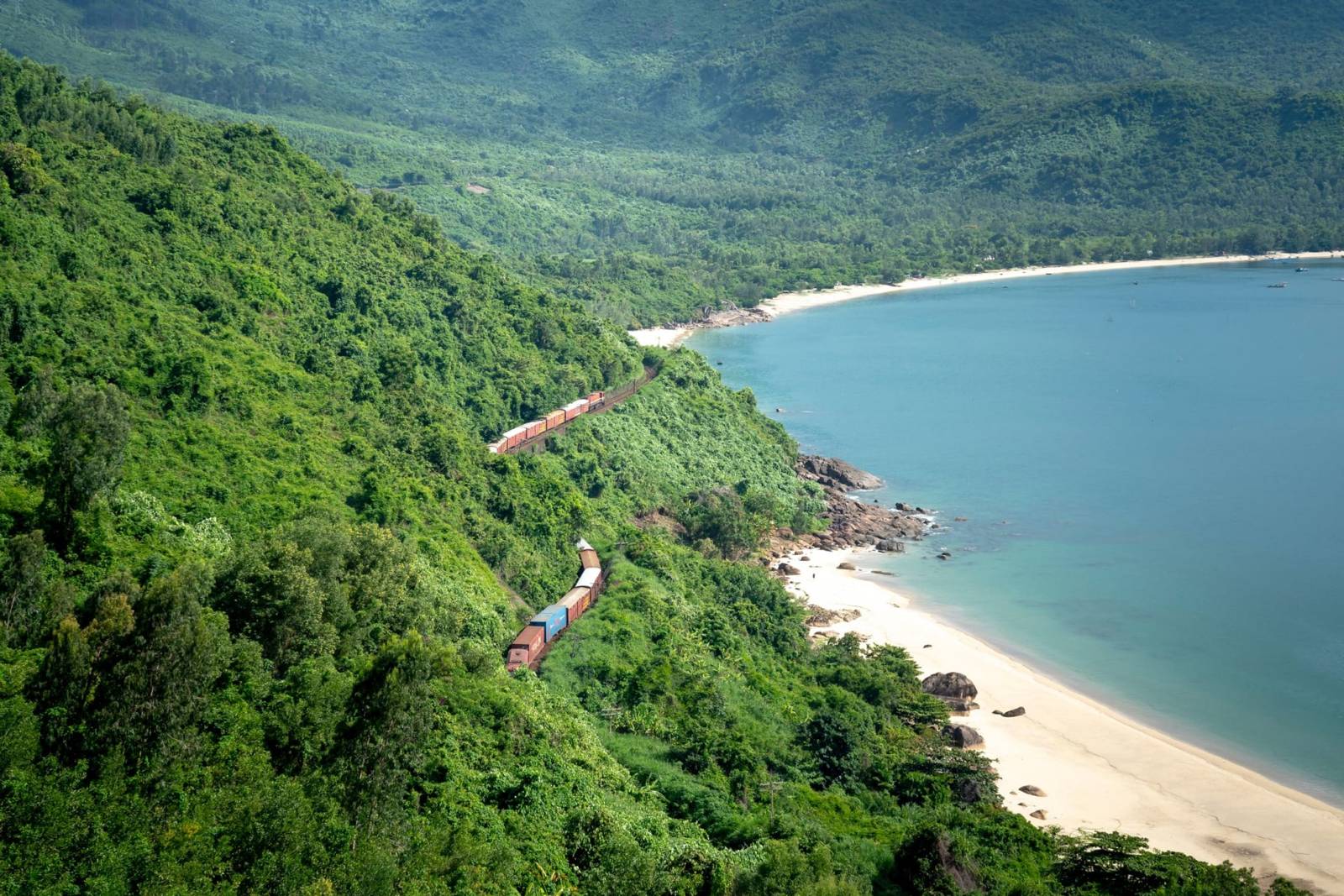
Vietnam is 1,650 kilometres long, and that more or less decides the route for you: you start at the top and work your way down, or the other way round. What does not decide itself is everything else. How many days does Hanoi need? Sapa or the Ha Giang Loop? And which stops do you drop when you only have three weeks?
Fourteen stops, from Hanoi all the way down to Phu Quoc. For each one you get how many days it needs, how to reach the next stop and where we would sleep. Then we cut the whole thing into three sizes: three, four and six weeks. Whether your passport gets you 45 days visa free or a 90-day e-visa, even the full route fits.
Every stop links to our page for that place, which is where you will find the neighbourhoods, the hostels and how to fill your days there.
The route at a glance
- Hanoi (3 to 4 days)
- Sapa (2 to 3 days)
- Ha Giang Loop (3 to 4 days)
- Cat Ba (2 to 3 days)
- Ninh Binh (2 days)
- Phong Nha (2 to 3 days)
- Hue (2 days)
- Da Nang (2 days)
- Hoi An (3 days)
- Nha Trang (2 days)
- Da Lat (2 to 3 days)
- Mui Ne (2 days)
- Ho Chi Minh City (2 to 4 days)
- Phu Quoc (3 days)
Add up the low end and you are already past thirty days. So seeing all of it in three weeks is not going to happen, and it does not need to. Most of the legs between stops are overnight on a sleeper bus or a night train, and dropping a few stops is exactly what gives the rest room to breathe.
Three, four or six weeks?
3 weeks: the backbone
Hanoi (3), Ha Giang Loop (4, including the two night buses), Ninh Binh (2), Phong Nha (2), Hue (2), Hoi An (3), Da Lat (2) and Ho Chi Minh City (3). That makes 21 days, and in that time you get the mountains of the north, the caves and the imperial city in the middle, the lanterns of Hoi An, the cool air of Da Lat and the energy of Saigon.
Sapa, Cat Ba, Da Nang, Nha Trang, Mui Ne and Phu Quoc wait for another trip. You reach Ha Giang straight from Hanoi on the night bus, six to seven hours, and after the loop you change in Hanoi for the train to Ninh Binh. You still see Da Nang, because you change there on the way to Hoi An. And from Hoi An a night bus of about fourteen hours runs straight to Da Lat, which skips the whole coast in a single night.
4 weeks: three more stops
Take the three-week route and add Sapa (3), Cat Ba (2) and Mui Ne (2). Pair Sapa with Ha Giang, because from Sapa a local bus takes you across to Ha Giang via Lao Cai in about six hours. Do Cat Ba from Hanoi, and carry on from there to Ninh Binh on a through ticket. Slot Mui Ne in between Da Lat and Ho Chi Minh City, both less than half a day away.
That gives you rice terraces, the bay, the dunes and everything in between in 28 days, without rushing anywhere.
6 weeks: all fourteen stops
Every stop, with the generous end of each number of days: count on 40 to 42 days. That is exactly the route below, in the order we describe it. If your passport gets 45 days visa free it still fits, but keep a few days of slack, because in storm season a boat to Cat Ba or a tour in Phong Nha can slip by a day. On a 90-day e-visa you have room to spare.
The north: mountains, bays and the best soup in the country
1. Hanoi (3 to 4 days)
Almost everyone starts here. Noi Bai airport is 35 kilometres out of the city, and Grab gets you in within forty-five minutes for about €10. Sleep in the Old Quarter: every hostel, food tour and travel agent is there, and tours pick you up from the door.
Two days in the city covers the Old Quarter, Hoan Kiem Lake, Train Street, Ho Chi Minh’s mausoleum and a food tour. On this route you do not spend the third day on a day trip, because Ninh Binh and the bay come later as stops of their own. Use your last morning to cross the Long Bien Bridge to Banana Island instead. More on our Hanoi page and in things to do in Hanoi.
Getting to the next stop: the sleeper bus to Sapa takes about six hours, leaves around ten at night and drops you off around six in the morning.

Our verdict: three days, and save the day trips for later on the route
2. Sapa (2 to 3 days)
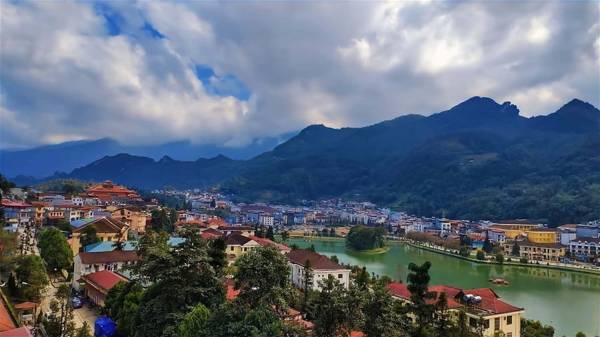
Sapa sits at 1,500 metres and is the town of the rice terraces. Arrive on the night bus, walk down to Cat Cat, and on day two do the trek through Lao Chai and Ta Van with a night at a homestay among the fields. If you have a third day, spend it on Fansipan by cable car or, on a Sunday, the market at Bac Ha.
Do not plan this one too tight: going up the mountain in fog is pointless, and visibility here can drop within minutes. Shoes with grip, a rain jacket and a warm layer belong in your bag, even in summer. See our Sapa page.
Getting to the next stop: straight on to Ha Giang, about six hours by local bus via Lao Cai. That way you do not have to go back to Hanoi.
Our verdict: three days, with the last one kept free as a backup for the view
3. Ha Giang Loop (3 to 4 days)
For a lot of backpackers this is the highlight of their whole trip through Vietnam: roughly 350 kilometres of mountain road in a loop through the far north, over the Bac Sum pass, through Heaven’s Gate, up to Lung Cu and along the Ma Pi Leng Pass. The classic route is three days. With a fourth you ride back via Du Gia, greener and much quieter.
Sit on the back with an easy rider unless you have serious experience riding mountain roads. You are then behind a local driver who rides these roads every day and all you have to do is look, for about €45 a day all-in, with your homestays and food included. Vietnam only recognises the 1968-convention international driving permit, and without the right category on it you are not insured, which the police here actively check. Never ride after dark, and leave your big bag behind in Ha Giang. Everything about the route is on our Ha Giang Loop page and in things to do on the Ha Giang Loop.
Getting to the next stop: after the loop you take the night bus back to Hanoi, about seven hours, and in the morning you switch to the combined ticket to Cat Ba.
Our own pick

The loop with Mama's Homestay
One of the best-known operators in Ha Giang, and the safe first choice: experienced easy riders, bikes that are actually maintained, and a hostel full of people about to do the same thing as you. Meals, homestays and entry fees are included, and you get a bed in Ha Giang before and after the ride.
Reader discount with the voucher REBELSONTHEROAD. Mention it when you book, because nobody applies it for you.
See Mama's HomestayOur partner in Ha Giang
Our own pick

The loop with Tiem Tours
Groups of eight to ten, with riders and guides who grew up on these roads. You choose how you do it: ride yourself, sit on the back, or take the car, over three days or four, in a dorm or a private room every night. All meals, the entry fees and the boat on the Nho Que are included, plus your first night in Ha Giang.
Reader discount with the code REBELSONTHEROAD. Put it in your first message to them, because without it you pay the standard rate.
See Tiem ToursOur partner in Ha Giang
Our verdict: the stretch of your route you will never forget, and three days is exactly right
4. Cat Ba (2 to 3 days)
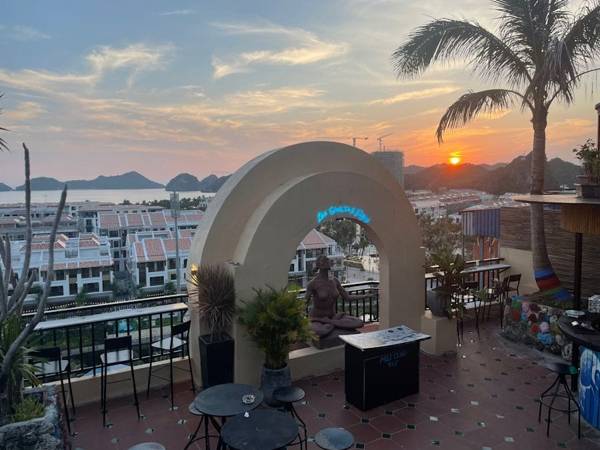
Cat Ba is an island of 285 square kilometres off the coast of northern Vietnam, and the place to see the limestone towers of Ha Long Bay without the crowds. From Cat Ba Town you spend a day out in Lan Ha Bay with kayaks and lunch, and on day two you ride a scooter out to Viet Hai Village and up to Cannon Fort. With three days you can sleep a night on a boat in the bay.
From Hanoi you come on a combined ticket: a bus to Hai Phong, a boat to the island and a minibus into Cat Ba Town, about four hours in total. Bring cash, because outside town there are hardly any ATMs. See our Cat Ba page.
Getting to the next stop: a through ticket for bus and boat to Ninh Binh, about six hours.
Our verdict: pick Cat Ba over a day tour to Ha Long Bay from Hanoi, because you get the same scenery and an island on top
5. Ninh Binh (2 days)
People call Ninh Binh Ha Long Bay on land: the same limestone peaks, but with rice fields and cycle tracks in between. Sleep in Tam Coc, because that is where the hostels are and the sights are all around it. On day one you are rowed through Trang An and in the late afternoon you climb the 500 steps to Mua Cave. On day two you cycle the loop past Bich Dong and the rice fields.
Two nights here really is the difference between ticking the place off and actually experiencing it, and at about €17 a day it is one of the cheapest stops on your route. See our Ninh Binh page.
Getting to the next stop: the night bus to Phong Nha, about eight hours.
Our verdict: two nights, and set your alarm for Hang Mua at sunrise
The centre: caves, emperors and lanterns
6. Phong Nha (2 to 3 days)
Phong Nha sits on the edge of Phong Nha-Ke Bang National Park and is the cave stop on your route. On day one you do Paradise Cave and Dark Cave, and on day two you ride a scooter through the Bong Lai Valley. A third day gets you Phong Nha Cave by boat or Mooc Spring, and with four days you can do a cave trip with a night underground, such as the one to Hang En.
Do not expect a town, a beach or nightlife. Do expect one of the most beautiful landscapes in Vietnam, for about €20 a day. Bring enough cash in with you, because ATMs here are scarce and sometimes empty. See our Phong Nha page.
Getting to the next stop: the bus to Hue, about four hours, and for most backpackers the easiest hop in the centre.

Our verdict: book one night more than you think you need, because the valley is the part everyone loved most afterwards
7. Hue (2 days)
Hue was the imperial capital for 143 years and sits on the Perfume River. Day one is the Citadel, the Dong Ba market and the walking street in the evening. Day two is a scooter ride past the royal tombs and the Thien Mu Pagoda. It is one of the cheapest cities in the country: a bed for around €5 and a street meal for €1.50.
Start both mornings before eight, because in summer it is 35 degrees inside the Citadel with no shade. See our Hue page.
Getting to the next stop: the train to Da Nang over the Hai Van Pass, three hours, and one of the most beautiful train rides in Asia. Want something more special? Ride over the pass on the back of an easy rider, which takes you a whole day.
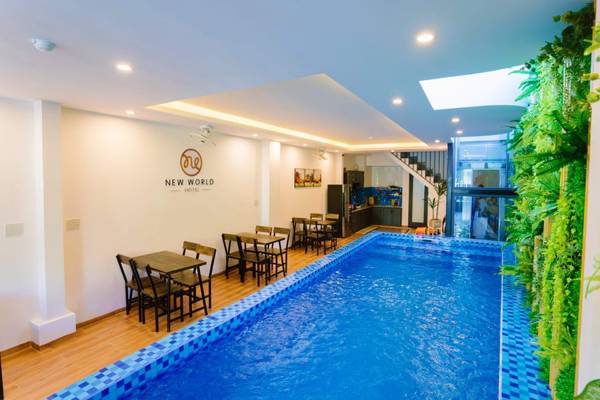
Our verdict: two days, and take the train rather than the bus to Da Nang
8. Da Nang (2 days)
Da Nang is the hub of central Vietnam, with one of the best city beaches in the country. Sleep near My Khe Beach, spend day one on the beach and at the Marble Mountains, and day two on the coast road over Son Tra or up at Ba Na Hills for the Golden Bridge. Plan in a Saturday or Sunday, because that is the only time the Dragon Bridge does its fire and water show.
On the three-week route you only use Da Nang to change: from the station, Grab gets you to Hoi An in forty-five minutes. See our Da Nang page.
Getting to the next stop: Hoi An is thirty kilometres away, about forty-five minutes by Grab for around €10, or a local bus for about a euro.

Our verdict: two days if you have the time, and ride the coast road over Son Tra just after sunrise
9. Hoi An (3 days)
For a lot of backpackers the best stop between the rush of Hanoi and the rush of Saigon. Day one is the old town, with the Japanese Covered Bridge and the lanterns in the late afternoon. Day two you cycle to An Bang Beach. Day three is a cooking class, the coconut forest or the Cham temples at My Son. Stay a day longer and you have time for a fitting at a tailor.
You do not need a scooter here: the old town is car free and a €2-a-day bike gets you everywhere. With a tailor, agree the fabric, the price and the number of fittings up front. See our Hoi An page and things to do in Hoi An.
Getting to the next stop: the night bus to Nha Trang, about eleven hours. Skipping the coast? Then a night bus of about fourteen hours also runs from Hoi An straight to Da Lat.

Our verdict: three days, and rent a bike on the first morning for the rice fields around Tra Que before the buses from Da Nang arrive
The south: beaches, mountains and the big city
10. Nha Trang (2 days)
Vietnam’s best-known beach town: six kilometres of city beach along a wide promenade. On day one you go island hopping or snorkelling, and on day two you do the Cham towers, Long Son Pagoda and a mud bath. Sleep a couple of streets back from Tran Phu, the beach road, and walk to the harbour just south of the centre for the boats.
Put your boat trip on your first full day, so you still have a day of slack if the wind gets in the way. Leave your valuables at the hostel when you go to the beach, and watch the flags. See our Nha Trang page.
Getting to the next stop: the bus to Da Lat, about four hours up through the mountains, and one of the best bus rides in the country.
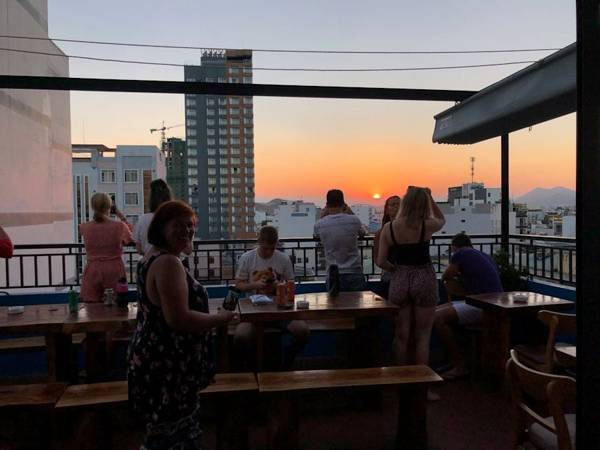
Our verdict: two days of sea between two long stretches over land, which is exactly right
11. Da Lat (2 to 3 days)
Da Lat sits at 1,500 metres in the Central Highlands and shows you a side of Vietnam you get nowhere else: cool mornings, mist over the coffee fields and winding mountain roads. Day one is the town, the lake, the Crazy House and the night market. Day two is the waterfalls by scooter. Take a third day for canyoning, because that is a full day from start to finish.
For canyoning, pick an operator with its own checked equipment and certified guides, and find out beforehand whether your travel insurance covers abseiling. See our Da Lat page.
Getting to the next stop: the bus to Mui Ne, about four hours down the mountain.

Our verdict: three days, and ride out towards Cau Dat early in the morning for the mist over the coffee fields
12. Mui Ne (2 days)
Mui Ne is ten kilometres of beach with a desert behind it, and dunes like these exist nowhere else in Vietnam. Day one is the sunrise jeep tour past the dunes, the Fairy Stream and the fishing village. Day two is the beach, a scooter ride or your first kitesurf lesson. A bed costs about €5 and a meal €2.
The list here is short, and that is exactly what makes it a good stopover: brief, cheap and a completely different landscape from the rest of your route. See our Mui Ne page.
Getting to the next stop: the sleeper bus to Ho Chi Minh City, about five hours.
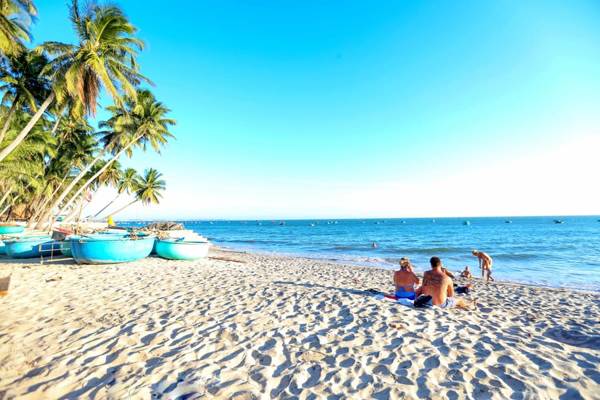
Our verdict: two days, and book the jeep tour at sunrise rather than at sunset
13. Ho Chi Minh City (2 to 4 days)
With fourteen million people, Saigon is the biggest city in the country, and you come here for the energy, the food and the history. Sleep in District 1 around Pham Ngu Lao and Bui Vien. Day one is the War Remnants Museum, the Independence Palace and Ben Thanh Market, day two the Cu Chi tunnels, day three the Mekong Delta. Keep those last two on separate days.
Expect heat: at an average of 32 degrees in the daytime you get less done here than you would plan at home. Use Grab, cross the road at a calm and steady pace, and do not hold your phone loosely by the road. See our Ho Chi Minh City page and things to do in Ho Chi Minh City.
Getting to the next stop: the flight to Phu Quoc takes forty-five minutes and often costs less than €30. If your trip ends here, Tan Son Nhat airport is seven kilometres from District 1.

Our verdict: three days, and get up at seven one morning for the market in Cholon
14. Phu Quoc (3 days)
The biggest island in Vietnam, and after weeks of cities, night buses and mountain passes exactly the place where you get to do nothing for a few days. Sleep in Duong Dong. Day one is Long Beach and the night market, day two Sao Beach and a snorkel trip or the cable car, and keep day three for the north: pepper farms, empty beaches and the fishing village of Rach Vem.
A scooter is essential here, and it is also where things go wrong most often. Ride slowly on the sand roads in the north, always wear a helmet, and take photos of the scratches before you ride off. See our Phu Quoc page.
Carrying on to Cambodia? Then this is a handy last stop. You take the boat back to Ha Tien and cross the border at Prek Chak towards Kampot.

Our verdict: the finish your route deserves, and even with three days you will want one more night
Practical: transport, timing, visa and budget
Getting around Vietnam between the stops
The long legs you do overnight. Sleeper buses run between almost every stop on this route and cost around €10, and the night train is more comfortable on the long runs from Hanoi to Hue and Da Nang. Flying saves you half a day on the big jumps: Hanoi to Da Nang in an hour, Ho Chi Minh City to Phu Quoc in forty-five minutes. In the cities Grab is king, and for the countryside around them you rent a scooter from about €4 a day.
The best time to visit Vietnam for this route
For Vietnam as a whole, November to April is the best time to go, but the country is so long that the north and the south each have their own season. In December and January you are often inside the cloud in Sapa and Hanoi is grey and cool, and in October and November Hue is the wettest city in the country.
Want one window for the whole route? Pick March and April. Sapa and Ha Giang are fresh, mostly dry and clear, the sea at Da Nang and Nha Trang is calm, and Saigon is just ahead of its hottest months. Start at the top in March and reach the bottom at the end of April.
Visa and onward ticket
Depending on your passport, you either walk into Vietnam visa free for 45 days or apply for an e-visa first, which then gives you 90 days. Arriving through Hanoi, Ho Chi Minh City, Da Nang or Phu Quoc, you fill in the digital arrival form before you land, and you need to be able to show a return or onward ticket. What applies to your passport is on our visa page, and how to get that ticket without locking in your route is on our onward ticket page.
What to pack
This route runs through 1,650 kilometres of climate, and you notice that in your backpack. Up in Sapa it is cold from November to February and often inside the cloud, and the paths through the terraces are mud, so a rain jacket and shoes with grip are no luxury there. Riding the Ha Giang Loop, you want gloves and long sleeves. And for every night bus or night train on this route: get that jumper back out, because the air con has one setting.
Everything else that goes in is in the Vietnam packing list.
What this route costs
Count on about €25 a day if you backpack normally: a bed around €6, a meal for €1.50 and a beer for under a euro. In Ninh Binh, Hue, Nha Trang and Da Lat you get by on less, while Ho Chi Minh City and Phu Quoc are among the pricier stops. The Ha Giang Loop with an easy rider is the biggest extra, at about €45 a day all-in, your food and bed included. That puts three weeks at around €600, not counting your flights.
Got time to spare?
If you have days left over, these are the extras that slot straight in. From Sapa there is the Sunday market at Bac Ha. From Ninh Binh, Cuc Phuong National Park, the oldest national park in Vietnam, is a day trip. In Phong Nha, four days gets you a cave trip with a night underground. And from Ho Chi Minh City the Mekong Delta is a full day, or you carry on from Phu Quoc into Cambodia and start in Kampot. Heading on to Laos, Cambodia or Thailand? The whole order is in our route through four countries.
Short on time instead? Look at the three-week route at the top and keep the rest for next time. Vietnam is a country people come back to.
North to south or the other way round: which direction is best?
For the route itself it makes no difference: the stops and the connections are the same in both directions, and the sleeper buses run both ways. The difference is in the season and in how it feels.
Start in the north in March and you get Sapa and the Ha Giang Loop in their best months, and you reach the south in April, just before the heat and the rain begin there. Travelling in November or December? Then the other way round is smarter: start in Saigon in the dry season and work your way up, so you only reach Sapa in spring.
And how it feels: north to south, you finish on a beach. After weeks of mountain passes, caves and night buses, Phu Quoc is exactly the place to do nothing for a while, and that is a better ending than a city of millions. Our advice: north to south if you go in spring, south to north if you leave in winter, and whichever way you go, keep the Ha Giang Loop in.


