Backpacking Kampot
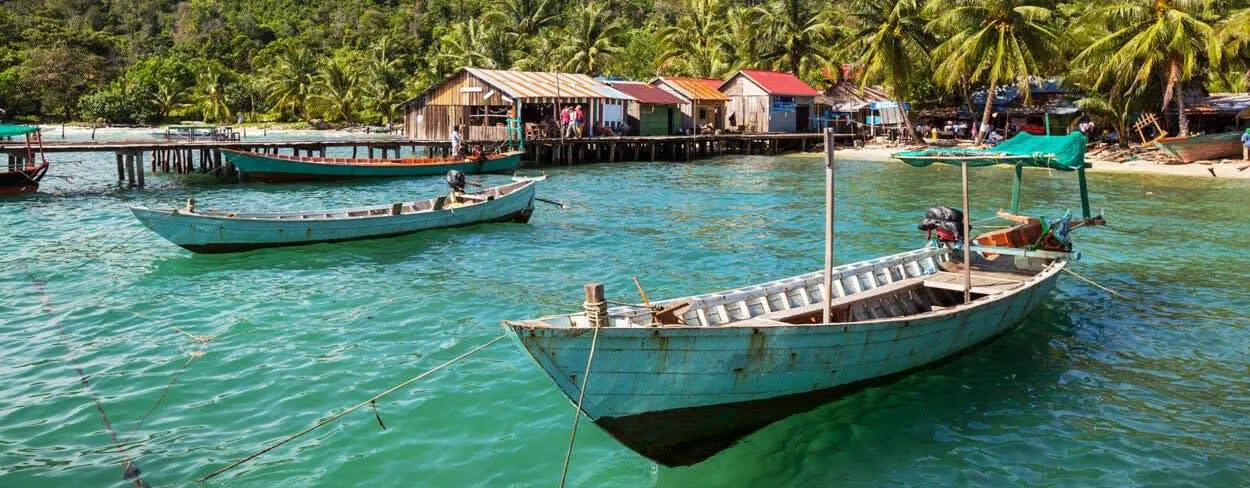
Kampot is a small river town in the south with green hills behind it, the sea half an hour away, and a reputation for eating people’s schedules. Travellers come for two nights. Ask around a hostel bar here and half the people in it will tell you they were supposed to leave on Tuesday.
There is a real reason for it and it is not just the hammocks. Kampot has the best pepper in the world growing twenty kilometres out of town, a river you can kayak into a tunnel of overhanging trees at sunset, and a 1,080 metre mountain with an abandoned French hill station on top of it, casino and all, usually half swallowed by cloud.
None of that is expensive. €17 a day, a bed for €5, a scooter for €7, and the roads around town are flat, empty and made for exactly that.
Why Kampot is popular with backpackers
- The pace, which is the whole point and the reason nobody leaves on time
- Kampot pepper, which has a protected origin like champagne does
- Kayaking the Green Cathedral, a tunnel of trees over the water, at sunset
- Bokor Mountain: a 1925 casino and a French hill station left to the jungle
- The crab market at Kep, twenty five kilometres away and worth a whole day
- Quiet, flat back roads that make this one of the best scooter days in Cambodia
- €17 a day, and bars along the river where the sunset is the entertainment
Best time to visit Kampot
Kampot sits between the mountains and the sea, and this coast gets considerably more rain than inland Cambodia does.
Bokor makes its own weather. It can be bright sunshine in town and thick fog at the top, which makes the abandoned casino up there considerably more atmospheric and means you see nothing at all of the view over the Gulf of Thailand. Both versions are worth the ride, but if you came for the view, go on a clear morning.
Backpacker budget: around €17 a day
- €5hostel bed
- €2.50local meal
- €0.60beer
- €7scooter for the day
Guide prices from our own days in Kampot. Add a tour or a night out and it climbs fast.
Best hostels in Kampot
All within walking distance of the river and the centre, which in a town this size is everywhere.
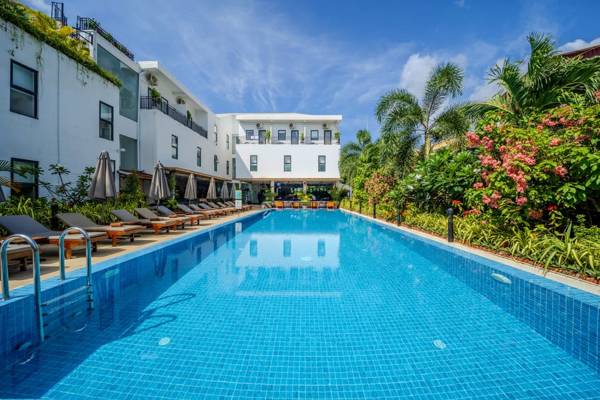
Onederz Kampot
The most modern of the three: clean, comfortable dorms, good beds and a central spot near the river. The same outfit as in Siem Reap and Phnom Penh, and it runs the same way.
Good if you are also working from your laptop for a few days, which in Kampot happens to a lot of people.
Karma Traders Kampot
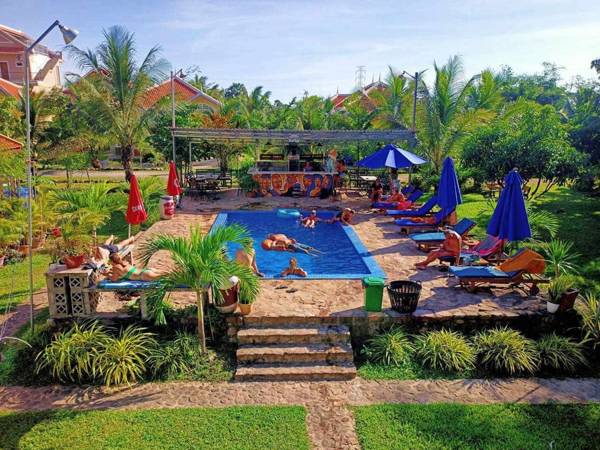
The Kampot classic, and the most social of the three. Green, sprawling, with big communal areas and enough going on that you will know everyone by the second evening.
Nearly seventeen hundred reviews. This is the one that is partly responsible for people extending.
Yellow Sun Hostel
The budget pick, with a proper backpacker atmosphere and a mix of nationalities that changes weekly. Cheap without being grim.
A sensible base if you are mainly using Kampot to get to Bokor, Kep and the plantations.
Best things to do in Kampot
The good stuff here is all outdoors and most of it is within a scooter ride. A river, a mountain, a pepper farm and a crab market.
The countryside: pepper, salt and a hidden lake
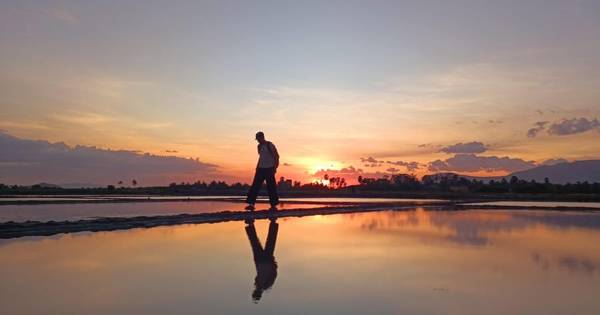
The tour that sums up the region in an afternoon. A working pepper farm where you taste the difference between black, red and white off the same vine, the salt flats where seawater is evaporated in shallow pans, and a lake nobody signposts.
Kampot pepper has a protected designation of origin, the same legal protection champagne has, and chefs across Europe pay accordingly for it. Here it costs about €5 a jar.
Bokor Mountain
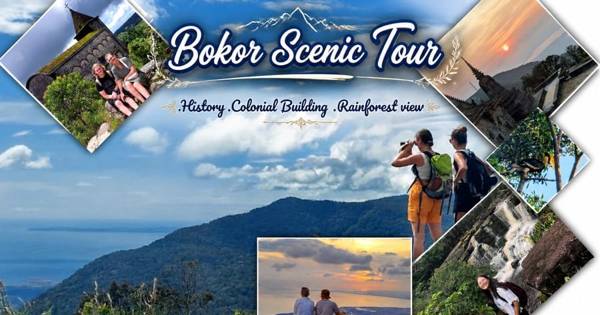
Thirty two kilometres of climbing on beautifully surfaced road to a plateau at 1,080 metres, where the French built a hill station in the 1920s to escape the heat and then abandoned it. The Bokor Palace casino from 1925 is still standing, along with a church and a water tower, and on a misty day the whole place looks like a film set nobody cleared away.
There is a temple up there too, and on a clear afternoon the view goes all the way out over the Gulf of Thailand.
Kayaking the Green Cathedral at sunset
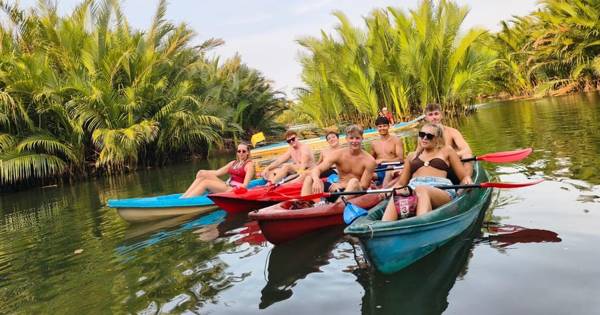
The most loved thing in Kampot. A network of narrow channels off the main river where the mangroves and trees close over the top of you, so you are paddling down a green tunnel with the light coming through in patches.
No skill needed, no current to speak of on the calm stretches, and birds everywhere. Go at sunset, and some trips carry on to the fireflies afterwards.
A pepper plantation
You can also just ride out to one yourself. The plantations east of town, on the road towards Kep, mostly give free tours: how the vines are grown up poles, when each colour is picked, and why the soil here does what it does.
Then you taste them side by side, which is the part that converts people. Fresh green peppercorns still on the stem are the ones to buy.
A day trip to Kep
Half an hour down the coast is Kep, a seaside town that was where wealthy Cambodians had their villas until the 1970s, and which has been slowly coming back ever since. The reason to go is the crab market: wicker baskets of live crab sitting in the sea, and stalls behind them that cook it with fresh green Kampot pepper.
There is also a small national park with a walking loop, and beaches that are quieter than anything on the Sihanoukville side.
Sunset on the river
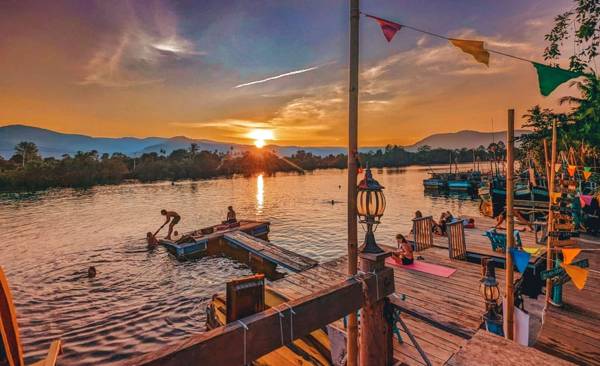
The free one, and the thing most people end up doing every single evening. The bars along the west bank all face the water and the hills, the sun goes down behind them, and that is the plan.
Boats go out too, for about €5, and most of them carry on afterwards to the stretch of bank where the fireflies are.
The night market and a day on two wheels
The evening market runs from about five, mostly grilled skewers, noodles and fruit shakes, and it is where the town eats. Cheap, busy and entirely local.
By day, the flat roads out of town are the reason to hire something. Rice fields, pepper farms, salt pans and villages, in whatever order the road takes you.
Best area for backpackers
The centre and the riverside
One small grid of streets with colonial shopfronts, and a promenade along the water. Everything in Kampot is in it or a five minute walk from it: the hostels, the restaurants, the tour desks and the bars.
The west bank, across the bridge, has the more spread out riverside places with gardens and hammocks. Quieter, a few minutes further from dinner, and the better view back at the hills.
Good to know about this area
- Everything on foot, because the town takes ten minutes to cross
- The promenade and the bars face west, which is what makes the sunsets
- Tour desks for Bokor, the kayaks and Kep on most corners
- Scooter hire from about €7 a day, bicycles from €2
- Quiet after about eleven, which is why people sleep well here
- The night market from five, and it is the cheapest dinner in town
How to plan your days in Kampot
Two to three days, and Kampot will try for four. Pick how long you have.
The river and the town. Colonial shopfronts, a quiet market, and a river you can get on. Paddle into the Green Cathedral at sunset, a tunnel of overhanging trees on the water.
Tonight: dinner by the river, or a beer in the centre.
Bokor Mountain. Thirty two kilometres of climbing on excellent tarmac. At the top, an abandoned French hill station with a casino from 1925, usually half in the cloud.
Tonight: back in town, for a pizza or a Khmer curry.
Pepper and Kep. The plantations east of town grow what a lot of chefs consider the best pepper in the world. Combine it with Kep, where the crab market sits on the sea.
Tonight: bus to Sihanoukville and Koh Rong, or back to Phnom Penh.
Food and drink in Kampot
Two things: pepper and crab, and the combination of the two is the dish this whole region is known for. Crab from Kep cooked with fresh green Kampot peppercorns, still on the stem, and you eat it with your hands.
Kampot pepper carries a protected designation of origin like champagne. At the plantations you can taste black, red and white from the same vines and buy them for a fraction of what they cost in a European deli.

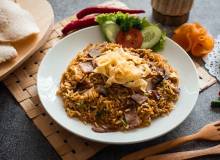
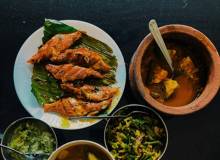

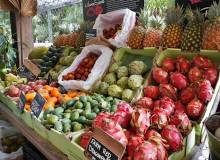
Lok lak with Kampot pepper is not a tourist dish here. It is what people eat. Ask for the fresh green peppercorns still on the stem, which is the real thing.
Getting there and onward
Kampot sits in the south, on the run between Phnom Penh and the coast, and most people combine it with Kep or carry on to the islands.
Getting there. Four hours by bus from Phnom Penh. There is also a train, slower and more comfortable, running a few times a week.
Around town. You walk the centre. For Bokor, the plantations and Kep you hire a scooter for about €7 a day, or a bicycle for €2 if you are staying flat.
Onward. Sihanoukville is two hours, and the ferries to Koh Rong go from there. For Vietnam you cross at Ha Tien, heading for Phu Quoc.
- BusPhnom Penh 4 hrs · Sihanoukville 2 hrs
- TrainTo Phnom Penh, a few times a week
- ScooterFrom about €7 a day, Bokor included
- KayakOn the Kampot river, half a day
- BorderHa Tien into Vietnam, for Phu Quoc
Staying safe in Kampot
Calm and safe. What needs care here is the mountain road and the river, where the current is stronger than it looks.
- Have the scooter checked before you go up Bokor. It is 32 km of climbing
- Take a rain jacket up. The weather at the top is not the weather in town
- Keep the life jacket on when kayaking, including on the calm stretches
- Stay on surfaced roads in the countryside, because of old ordnance
- Come down from Bokor in the dark. Hairpins, no lighting, and a long way
- Swim in the river after heavy rain. The current gets serious fast
- Climb into the abandoned buildings on Bokor. Some of them are unsound
- Ride without a helmet, in town included
Cambodia is the one country on this route where your own licence plus an international permit is not enough to ride a scooter: you need a Cambodian licence, which you get on the spot, and you apply for it with the 1949 international permit. Check our travel insurance page before you rent, because that is what decides whether you are covered on the Bokor road.
Rebels on the Road tip
Take the scooter out at seven in the morning rather than after breakfast. The back roads east of town towards Kep are empty at that hour, it is twenty degrees cooler than it will be at eleven, and the salt pans are being worked while the light is still low and flat across them. You will pass pepper farms, rice fields and villages where nobody is selling you anything, and be back at your hostel for a swim before the day gets heavy. That single morning is the reason people stay an extra week here.
Frequently asked questions
How many days do you need in Kampot?
Two to three. One for the river and the town, one for Bokor, and a third for the pepper plantations and Kep. Budget for a fourth, because a lot of people end up using one.
Why do people stay so long in Kampot?
Because it is cheap, quiet, easy to get around and there is no pressure to do anything. The town has good food, a river to sit by and enough outside it to fill a week if you feel like it. That combination is rare.
Is Bokor Mountain worth it?
Yes, in both weathers. Clear, you get the view out over the Gulf of Thailand. Foggy, you get a 1925 casino appearing out of cloud, which is the better photograph. The road up is excellent and the ride itself is half the point.
What is Kampot pepper?
Pepper grown in this province, with a protected designation of origin like champagne, and widely rated the best in the world. Black, red and white all come off the same vine at different stages. A jar at the farm costs about €5 and is a fraction of the European price.
Kampot or Kep?
Stay in Kampot and visit Kep. Kampot has the hostels, the food and the river; Kep has the crab market, the coastline and a small national park, and it is half an hour away. Doing them the other way round works, but there is much less going on in Kep in the evening.
Can I rent a scooter here?
Yes, from about €7 a day, and the roads around Kampot are some of the most enjoyable in Cambodia. Sort the licence question first: in Cambodia your own licence plus an international permit is not enough to ride a scooter, you need a Cambodian licence that you get on the spot, and that affects your insurance.
How do I get to Koh Rong from Kampot?
Bus to Sihanoukville, two hours, and the ferry from there. It is a straightforward half day if you leave in the morning.
When is the best time to visit Kampot?
November to April: dry, sunny and with clear views from Bokor. May to August brings afternoon rain, and September and October are the wettest months of the year on this coast.
