
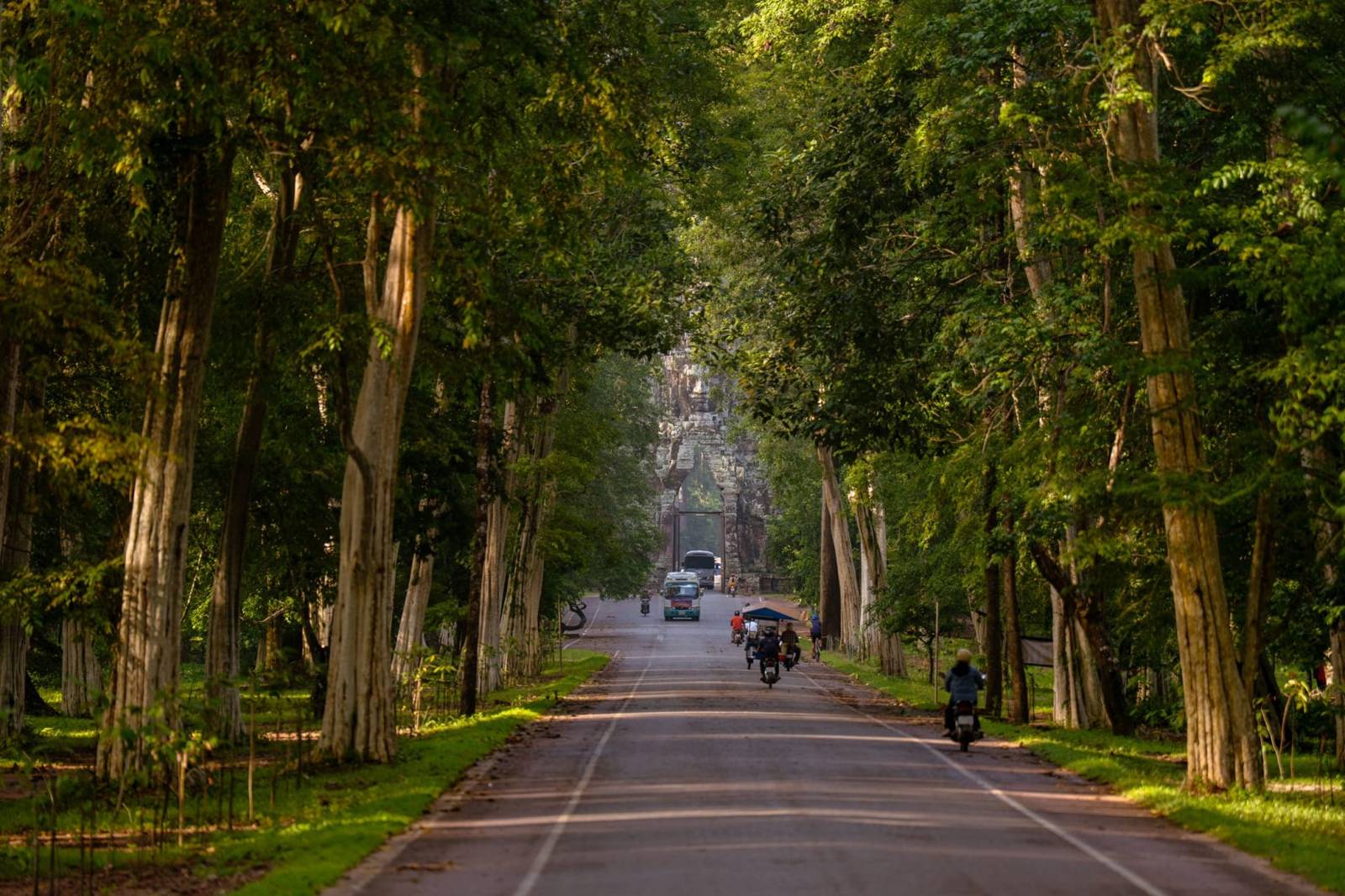
Cambodia is the country backpackers sell short more than any other. They fly in for Angkor, do the Killing Fields in Phnom Penh and are gone again after five days. Which is a shame, because the country really starts after those two big names: the bamboo train in Battambang, the river in Kampot and an island where the water lights up at night.
Only five stops, from Siem Reap to Koh Rong, and that is exactly why you never have to rush here. For each one you get how many days it needs, how to reach the next stop and which hostel we would start with. Then we cut the whole thing into three sizes: ten days, two weeks and three weeks. Your visa is good for thirty days, so time is never the problem here.
Every stop links to our page for that place, which is where you will find the neighbourhoods, the hostels and everything there is to do.
The route at a glance
- Siem Reap (3 days)
- Battambang (2 to 3 days)
- Phnom Penh (2 days)
- Kampot (2 to 3 days)
- Koh Rong (3 days)
Add up the low end and you get twelve days plus a few travel days. Cambodia is compact and the buses between the stops take three to six hours, so you rarely lose a whole day to travelling. The route runs from the northwest down to the south: from the temples through the capital to the coast, and it ends on an island.
Ten days, two or three weeks?
10 days: the temples, the capital and the coast
Siem Reap (3), Phnom Penh (2), Kampot (2) and Koh Rong (3). That makes 10 days, and in that time you get Angkor on the three day pass, the history of Phnom Penh, the river and the mountain at Kampot, and three nights on the island.
Battambang waits for a longer trip. From Siem Reap you ride straight to Phnom Penh in six hours, and after Koh Rong you sail back to Sihanoukville and either carry on into Vietnam via Kampot and the border at Ha Tien, or head back to Phnom Penh for your flight.
2 weeks: add Battambang and an extra day everywhere
Take the ten-day route and add Battambang (2), three hours by bus from Siem Reap and then five to six hours on to Phnom Penh. Give Kampot a third day for the pepper plantations and the crab market in Kep.
That brings you to 13 days plus a travel day: two weeks in which you have done all five stops without having to run anywhere.
3 weeks: everything, with the detours that make it
All the stops at the generous end of each range, plus the detours: the boat across Tonle Sap from Siem Reap to Battambang instead of the bus, Silk Island and a Kun Khmer fight night in Phnom Penh, a day in Kep from Kampot and a day on Koh Rong Sanloem from Koh Rong. Count on 18 to 20 days, and the rest of your three weeks will quietly disappear in Kampot, because that is where everyone ends up staying.
The northwest: Angkor and the bamboo train
1. Siem Reap (3 days)
For most backpackers this is the first stop in Cambodia and the high point of the whole trip. Sleep around Pub Street and the Old Market, and everything is walkable. It is no coincidence that three days is also the length of the most popular temple pass: day one is the small circuit with Angkor Wat, Bayon and Ta Prohm, day two the grand circuit or Banteay Srei, day three Tonle Sap lake, a cooking class or a bike ride through the countryside. Hire a tuk-tuk for the whole day, about twelve euros for the small circuit.
Take two litres of water each between the temples, because there is hardly any shade, and cover your shoulders and knees, or you will not get into Angkor Wat. Buy your pass yourself at the official ticket centre. Where to stay and what to book is on our Siem Reap page, the best days out in things to do in Siem Reap.
Getting to the next stop: the bus to Battambang takes about three hours. The boat across Tonle Sap takes eight, a whole day, but it is a completely different way to arrive.
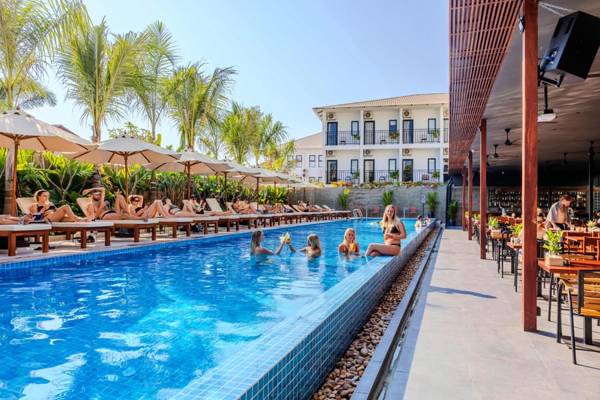
Our verdict: the three day pass, and one extra early morning for Ta Nei or Preah Khan, where you often have the place to yourself
2. Battambang (2 to 3 days)
For a lot of travellers the best surprise of their whole route through Cambodia, precisely because there is so little mass tourism. Sleep in the centre by the river. Day one is the bamboo train and Phnom Sampeau, finishing late in the afternoon with the millions of bats pouring out of the cave, day two a bike tour through the countryside and the street art in town. With a third day you do a cooking class or just ride out into the countryside with no plan at all.
Book a tuk-tuk driver for a whole afternoon rather than just the standard tour, because most drivers know temples and villages that are in no guidebook. Stay on surfaced roads in this province, because there are still landmines, and hold on to your things on the bamboo train. At about seventeen euros a day this is one of the cheapest stops on your route. The bamboo train, the bats and the hostels are on our Battambang page, the best days out in things to do in Battambang.
Getting to the next stop: the bus to Phnom Penh takes five to six hours.
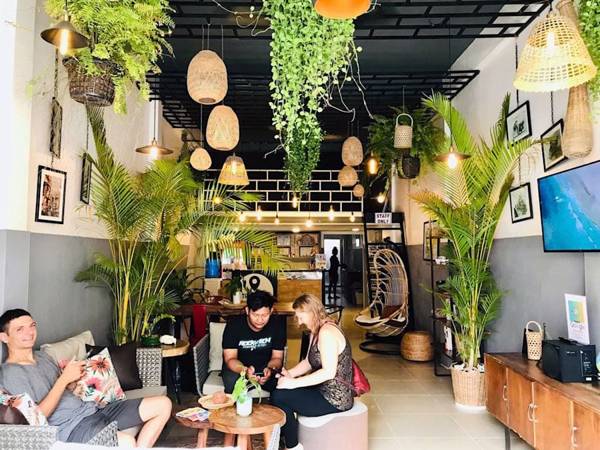
Our verdict: two days, and the bats at Phnom Sampeau are the moment of the day
The capital: one heavy day and one light one
3. Phnom Penh (2 days)
Plenty of backpackers rush through the capital, and that is a pity: nowhere else in Cambodia do the history, real city life and a surprisingly good food scene sit this close together. Sleep between Riverside and Bassac Lane. Day one is the Killing Fields and Tuol Sleng, and keep that evening free on purpose. Day two is the palace, the markets and a sunset cruise. Give the Killing Fields a day of their own rather than squeezing them in before a bus.
This is the place in Cambodia where things go wrong most often, and it is nearly always bag snatching from a passing scooter: carry your bag on the pavement side, keep your phone in your pocket along the road, and use PassApp or Grab for tuk-tuks. You pay mostly in dollars here, so take out larger amounts less often and keep small notes on you. The history, the markets and the hostels are on our Phnom Penh page, the best days out in things to do in Phnom Penh.
Getting to the next stop: the bus to Kampot takes about four hours. There is also a train, more comfortable but only a few times a week.
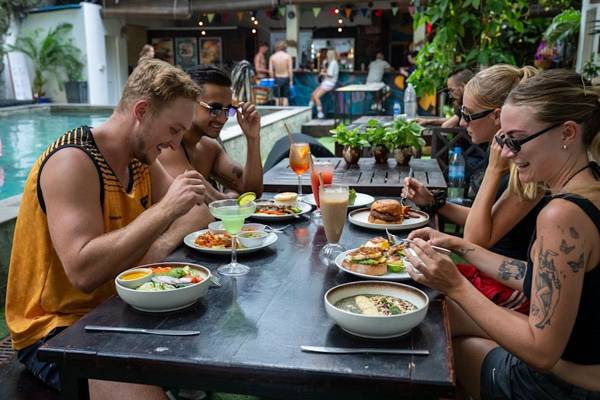
Our verdict: two nights minimum, with the Killing Fields on the first morning
The south: the river, the mountain and the island
4. Kampot (2 to 3 days)
After Phnom Penh and Siem Reap, Kampot instantly feels a few gears lower: a river between the mountains and the sea, cheap and good food, and evenings that stretch out on their own. Sleep in or right next to the centre. Day one is the town and a kayak trip through the Green Cathedral, day two the scooter up Bokor Mountain, day three the pepper plantations and the salt pans, or a day trip to Kep and the crab market.
The road up Bokor is 32 kilometres of climbing with hairpins and no lighting, so make sure you are back down before dark and take a rain jacket to the top. Head out into the countryside early in the morning, while it is still cool and quiet. At about seventeen euros a day this is one of the cheapest stops on the route. The river, Bokor and the hostels are on our Kampot page, the best days out in things to do in Kampot.
Getting to the next stop: the bus to Sihanoukville takes two hours, and from there you get the fast boat to Koh Rong.
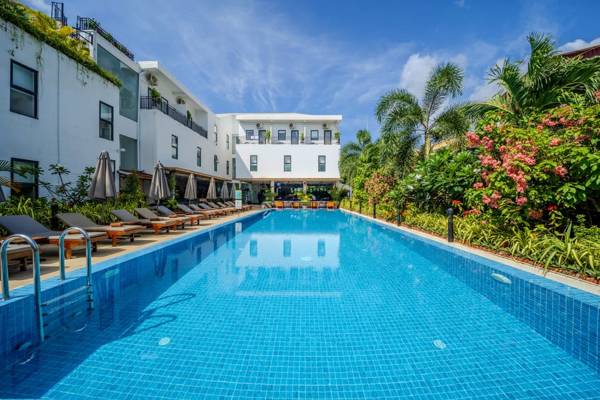
Our verdict: three days, and expect it to turn into more
5. Koh Rong (3 days)
Forty-five minutes by boat off the coast at Sihanoukville, and still quieter and less developed than most Thai islands. Sleep in Koh Touch, where you step off the boat. Day one is Koh Touch and Long Beach, with the glowing plankton in the evening, day two the boat trip with snorkelling and sunset, day three the jungle path across the island or a day over on Koh Rong Sanloem. Book at least three nights, because it is only on day three that you understand why everyone ends up staying.
There is no hospital, the power goes out regularly and the cash machine is unreliable, so bring cash and a torch from the mainland. Never swim with the plankton alone, and never after drinking. Check the moon before you book and keep your plankton night free around the new moon. The beaches, the boat day and the hostels are on our Koh Rong page, the best days out in things to do on Koh Rong.
Heading home or onward: the fast boat back to Sihanoukville takes 45 minutes, so buy a return straight away. From there you travel via Kampot into Vietnam over the border at Ha Tien towards Phu Quoc, or back to Phnom Penh for your flight.
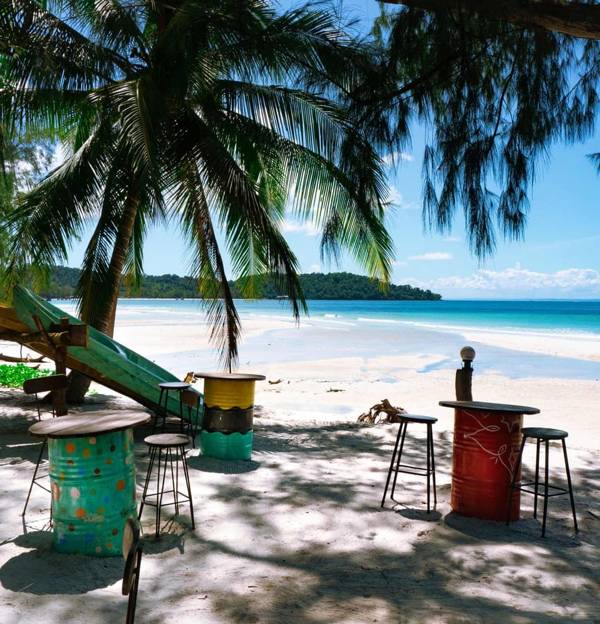
Our verdict: three nights in the dry season, planned around the new moon
Practical: transport, timing, visa and budget
Getting around Cambodia between the stops
Cambodia is compact and easy. Buses and minivans run between all the stops in three to six hours, for about eight euros a ride, and the boat to Koh Rong connects with the bus to Sihanoukville. In the cities you take a tuk-tuk through PassApp or Grab, so you see the price up front, and for the countryside around Battambang and Kampot you rent a scooter for about seven euros a day. Cambodia has its own licence rules for that, so read our travel insurance page before you ride off.
Cambodia is easy to combine with its neighbours. From Bangkok the bus runs through the border at Poipet to Siem Reap, a long day, or you fly. From Don Det in Laos you come in via Kratie. From Ho Chi Minh City you are in Phnom Penh in six to seven hours through the border at Bavet, and from Phu Quoc you come in via Ha Tien to Kampot. Coming from Vietnam? Then simply run this route in reverse.
The best time to visit Cambodia for this route
November to February is the best time to visit Cambodia as a whole: dry, blue skies and the coolest it gets, perfect for cycling in Battambang and walking the temples. On the coast, Kampot and Koh Rong stay good until April. From March to May it climbs above 35 degrees inland, and then you keep Angkor for the early morning and the late afternoon. From June to October the rain comes in short, heavy downpours: the country is green and cheap, but fewer boats run to Koh Rong.
Want one window for the whole route? Pick November to February, and plan your nights on Koh Rong around the new moon for the plankton.
Visa and arrival
Every passport needs a visa for Cambodia: apply online in advance through the official portal, or get one on arrival. Both are valid for thirty days. Flying in? Then you also fill in the e-Arrival Card, no earlier than seven days before you land. An onward ticket is not something they ask for here. What it costs and what applies to your passport is on our visa page. How to behave in Cambodia, from temples to tuk-tuk prices, is in Cambodia etiquette.
What to pack
One morning on this route decides what goes in your bag: sunrise at Angkor Wat. You get up at four and walk onto the site in the dark, so a torch or head torch comes in handy, your shoulders and knees need to be covered, and two litres of water each is not overdoing it, because there is hardly any shade. You pay in dollars and riel mixed together, so always keep some cash on you.
The rest is in the Southeast Asia packing list.
What this route costs
Count on about €25 a day if you backpack normally: a bed around €5, a meal for €2.50 and a beer for €0.60. In Battambang and Kampot you get by on €17, and on Koh Rong everything costs a bit more because it all has to come in by boat. The Angkor pass and your visa come on top of that. That puts ten days at around €250, plus those two and not counting your flights. You pay mostly in US dollars and only get riel back as change. What to eat for that money is in our guide to food in Cambodia.
Got time to spare?
If you have days left over, these side trips are ready and waiting. From Siem Reap, Phnom Kulen is a day out. From Phnom Penh, Silk Island is a day trip, and in the evening there are the Kun Khmer fights. From Kampot, Kep is half an hour away, with its crab market. And from Koh Rong you are on Koh Rong Sanloem in half an hour, where it is even quieter. Our five favourites from the whole country are in the best things to do in Cambodia. Combining Cambodia with its neighbours? The order and the border crossings are in our route through four countries.
Short on time instead? Do Siem Reap and Phnom Penh properly and save the coast for next time. Five days of temples and capital beats ten days of rushing.
Siem Reap or Phnom Penh first: where do you start?
It depends on where you are coming from. Coming from Thailand, or flying straight in? Then you start in Siem Reap and the route runs as above, with the island to finish. Coming from Vietnam? Then turn it around: Ho Chi Minh City to Phnom Penh, then the coast with Kampot and Koh Rong, and back via Phnom Penh and Battambang to Siem Reap, where you finish with Angkor and fly on or take the bus to Bangkok.
Both work. The difference is what you remember last: finishing with Angkor means finishing with the biggest thing, finishing on Koh Rong means finishing with doing nothing at all. After a few weeks in Southeast Asia, most backpackers choose the second.
Our advice: start with Angkor if you want to see the temples while you are still fresh, and whatever you do, do not plan Kampot as your last stop before a flight. That is the place where you let your bus leave without you.


