
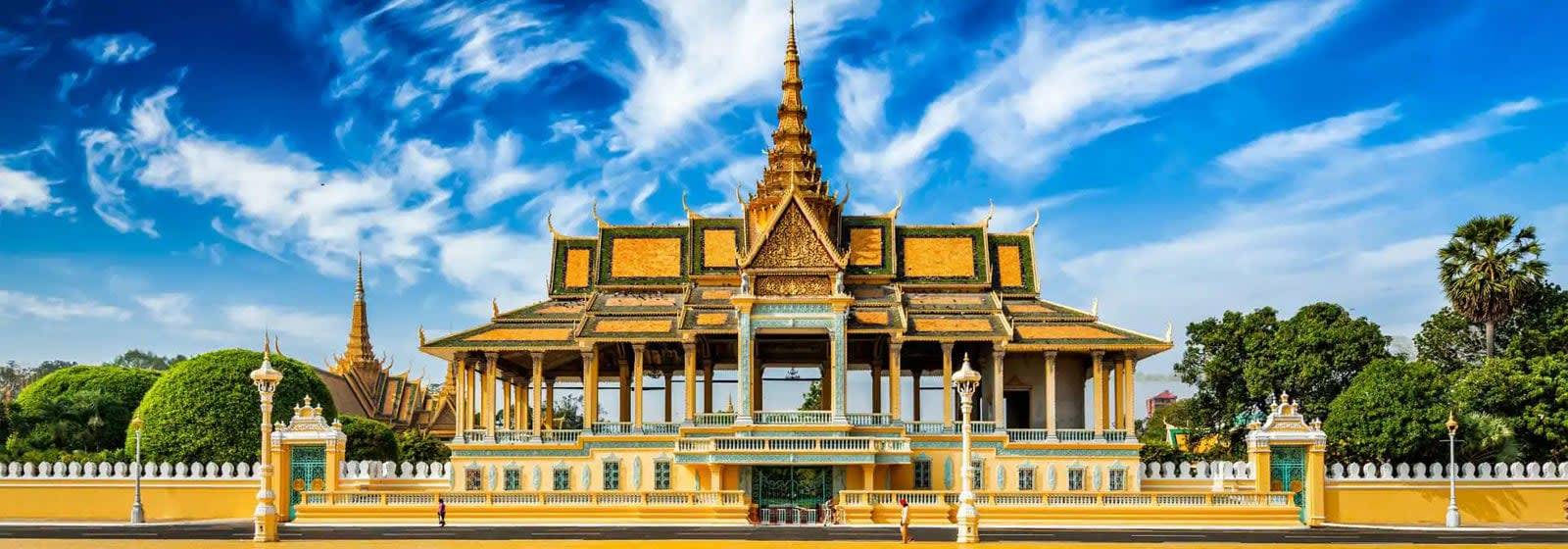
Backpacking Phnom Penh
Phnom Penh is where Cambodia stops being temples. The capital sits at the point where the Mekong and the Tonle Sap meet, it has two and a bit million people in it, and it is the one stop on this route where the recent past is unavoidable rather than optional.
You come here for two things that sit uncomfortably next to each other. The Killing Fields and the S-21 prison, which take half a day and change how you read everything else in the country. And then a city with the best food scene in Cambodia, rooftop bars over the river, an alley full of tiny cocktail bars, and Kun Khmer fights in a television studio on a Sunday afternoon.
Two days is the right length. One heavy, one light, in that order. It is also cheap: €20 a day, a bed for €5, and a tuk-tuk across town for a euro or two with the price agreed by an app before you get in.
Why Phnom Penh is popular with backpackers
- The history that explains modern Cambodia, told properly and without spectacle
- The best food in the country, from street carts to restaurants that train young chefs
- Rooftop bars over the Mekong for the price of a beer
- Kun Khmer fights in front of a local crowd, with almost no other travellers there
- Bassac Lane: one alley, a dozen tiny bars, and everyone ends up there
- €20 a day in a capital city, which is not a thing that happens often
- The transport hub of Cambodia: every bus and border crossing starts here
Best time to visit Phnom Penh
Warm all year. What changes is the rain and how heavy the heat gets in the middle of the day.
Late October or early November brings the water festival, when the Tonle Sap river reverses its direction of flow and hundreds of dragon boats race in front of the palace. It is extraordinary and the city is completely full, so book ahead or plan around it.
Backpacker budget: around €20 a day
- €5hostel bed
- €2.50local meal
- €0.60beer
- €2tuk-tuk ride
Guide prices from our own days in Phnom Penh. Add a tour or a night out and it climbs fast.
Best hostels in Phnom Penh
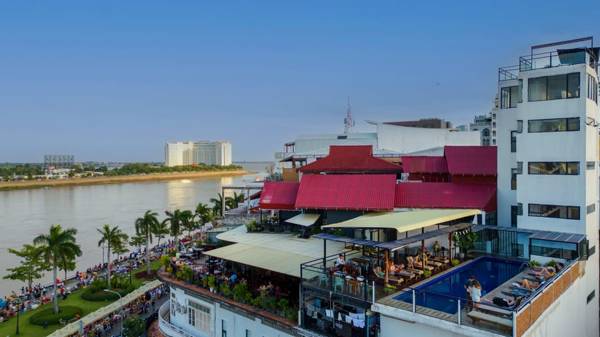
All of them are in the riverside and Bassac area, which is where you want to be. Rooftop pools are standard here at prices that are not.
Mad Monkey Phnom Penh
The best known backpacker hostel in Cambodia, with almost nine thousand reviews and a 9.6. Pool, bar, something organised every day, and a steady supply of people who arrived on their own.
If you want the social version of this city, start here.
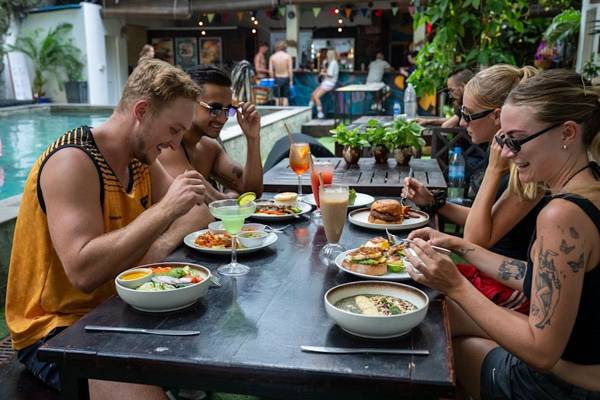
Pooltop Phnom Penh
A rooftop pool in the middle of the centre, for the price of an ordinary dorm. Quieter than Mad Monkey and cheaper than most of what is around it.
Good if you want the pool and the location without the programme.
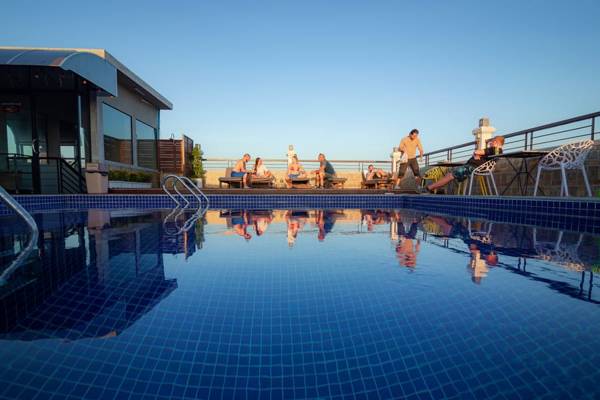
Onederz Phnom Penh
The same outfit as the Siem Reap one, and the same idea: modern, clean, well run, comfortable dorms and a calm social atmosphere.
Over three and a half thousand reviews, and the safest choice on this list if you are not sure what you want.
Best things to do in Phnom Penh
One morning of history you will not forget, and then a city that turns out to be a lot more fun than its reputation.
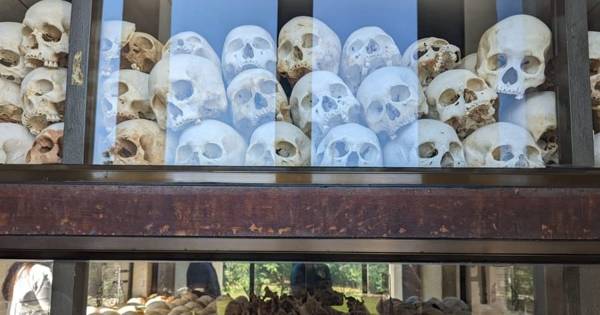
The Killing Fields and Tuol Sleng
The single most important half day in Cambodia, and by a distance the hardest. S-21 was a school that the Khmer Rouge turned into a prison; Choeung Ek, fifteen kilometres out, is where the prisoners were taken.
Take the audio guide. It is one of the best made anywhere: measured, unflinching, and built around survivors telling you what happened in their own voices. Go in the morning and put nothing heavy after it.
A sunset cruise on the Mekong
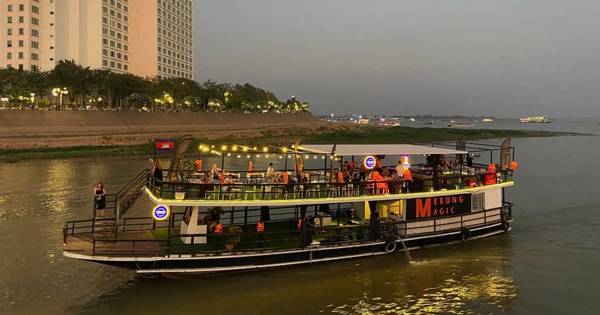
The correct way to end a day like that. Two hours on the water where the two rivers meet, the palace lit up along the bank, a barbecue buffet and beer that keeps coming.
Cheap, cheerful, and the easiest place in the city to end up talking to everyone else on the boat.
A Kun Khmer fight night
Kun Khmer is Cambodia’s version of the same fighting art Thailand calls Muay Thai, and the two countries will argue about which came first for as long as both exist. It is broadcast live from a television studio, the crowd is entirely local, and the betting in the stands is louder than the fight.
Almost no travellers go. That is most of the reason to.

Silk Island by bicycle
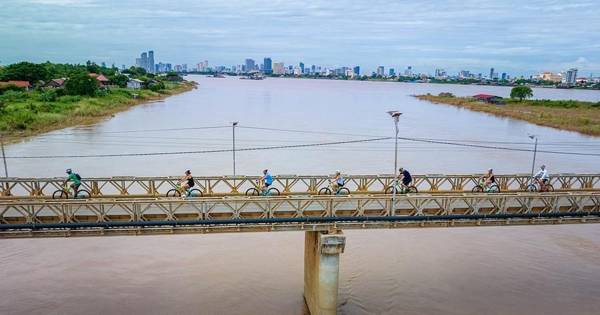
A ferry across the Mekong and you are on Koh Dach, a long sandbank island of villages, rice fields and looms, twenty minutes from a capital city. Silk is still woven here by hand, in front of houses, and you can watch it happen.
Flat, quiet and green, and available by bike, e-bike or tuk-tuk if pedalling in this heat is not your plan.
The Royal Palace and the Silver Pagoda
Still a working royal residence, which is why parts of it are closed and why the opening hours are split across the day. The Silver Pagoda has a floor of five thousand silver tiles and an emerald Buddha, and the grounds are the calmest place in the city centre.
Shoulders and knees covered, or you do not get in. There is no negotiating at the gate.
The Central Market
An art deco building from 1937 with a dome so big it was the largest in Asia when it opened, and the yellow paint makes it look like something from a film set. Inside: gold, watches, electronics, fabric, flowers and food, in that order as you work outwards.
The Russian Market
Low, hot, crowded and far more interesting than the Central Market. This is where souvenirs, fabric, secondhand clothes and a very good food corner all sit under one tin roof.
Haggle, and start at about half of what is asked. Everyone expects it and nobody minds.
An evening eating your way across the city
Phnom Penh has the best food in Cambodia and almost none of the good stuff is in a restaurant with a menu in English. A guided evening fixes that: eight or so stops, on the back of a scooter or on foot, through night markets and side streets.
Come hungry. People consistently underestimate how much food eight stops is.
Bassac Lane and the rooftops
One narrow alley south of the centre, lined with bars the size of a living room, each with its own idea of what a bar should be. It is where the city’s evening actually happens, and it is a five minute tuk-tuk from most hostels.
Before that, a rooftop for sunset over the Mekong. A drink costs about €3 and the view is free.
Best area for backpackers
Riverside and Bassac
Two neighbouring areas and you want to be in one of them. Riverside is the promenade along the Tonle Sap, with the palace at one end and a line of restaurants and bars the whole way. Bassac, a little further south, is where the alley bars and the better food are.
Everything worth doing in the centre is within a two euro tuk-tuk of both, and the Killing Fields run is the only real distance.
Good to know about this area
- Almost every hostel in the city sits in these two areas
- Riverside is the promenade, Bassac the bars and the food
- Use PassApp or Grab for tuk-tuks: the price is set before you get in
- Rooftop bars along the river, most of them free to walk into
- Busy with traffic in the day, and calm on the promenade at dusk
- This is the one place in Cambodia where bag snatching happens, so keep it inland
How to plan your days in Phnom Penh
Two days: one heavy, one light. Pick how long you have.
The Killing Fields and Tuol Sleng. The hardest and most important day of any trip through Cambodia. Take the audio guide, which is excellent. Half a day, and plan nothing heavy afterwards.
Tonight: a quiet dinner on the riverside, or a rooftop.
Palace, markets and the river. The Royal Palace with the Silver Pagoda, the art deco Central Market, and the Russian Market for anything you want to carry home. Finish with a sunset cruise on the Mekong.
Tonight: Bassac Lane, an alley of very small bars.
Food and drink in Phnom Penh
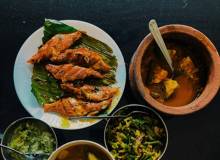
The best eating in Cambodia, and it ranges from a woman with two baskets on a pole to restaurants set up to train young Cambodians into professional kitchens. Both are worth your money.
Start with nom banh chok, which is breakfast here: rice noodles under a green fish curry, with a pile of raw herbs and banana flower on top, sold on the street before eight in the morning for about a euro.


Getting there and onward
Phnom Penh is the hub. Every bus to the coast, to Siem Reap and to both land borders leaves from here.
From the airport. Ten kilometres west, and there is a train from the airport to the central station for about €1.50. In rush hour that beats the road easily.
Around town. Use PassApp or Grab for tuk-tuks. The price is fixed before you get in, and a ride across the centre is usually a euro or two. It also removes the entire negotiation, which in this city is worth something.
Onward. Siem Reap is six hours, Kampot four, Sihanoukville five. Ho Chi Minh City is six to seven hours through the border at Bavet, and it is the easiest land crossing on this whole route.
- PassAppTuk-tuk at a set price, usually €1 to €2
- BusSiem Reap 6 hrs · Kampot 4 hrs · Sihanoukville 5 hrs
- To VietnamHo Chi Minh City 6 to 7 hrs via Bavet
- TrainTo the airport and down to the coast
- Sunset cruiseOn the Mekong, about 2 hrs
Staying safe in Phnom Penh
This is the one place in Cambodia where travellers do get robbed, and it is almost always the same thing: a bag or a phone taken from a passing scooter. It is avoidable.
- Carry your bag on the pavement side of you, not the road side
- Keep your phone in your pocket when you are walking by the road or sitting in a tuk-tuk
- Use PassApp or Grab, so the price is set and there is a record of the ride
- Take a tuk-tuk at night rather than walking long stretches
- Hold your phone out in the back of an open tuk-tuk
- Walk the riverside alone after midnight
- Join a card game or a bet you are invited into on the street
- Carry large amounts of cash around. Keep small dollar notes to hand instead
Cambodia runs largely on US dollars: you pay in dollars and get riel back as change under a dollar. Cash machines dispense dollars, so check what your own bank charges per withdrawal before you land, and take out more at once rather than more often.
Rebels on the Road tip
Everybody does the Killing Fields and then goes for a beer, which is understandable and not quite enough. Give yourself the walk instead: get the tuk-tuk to drop you at the north end of the riverside promenade in the late afternoon and walk the length of it, past the palace, the flag poles and the families out for the evening. Whole neighbourhoods do aerobics on the grass at six, in rows, to speakers. It is ordinary, cheerful, twenty first century Cambodia, and after that morning it is the thing you need to see.
Frequently asked questions
How many days do you need in Phnom Penh?
Two. One for the Killing Fields and S-21, one for the palace, the markets and the river. A third if you want a day out to Silk Island or a fight night.
Should I visit the Killing Fields?
Yes. It is difficult and it is the thing that makes the rest of the country make sense. Take the audio guide, go in the morning, and do not plan anything demanding for the rest of the day.
Is Phnom Penh safe?
Broadly yes, with one specific exception: bag and phone snatching from passing scooters, which is more common here than anywhere else in Cambodia. Keep your bag inland, keep your phone in your pocket, and you remove nearly all of the risk.
Where should I stay?
Riverside or Bassac. Riverside puts you on the promenade near the palace, Bassac is closer to the better bars and food. Both are walkable to each other and cheap to get around from.
How do I get around the city?
PassApp or Grab, which are tuk-tuk apps with a price set in advance. A ride across the centre is usually a euro or two, and you skip the negotiation entirely.
How do I get to Vietnam from here?
A bus to Ho Chi Minh City through the border at Bavet, six to seven hours, and it is the most straightforward land crossing on this route. Check your visa first: some passports walk in and some have to apply for an e-visa before they fly.
Is Phnom Penh expensive?
No. Around €20 a day covers a bed, three meals, a couple of beers and getting about, which for a capital city is remarkable. The Killing Fields tour and the palace entry are the two things worth budgeting separately.
When is the best time to visit Phnom Penh?
November to February, when it is dry and the evenings are comfortable. March to May is heavy. The water festival in late October or early November is spectacular and fills every bed in the city, so book early or come at another time.
