
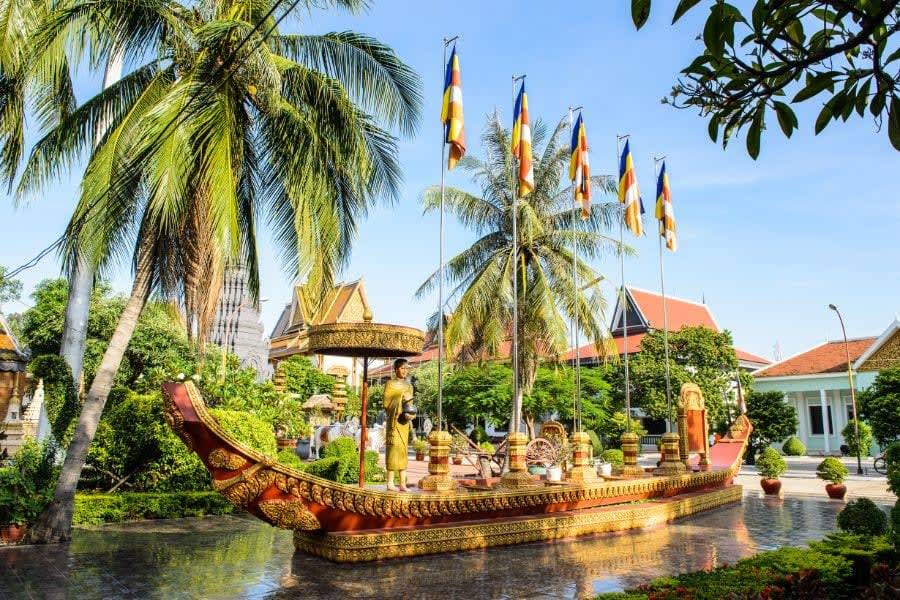
Backpacking Siem Reap
Siem Reap exists because of what sits eight kilometres north of it. Four hundred square kilometres of temple park, a thousand years old, with the largest religious monument ever built in the middle of it. That is why you come, and it lives up to every bit of the reputation.
What surprises people is the town itself. It is small, flat, walkable and startlingly cheap: a bed for €5, dinner for €2.50, a beer for fifty cents, and a tuk-tuk driver for an entire day of temples for about €12. The hostels here are among the best in Southeast Asia, and Pub Street does exactly what the name suggests, every night.
Three days is the standard plan, because that is the length of the temple pass most people buy. Plenty of travellers then find a reason to stay a fourth and a fifth, and end up doing a cooking class, a circus show and a boat trip on the lake, none of which was on the list when they arrived.
Why Siem Reap is popular with backpackers
- Angkor: the biggest religious monument on earth, with hundreds more temples around it
- One of the cheapest towns anywhere on this route
- Hostels with rooftop pools for the price of a plain dorm bed elsewhere
- Pub Street, where fifty cent beer is the normal price and not a happy hour trick
- A village built on ten metre stilts out on Tonle Sap
- Everything walkable, with nothing to rent and nothing to ride
- Easy to arrive on your own: the hostels here are built around people meeting
Best time to visit Siem Reap
Hot all year round. What changes between the seasons is the humidity and how much water is standing in the moats around the temples.
One thing worth planning around. The famous reflection of Angkor Wat needs water in the pond in front of it, and the water is highest at the end of the rainy season, roughly September to November. Come in March and you get the temple without the mirror.
Backpacker budget: around €20 a day
- €5hostel bed
- €2.50local meal
- €0.50beer
- €12tuk-tuk for a temple day
Guide prices from our own days in Siem Reap. Add a tour or a night out and it climbs fast.
Best hostels in Siem Reap
An unusually good crop of them, all within walking distance of Pub Street, and all cheap enough that the gap between the top and the bottom of this list is about two euros a night.
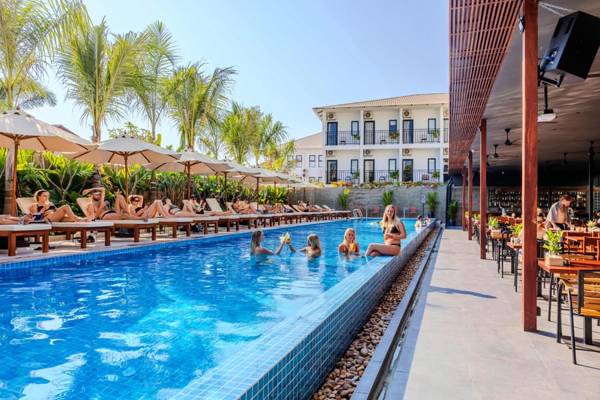
Onederz Siem Reap
The one most people end up in. Modern, clean, a rooftop pool looking out over the town, and five minutes on foot from Pub Street.
Sociable without being a party hostel, which is a harder balance to strike than it sounds. If you want to meet people and also sleep, this is the one.
Mad Monkey Siem Reap
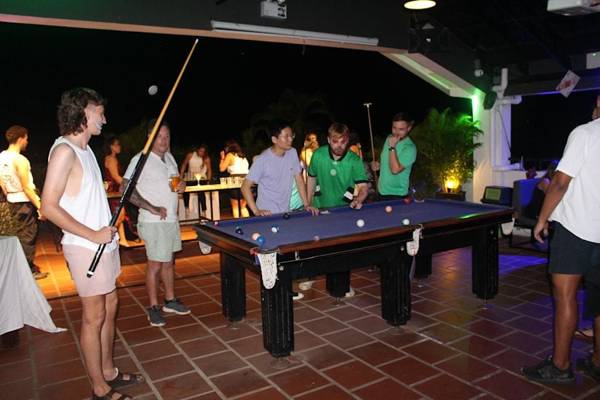
The party option, and unapologetic about it. Pub crawls, pool parties, a bar that runs late and a constant churn of people who arrived on their own.
Nearly five thousand reviews and a 9.8, which tells you it delivers what it promises. This is the easiest place in town to find three people to share tomorrow morning’s tuk-tuk to Angkor with.
Lub d Siem Reap
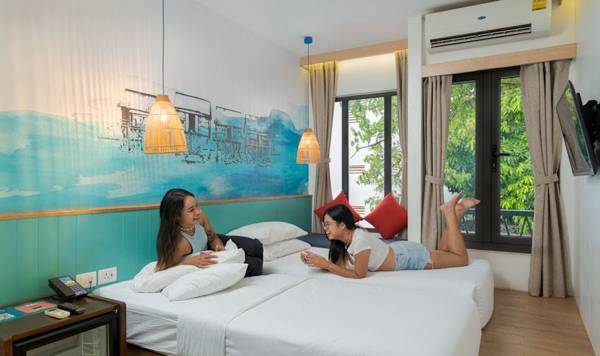
A design hostel with a hotel’s swimming pool and the most comfortable bed on this list. Central, quiet when you want it to be, and still social around the pool in the afternoon.
Worth the couple of euros extra after a five o’clock start at the temples.
Best things to do in Siem Reap
Angkor is the obvious answer and it deserves two of your days. What fills the rest is a lake, a circus, a sacred mountain with a waterfall on it, and some of the best cooking classes in the country.
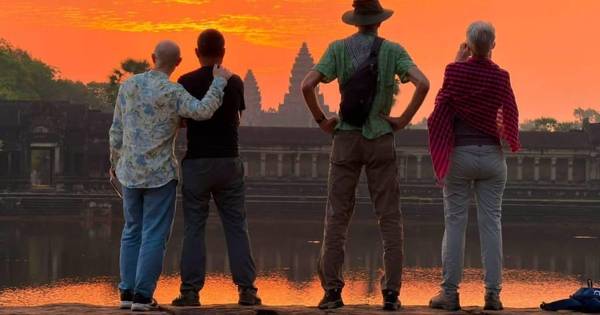
Angkor Wat at sunrise
The one everyone comes for. You leave in the dark, you stand at the pond with a few hundred other people, and then the sky behind the five towers goes orange and for about ten minutes nobody says anything.
Take a guide the first time. The place is enormous and the carvings mean nothing without someone telling you what you are looking at: the reliefs along the outer gallery run for eight hundred metres and tell one continuous story.
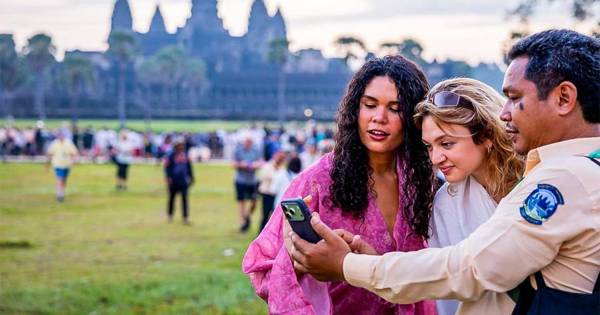
Angkor by tuk-tuk, at your own pace
The second day is the one you do yourself. A driver for the day, the small circuit or the grand one, and no schedule at all: Bayon with its two hundred and sixteen stone faces, Ta Prohm where fig roots pour over the walls, and the quieter ones like Preah Khan where you can have a corridor to yourself.
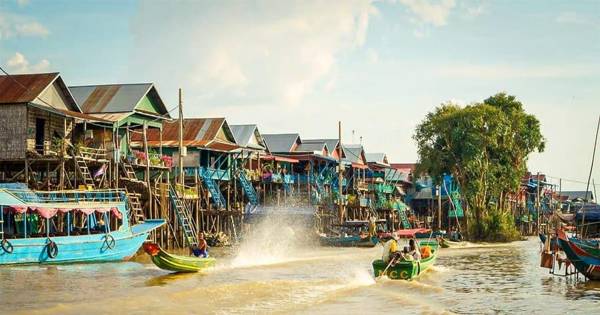
The stilt village at Kampong Phluk
Out on Tonle Sap, an hour from town, is a village built on stilts ten metres tall. In the dry season they look absurd, houses on pylons in a dusty field. In the wet season the lake climbs to the floorboards and the whole place becomes what it was designed to be.
You get there by boat through a flooded forest, which is worth the trip on its own.
Phare, the Cambodian circus
The best evening in Siem Reap, and hardly anybody expects it. Acrobatics, live music and theatre performed by graduates of an arts school set up for children from difficult backgrounds, and every show tells a Cambodian story rather than doing tricks for their own sake.
Loud, funny and often genuinely moving, and the ticket money goes back into the school.
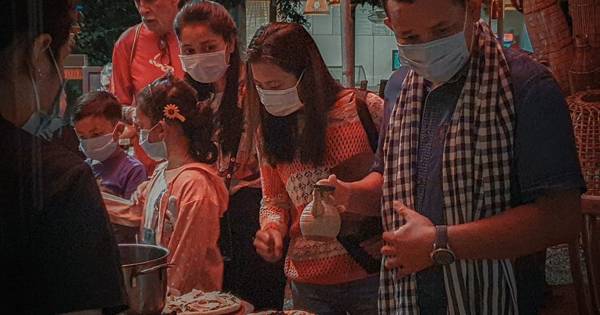
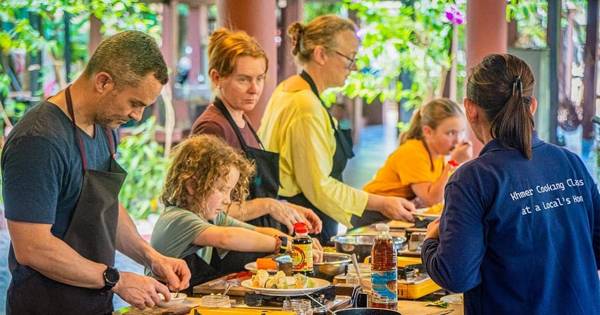
A Khmer cooking class
Khmer food is the quietest cuisine in the region and the one travellers know least. A morning in somebody’s kitchen learning to pound kroeung, the lemongrass and turmeric paste that everything here is built on, fixes that for good.
You come out able to make fish amok and lok lak, and with an opinion about Cambodian food that you did not have at breakfast.
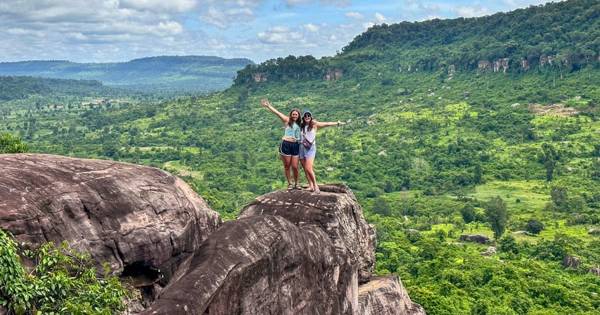
Phnom Kulen, the sacred mountain
Forty kilometres north, the mountain where the Khmer empire was declared in 802. There is a waterfall you can swim under, a reclining Buddha carved into the rock at the top, and a riverbed with a thousand lingas cut into it underwater.
A full day, and the greenest thing you will do from here.
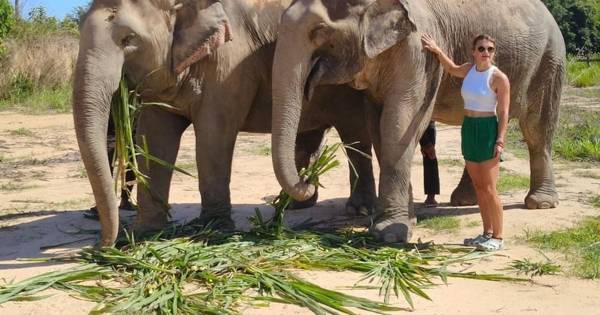
An elephant sanctuary, the right kind
Riding elephants has been banned inside the Angkor park since 2020, and the sanctuaries outside town are where the retired ones went. The good ones let you walk with them, feed them and watch them bathe, and nobody gets on anything.
Ask the question directly before you book anywhere: can you ride them? If the answer is yes, book somewhere else.
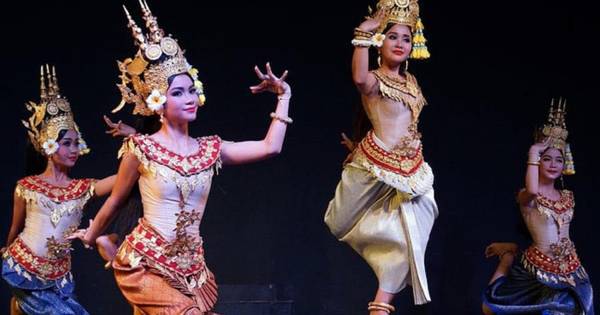
An Apsara dance show with dinner
The classical Khmer dance you have been looking at on temple walls all day, performed live, with a Cambodian buffet in front of you. Slow, precise and hypnotic, and the hand positions alone take dancers years to learn.
Touristy, absolutely, and still the cleanest way to connect what you saw in the morning with something living.
The lotus silk farm
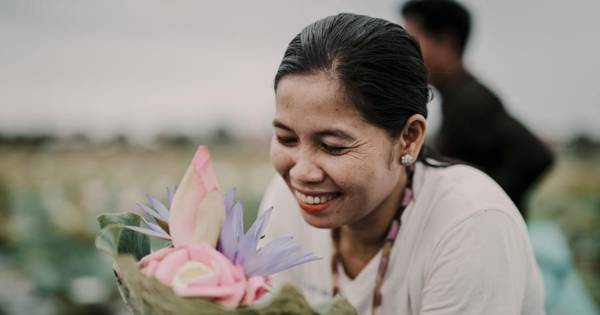
Silk pulled by hand from lotus stems, one thread at a time, on a farm outside town near the lake. A single scarf takes about a month of work, which you understand roughly four minutes after you watch somebody start.
One of the few things in Siem Reap that has nothing to do with Angkor, and a 4.9 across more than seven hundred reviews suggests other people found that a relief too.
The countryside by quad
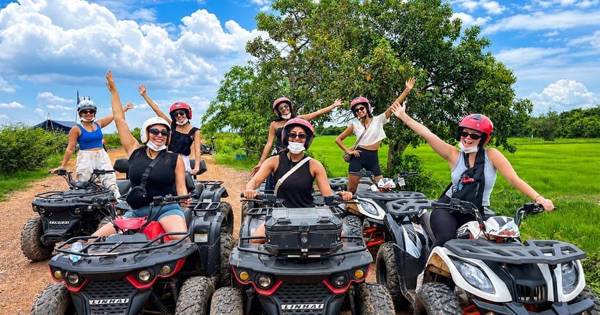
Out of town on an ATV, through rice fields and Khmer villages and past the floating fish farms, usually timed so you finish with the sun going down over the paddies.
Loud, dusty and nothing like the rest of your week here. Good for the afternoon when you have had enough of temples.
Best area for backpackers
Pub Street and the Old Market
There is really only one answer. Almost every hostel, restaurant, bar and tour desk in Siem Reap sits within a few blocks of Pub Street and the Old Market, and the whole area is flat and walkable.
By day it is a quiet grid of cafes, massage places and travel agents. After eight it becomes the loudest street in Cambodia, and then at two in the morning it stops dead and the town goes to sleep.
Good to know about this area
- Everything within a ten minute walk, night market included
- The largest concentration of hostels in the country
- Local food behind the market for a third of the Pub Street price
- Tour desks on every corner, so you can book tomorrow tonight
- Loud until about two if you are on the street itself, silent one block back
- Dollars accepted everywhere, with your change coming back in riel
How to plan your days in Siem Reap
The temple pass comes in one, three and seven day versions. Three is the right size for almost everyone. Pick how long you have.
The small circuit. Sunrise at Angkor Wat, then Bayon with its stone faces and Ta Prohm where the trees have grown straight through the walls. The classic first day, and a long one.
Tonight: Pub Street, and the night market around it.
The grand circuit, or Banteay Srei. Preah Khan, Neak Pean and Ta Som are further apart and far quieter. Banteay Srei, the pink sandstone one with the finest carving in the park, is 35 kilometres north.
Tonight: Phare, the Cambodian circus. Easily the best show here.
Tonle Sap or the countryside. Out to the stilt village at Kampong Phluk, through the flooded forest by boat. Or swap it for a cooking class and an afternoon by the pool.
Tonight: bus to Battambang or Phnom Penh, or a flight on to your next country.
Food and drink in Siem Reap
Khmer cooking is milder than Thai and less sweet than Vietnamese, and nearly everything starts with kroeung: a paste of lemongrass, turmeric, galangal and kaffir lime, pounded together.
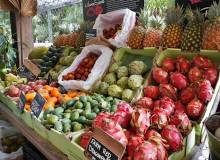
The trick here is one street. Behind Pub Street are the markets where people who live in Siem Reap eat, and the same plate costs two euros there and eight on the tourist strip.


Fifty cents for a beer on Pub Street is not a happy hour offer. It is the price, all night, at most of the bars on the street.
Getting there and onward
Siem Reap is where a lot of people start Cambodia, and since 2023 it has a new airport a long way out of town.
From the airport. The new one is fifty kilometres east, about an hour away. A shared bus is around €8 and a taxi roughly double. Nothing near the old airport site is useful any more.
In town and at the temples. You walk the centre. For the temples you hire a tuk-tuk for the whole day, about €12 for the small circuit and a little more for the grand one. The small circuit is cyclable too if you start early enough.
Onward. Battambang is three hours by bus and Phnom Penh six. Bangkok goes overland through the border at Poipet and is a long day however you do it. There is also a boat to Battambang across Tonle Sap: eight hours, beautiful, and dependent on the water level.
- Tuk-tukA temple day from about €12
- BusPhnom Penh 6 hrs · Battambang 3 hrs
- PlaneNew airport, 50 km east of town
- BicycleFrom about €2, enough for the small circuit
- BoatAcross Tonle Sap to Battambang, 8 hrs
Staying safe in Siem Reap
Safe, including late on Pub Street. What actually catches people out here is the heat at the temples and picking the wrong elephant sanctuary.
- Take two litres of water each into the park. There is very little shade
- Cover your shoulders and knees. Without it you do not get into Angkor Wat
- Buy your temple pass at the official ticket centre and nowhere else
- Ask a sanctuary whether you can ride the elephants, and leave if they say yes
- Ride an elephant at Angkor. It has been banned inside the park since 2020
- Give money or sweets to children on the street, however hard that is
- Let a tuk-tuk driver wait for you without agreeing the day rate first
- Climb on roped off parts of the temples. They are a thousand years old
Rebels on the Road tip
Everybody does sunrise at Angkor Wat on their first morning, which means everybody is in the same place at the same time. Do it anyway, it earns its reputation. Then get up early once more on your last morning and have your driver take you to Ta Nei or Preah Khan instead. No coaches go there. You walk down a collapsed stone corridor with tree roots through the roof and there is nobody else in it, and that is the one you take home.
Frequently asked questions
How many days do you need in Siem Reap?
Three. That matches the three day temple pass and leaves you a day for the lake, a cooking class or Phnom Kulen. Two is enough for the temples alone if you are moving fast.
Do I need an Angkor Pass?
Yes, for Angkor Wat and nearly every temple in the park. It comes in one, three and seven day versions and you buy it at the official ticket centre outside town. Your photo goes on it and it is checked at every temple.
Can you visit Angkor without a guide?
You can, and plenty of people hire a tuk-tuk and do it themselves. But the carvings are the point and they mean little unless someone explains them, so take a guide for the first day and do the rest on your own.
Sunrise or sunset at Angkor Wat?
Sunrise for the reflection in the pond, which is the shot everybody has seen, and it is busy. Sunset is quieter and better from a different temple: Pre Rup and Phnom Bakheng both look back over the park.
Is Siem Reap expensive?
No. It is one of the cheapest places on this whole route. Around €20 a day covers a hostel bed, three meals, a few beers and your share of a tuk-tuk. The temple pass is the one real expense, and it is worth it.
Can you pay in dollars?
Yes, and mostly you will. Cambodia runs on US dollars alongside the riel: you pay in dollars and your change under a dollar comes back in riel. Bring clean, untorn notes, because damaged ones get refused.
Do I need a scooter here?
No, and Cambodia is the one country on this route where renting one is complicated anyway. Tuk-tuks, bicycles and organised trips cover everything, and the town itself you walk.
When is the best time to visit Siem Reap?
November to February: dry, blue skies and slightly cooler. March to May is brutally hot. The rainy season is green and quiet, and it is also when the moats are full, which is when Angkor Wat reflects properly.
