
Backpacking Battambang
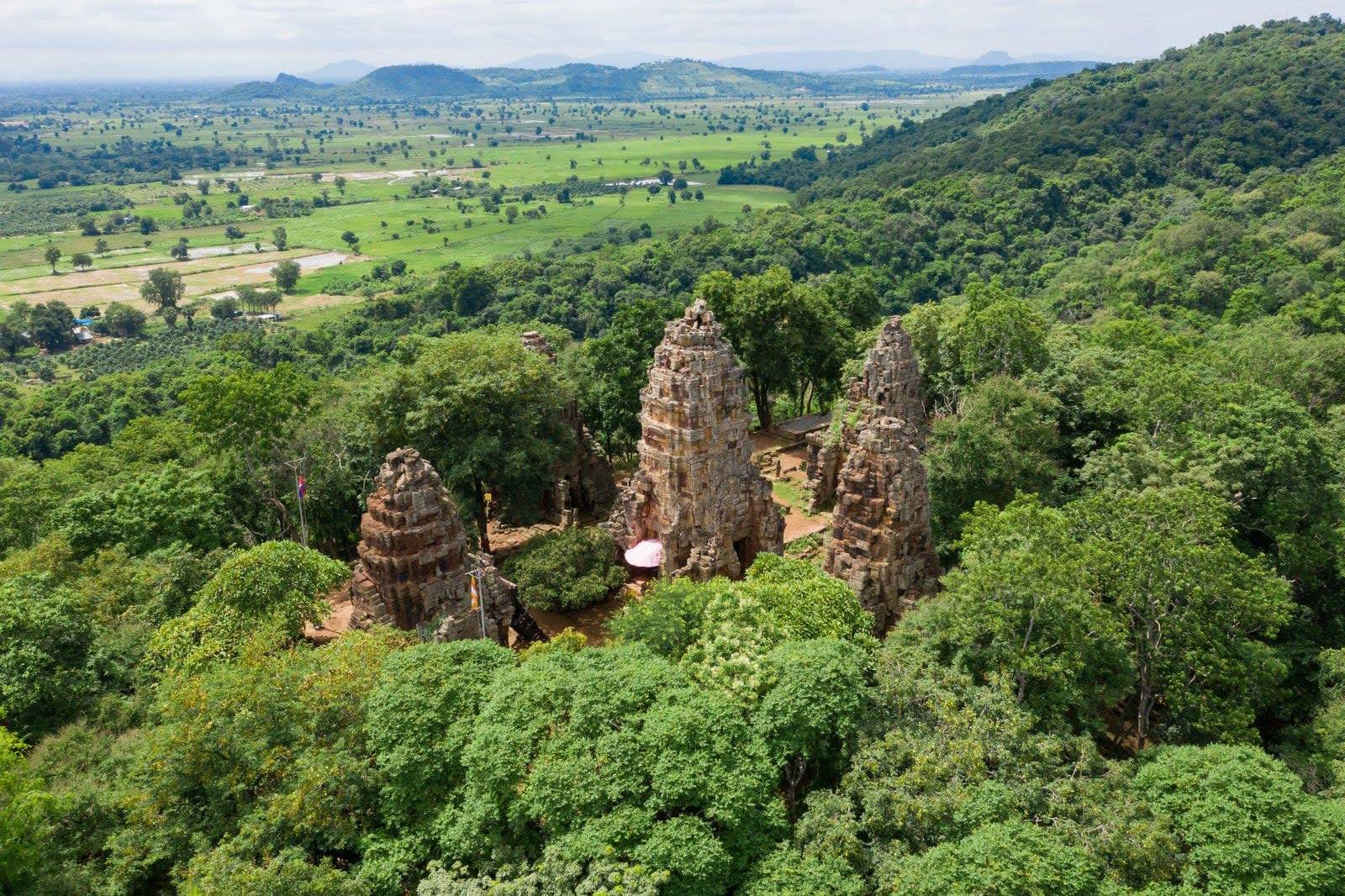
Battambang is the stop between Siem Reap and Phnom Penh that a lot of people drive straight past, and it is the one where Cambodia stops performing for you. Cambodia’s second city on paper, a country town in practice: French shopfronts going quietly green along the Sangker river, a market that has not changed in decades, and the country’s best art scene in a handful of galleries you would walk past.
The two things it is known for are both just outside town. A bamboo train, which is a plank on wheels that does forty kilometres an hour down an abandoned rail line. And Phnom Sampeau, a hill with temples on top, where at quarter to six every evening three million bats pour out of a cave in a single unbroken ribbon for twenty minutes.
Two days does it, and it costs almost nothing: €17 a day, which is the cheapest stop in Cambodia. Most people arrive planning one night and book a second.
Why Battambang is popular with backpackers
- Far fewer travellers than Siem Reap, three hours up the road
- The bamboo train, which is exactly as daft and as fun as it sounds
- Three million bats leaving one cave at sunset, every night, for free
- The best street art and gallery scene in Cambodia
- Flat countryside made for a bicycle: rice paper, rice wine and banana chips
- €17 a day, the cheapest stop in the country
- French colonial streets by the river that nobody has restored into a theme
Best time to visit Battambang
Flat farmland in western Cambodia, so the climate is the country’s standard: a clear dry season and a clear wet one.
The bats are not seasonal. They come out of the cave at Phnom Sampeau around a quarter to six every evening of the year, and it takes roughly twenty minutes for all of them to leave. It is one of the strangest and best things you will see in Cambodia and it costs nothing.
Backpacker budget: around €17 a day
- €5hostel bed
- €2local meal
- €0.60beer
- €7scooter for the day
Guide prices from our own days in Battambang. Add a tour or a night out and it climbs fast.
Best hostels in Battambang
Small town, small scene, and all of it in the centre near the river. These three are within a few streets of each other.
THE PLACE Hostel Battambang
The most popular hostel in town: modern, well run, comfortable dorms and a social common area that gets people talking without trying too hard.
Central enough to walk everything from, and the easiest place here to find someone to split a tuk-tuk to Phnom Sampeau with.
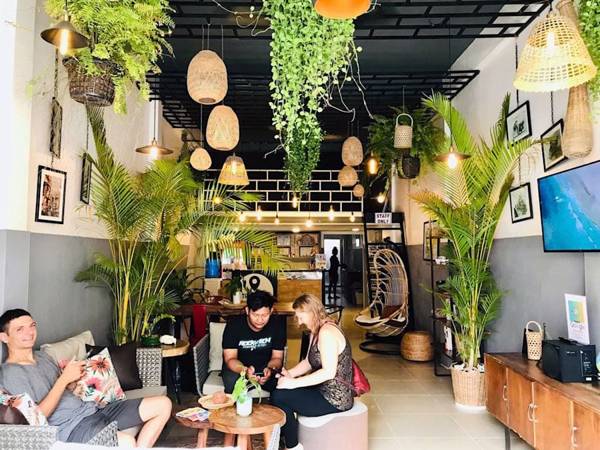
Social Backpacker Hostel and Rooftop Bar
The name tells you the plan. A rooftop bar that is the default meeting point for travellers in Battambang, and enough organised things going on that arriving alone is not a problem.
Good if you want a town this quiet to still have an evening in it.
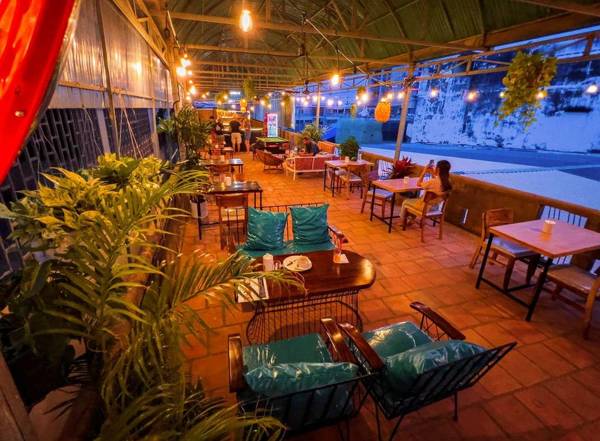
Pomme Hostel Restaurant and Bar
The calm one, and the best rated of the three at 9.6. A relaxed place with a genuinely good restaurant attached, which matters more than it sounds when the town shuts early.
For backpackers who want comfort and a proper meal without giving up the hostel part.
Best things to do in Battambang
Two headline attractions, both outside town, and both usually done in one afternoon. Then a day of countryside, food and galleries.
The classic afternoon: bamboo train, caves and bats
The one tour almost everybody here books, and for once it is the right call: it strings the bamboo train, the Killing Caves, the temples on Phnom Sampeau and the bat exodus into a single afternoon by tuk-tuk, in the right order, finishing at sunset.
Nearly two thousand reviews and a 4.9. Doing it yourself is possible and you will spend the day negotiating rather than looking.
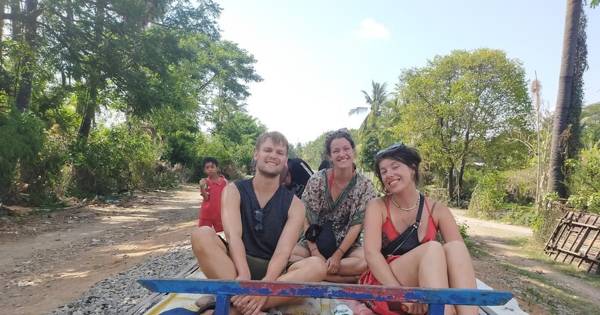
The bamboo train
A bamboo platform on two axles with a small engine on the back, running down an old single track line at a speed that feels considerably faster than it is. When another one comes the other way, the lighter loaded one is lifted off the rails by hand and put back afterwards.
The bat cave at Phnom Sampeau
At the foot of the hill, a cave mouth in the cliff, and a row of plastic chairs and drink stalls pointed at it. At about quarter to six the bats start, and they keep coming out in one continuous black ribbon for twenty minutes, curling out across the rice fields.
Free, reliable and genuinely astonishing. Get there by half past five for a seat.
The Killing Caves
On the same hill, and the reason a lot of people go quiet on the way back down. During the Khmer Rouge years people were killed at the top and their bodies dropped through a hole in the rock into the cave below. There is a shrine down there now, with a glass case of skulls.
This is a memorial and not a sight. Go, because understanding Cambodia means understanding this, and behave the way you would at any memorial anywhere.
Cycling the countryside
The best half day here. Flat roads, rice fields in every direction, and a string of small workshops: rice paper dried on racks in the sun, banana chips fried in a yard, rice wine distilled in somebody’s shed and offered to you at nine in the morning.
Go with a guide. Half of these places are behind a house with no sign on it.
A Khmer cooking class
Cheaper here than in Siem Reap and usually smaller. It starts at the market, where someone explains what half the vegetables are, and ends with you eating what you cooked.
The galleries and the street art
Battambang is where Cambodia’s art school graduates end up, and it shows on the walls. Murals down side streets, a handful of small galleries, and a circus school that feeds performers to the one in Siem Reap.
An hour or two on foot around the old French quarter by the river, and it costs nothing.
A scooter day around the valley
Flat, quiet roads and almost no traffic once you are out of town, which makes this one of the easier places in Cambodia to ride. Temples, rice fields, markets and villages, and you can string them together in whatever order you like.
One rule that is not optional here: stay on surfaced roads. Western Cambodia was heavily mined and clearance is not finished.
Best area for backpackers
The centre and the riverside
There is one area and everybody is in it: the few streets between the market and the Sangker river. Hostels, restaurants, cafes, bars and tour desks are all in that grid, and the old French shopfronts are the nicest part of it.
The town is small enough that “central” means everything is a five minute walk, and quiet enough that you will hear the river at night.
Good to know about this area
- Everything on foot, including the market and the river
- The largest cluster of cafes and restaurants in town
- Quiet after about ten, which is the point of Battambang
- Tour desks for the bamboo train and the hill on most corners
- Cheaper for food and beds than anywhere else in Cambodia
- Dollars everywhere, with change coming back in riel
How to plan your days in Battambang
Two days is the size of this place. Pick how long you have.
Bamboo train and Phnom Sampeau. The train in the afternoon, then out to the hill for the Killing Caves and the temples on top, and stay until quarter to six for the bats.
Tonight: dinner by the river, and a walk along the old shopfronts.
The countryside and the art. A cycle tour past the rice paper makers, fish farms and villages distilling rice wine. Back in town, the galleries and the murals around the French quarter.
Tonight: bus to Siem Reap, Phnom Penh or the Thai border.
Food and drink in Battambang
This is Cambodia’s rice bowl and its fruit basket, and the food here is rural, simple and noticeably cheaper than in Siem Reap. The market is where to eat, and lunch costs about two euros.
The countryside around town is the interesting part: rice paper dried on bamboo racks, rice wine distilled in back yards, and banana chips fried in front of you. Most of those stops sit inside the cycle tour.





Getting there and onward
Battambang sits between Siem Reap and the Thai border, which makes it the obvious stop on that leg and the one most people skip anyway.
Getting there. Three hours by bus from Siem Reap, five or six from Phnom Penh. There is also a boat from Siem Reap across Tonle Sap, eight hours, which is beautiful and depends on the water level.
Around town. Small enough to walk. For the countryside you hire a scooter or take a tuk-tuk for half a day, about €10 to Phnom Sampeau and back.
Onward. The Thai border at Poipet is two hours west and buses run through to Bangkok from there. Phnom Penh is five to six hours south.
- BusSiem Reap 3 hrs · Phnom Penh 5 to 6 hrs
- BoatFrom Siem Reap across Tonle Sap, 8 hrs
- ScooterFrom about €7 a day
- Tuk-tukHalf a day to Phnom Sampeau, about €10
- BorderPoipet into Thailand, 2 hrs
Staying safe in Battambang
One of the calmest towns in Cambodia and there is very little crime aimed at travellers. The one thing here that is genuinely serious is what is still in the ground outside town.
- Stay on surfaced roads and marked paths outside town, without exception
- Be at the bat cave by half five if you want somewhere to sit
- Agree the price with a tuk-tuk driver before the afternoon starts
- Treat the Killing Caves as a memorial, because that is what they are
- Walk into fields or scrub off the road. Western Cambodia is still being cleared of mines
- Ride a scooter here without the right cover. Cambodia has its own licence rules
- Photograph the skulls at the caves as though it were a viewpoint
- Expect anything open late. The town closes early and that is the appeal
Cambodia is the one country on this route where your own licence plus an international permit is not enough to ride a scooter: you need a Cambodian licence, which you get on the spot, and you apply for it with the 1949 international permit. Read the detail on our travel insurance page before you rent anything, because that is the bit that decides whether you are covered.
Rebels on the Road tip
Skip the organised sunset crowd at Phnom Sampeau for one evening and climb the hill in the late afternoon instead, before the tuk-tuks arrive. There is a temple at the top, a view over the entire flat plain to the horizon, and usually nobody else on it. Then walk back down as the light goes and you arrive at the cave mouth exactly as the first bats come out, from above them rather than in the row of plastic chairs.
Frequently asked questions
How many days do you need in Battambang?
Two. One afternoon for the bamboo train, the hill and the bats, and one day for the countryside and the galleries. A third day is easy to fill and nobody regrets it.
Is the bamboo train worth it?
Yes, as the daft forty minute thing it is rather than as a serious attraction. There are two lines now: the original one near town and a newer, more polished one at Banan. Either is about €5.
What time do the bats come out?
Around quarter to six, every evening of the year, and it takes about twenty minutes for the whole colony to leave. Be in place by half five. It is free.
Is Battambang worth stopping for?
If you have the days, yes. It is the cheapest stop in Cambodia, the least touristed and the only place on this route where you get an ordinary Cambodian town with a good art scene attached. If you are tight on time, it is the one that gets cut.
Can I rent a scooter in Battambang?
You can, from about €7 a day, and the roads here are flat and quiet. Check the licence question first: in Cambodia your own licence plus an international permit is not enough to ride a scooter, you need a Cambodian licence that you get on the spot, and that affects your insurance.
How do I get to Battambang?
Bus from Siem Reap in three hours or from Phnom Penh in five to six. There is also the boat across Tonle Sap from Siem Reap, eight hours, which is a day out in itself when the water is high enough.
Is Battambang safe?
Yes, in the ordinary sense. The one real hazard is unexploded ordnance and landmines in the countryside, which is why you stay on surfaced roads and marked paths. In town there is nothing to worry about.
When is the best time to visit Battambang?
November to February, when it is dry enough to cycle comfortably. March to May is very hot. The rainy season turns the rice fields green and floods the side roads, which is beautiful and harder to ride through.
