
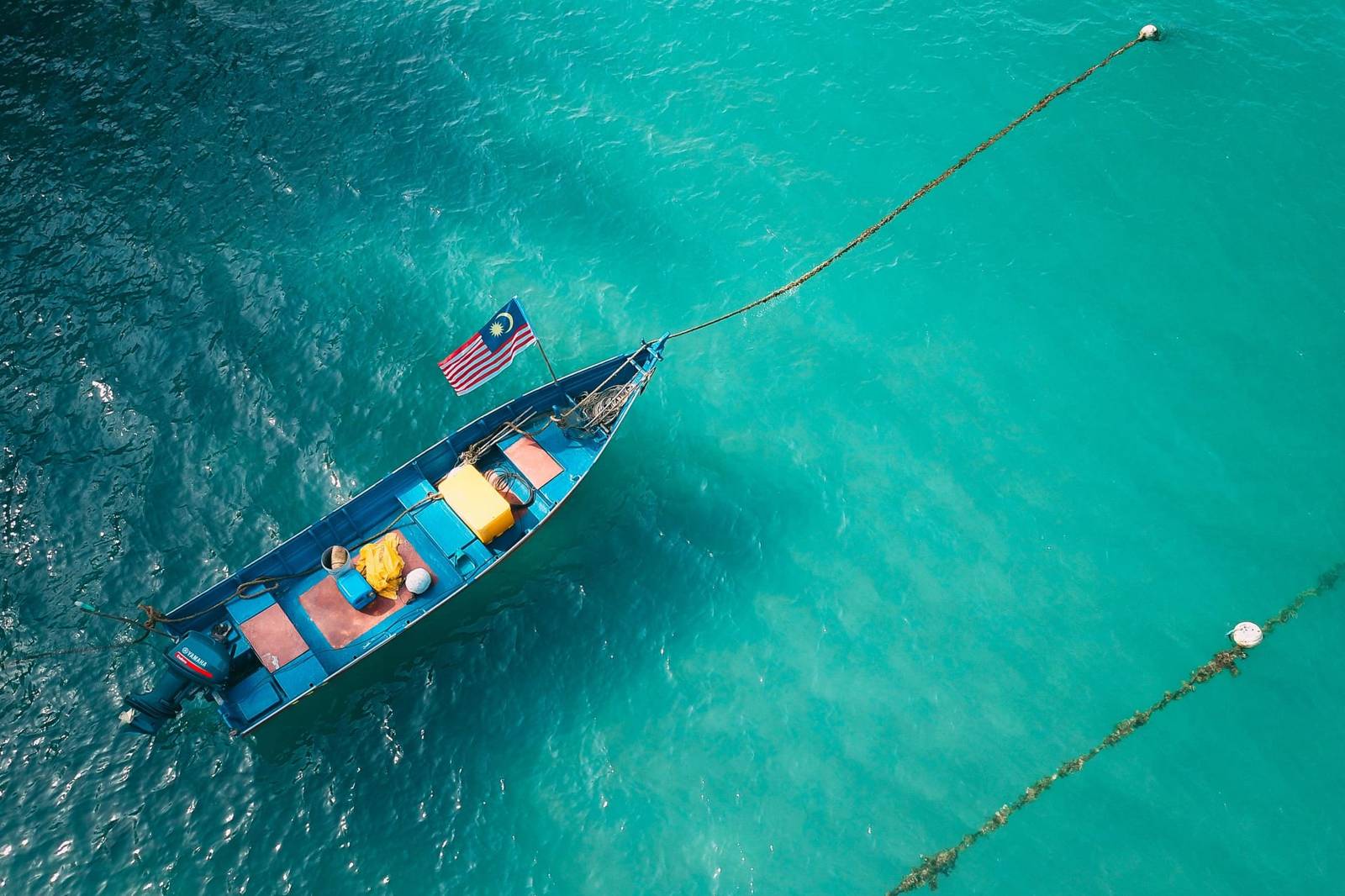
Malaysia has three islands that almost every backpacker goes back and forth over, and they are not on the same coast. The Perhentian Islands and Tioman are on the east side of the peninsula, in the South China Sea. Langkawi is on the west coast, right up in the north west. That sounds like a detail. It is the whole answer.
The two coasts run on opposite rhythms. When the east coast is in the monsoon and the boats are tied up, Langkawi is at its driest. When Langkawi has its wettest months, the Perhentians and Tioman are at their best. So picking an island in Malaysia means picking a month first, and a beach second.
Below is what each island is about, which season suits which island, and who will feel most at home where. What to do on each island is in the highlights for that island, so we will not repeat it here.
The Perhentian Islands: the clearest water
The Perhentians are all about the sea. Reef sharks and green turtles swim just off the coast, the water is so clear you can see the bottom from the boat, and a snorkel trip to five spots costs about €10. There are no roads: you walk jungle trails or hop in a water taxi.
You sleep on Perhentian Kecil, on Long Beach, where the dive schools sit shoulder to shoulder between the chalets and the beach bars open up with fire shows at night. Of the three, it is the most sociable island for backpackers, and the easiest place to walk into three dive schools in one afternoon. An Open Water here costs from about €290. Everything else there is to do on the islands is in our things to do on the Perhentian Islands.
Two things to sort out beforehand: there is not a single cash machine on the islands, and the state of Terengganu is conservative. You find beer at the beach bars on Long Beach, for about €3 a can.
Our verdict: pick the Perhentians if you want the best underwater world and the most travellers around you
Tioman: jungle right down to the sand
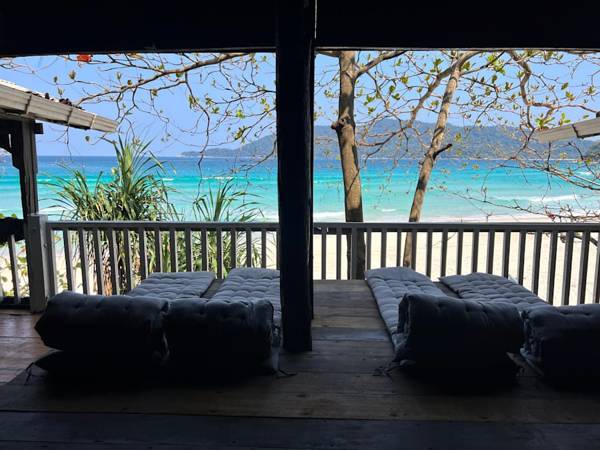
Tioman is bigger, greener and wilder. The island is a ridge of rainforest with granite peaks above it and a handful of villages at its feet that you only reach by boat or on foot. In Air Batang, which everyone calls ABC, there are no cars: you walk a concrete path along the sea while a monitor lizard crosses in front of you.
Tioman’s strongest point is that you find adventure on land here too. You snorkel off the jetty, walk the coastal path via Monkey Bay to Salang, and trek seven kilometres straight through the jungle to Juara, a long, empty beach on the east side where you watch the sun come up out of the sea. You can get certified here from about €200, and because the island is duty-free, a can of beer from the shop costs less than a euro. There is more in our things to do on Tioman.
Bring cash: there is one cash machine, in Tekek, and it does run dry.
Our verdict: pick Tioman if you want the jungle as well as the water, and if you want to learn to dive for the least money
Langkawi: the west coast island
Langkawi is the island you explore by scooter. It is big, the roads are good and public transport barely exists, so for about €8 a day you ride yourself from the cable car to the Kilim mangroves and on to the white beach at Tanjung Rhu. At the top of the mountain you walk the Sky Bridge, a curved 125 metre bridge hanging above the rainforest.
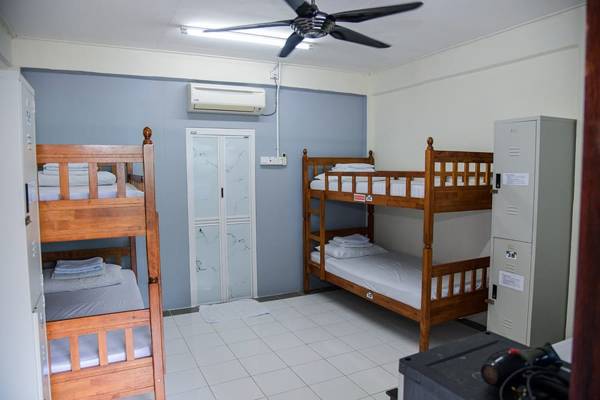
You sleep on Pantai Cenang, with the sunset straight from the beach and a night market that pops up somewhere different on the island every day. Langkawi is duty free too, since 1987, so your sunset beer costs a fraction of what you pay in the cities. Of the three, Langkawi has the most variety on land. Everything you can do there is in our things to do in Langkawi.
Our verdict: pick Langkawi if you want to see more than the beach, and if you are travelling in the months the east coast is closed
The season decides
This is usually where the choice gets made. From roughly November to February the east coast takes the full northeast monsoon. On the Perhentians the sea gets too rough for the boats and most of the places to stay close. On Tioman the ferries run far less often, sometimes not at all for days, and most dive schools shut. Langkawi, meanwhile, is having its best time of year: from December to March it is dry and sunny there, with a calm sea and the best sunsets.
Flip the year round and the picture flips with it. The Perhentians are at their best from April to August, with the best visibility underwater. Tioman is at its best from March to October. On Langkawi, June to August is changeable and September to November the wettest stretch, although even then the sun is out a lot and a shower usually comes hard and short.
Month by month, that looks like this:
- December to February: Langkawi, no question
- March: Langkawi is still dry, Tioman’s best time begins and on the Perhentians the first chalets reopen
- April to August: the Perhentians and Tioman at their best
- September and October: Tioman and the Perhentians, with more showers; at the end of October the first places on the Perhentians close
- November: the trickiest month, wet on both coasts
When the rest of the country is at its best is in the best time to visit Malaysia.
Our verdict: check your calendar first and the map second, because in most months the weather has already chosen for you
Which island suits you?
You want to learn to dive
Tioman and the Perhentians are both good. On Tioman you get your Open Water from about €200, in four days, with dive schools in ABC, Salang and Tekek. On the Perhentians it costs from about €290, in three to four days, with warm water, little current and the schools side by side on Long Beach. After that, Tokong Laut and the Sugar Wreck are waiting for your first fun dives. Either way, check your travel insurance before you start.
You want to snorkel
The Perhentians. Sharks at Shark Point and turtles at Turtle Point in one morning is hard to beat. Ask for a trip that leaves in the morning, and you share those spots with a few boats instead of a fleet.
You want to hike and get into the jungle
Tioman. The trek to Juara is seven kilometres with three hundred metres of climbing, two to three hours through real rainforest with a chance of monkeys and hornbills. Then stay a night in Juara, and you have the beach to yourself at sunrise.
You want to meet other backpackers
The Perhentians, with Long Beach at the centre of it all. On Langkawi you also find sociable hostels around Cenang, and on an island hopping trip or a mangrove tour you share the boat with other travellers.
You are on a tight budget
At about €25 a day, Langkawi is the cheapest of the three, with a bed for €8. On the Perhentians and Tioman, count on about €30, because nearly everything arrives by boat.
Our verdict: water lovers pick the Perhentians, jungle lovers pick Tioman, and anyone who wants to ride around picks Langkawi
How do you get there?
You reach all three over the water. To the Perhentians the speedboat takes about forty minutes from Kuala Besut, for about €7, plus about €6 for the marine park. To Tioman you take the ferry from Mersing or Tanjung Gemok, an hour and a half to two hours on the water for about €12 to €17, again with a marine park fee of about €6. To Langkawi the ferry from Kuala Perlis takes about 75 minutes, and it is the only one of the three with an airport, with flights to Kuala Lumpur and Penang.
The Perhentians and Tioman are on the same coast and share the same season, so they are easy to combine in one trip. Langkawi fits better into a route along the west coast, after Penang. From Langkawi to the Perhentians is a long travel day right across the peninsula. How to tie it all together is in getting around Malaysia and our route through Malaysia.
If you can only do one island, which should it be?
That depends on your month first. Travelling between December and February? Then it is Langkawi, and that settles it: the east coast is shut down and Langkawi has its driest weather of the year.
Travelling between April and October? Then you are choosing between the Perhentians and Tioman, and you ask yourself one question: do you mainly want to be in the water, or do you want the jungle as well? For the water it is the Perhentians, with the sharks, the turtles and the buzz of Long Beach. For jungle and peace it is Tioman, with the trek to Juara and villages without cars.
Still not sure? Pick the Perhentians. A morning snorkelling above green turtles is the moment most travellers take home from Malaysia’s islands. How the islands fit in with the rest of the country is in the best things to do in Malaysia.


