
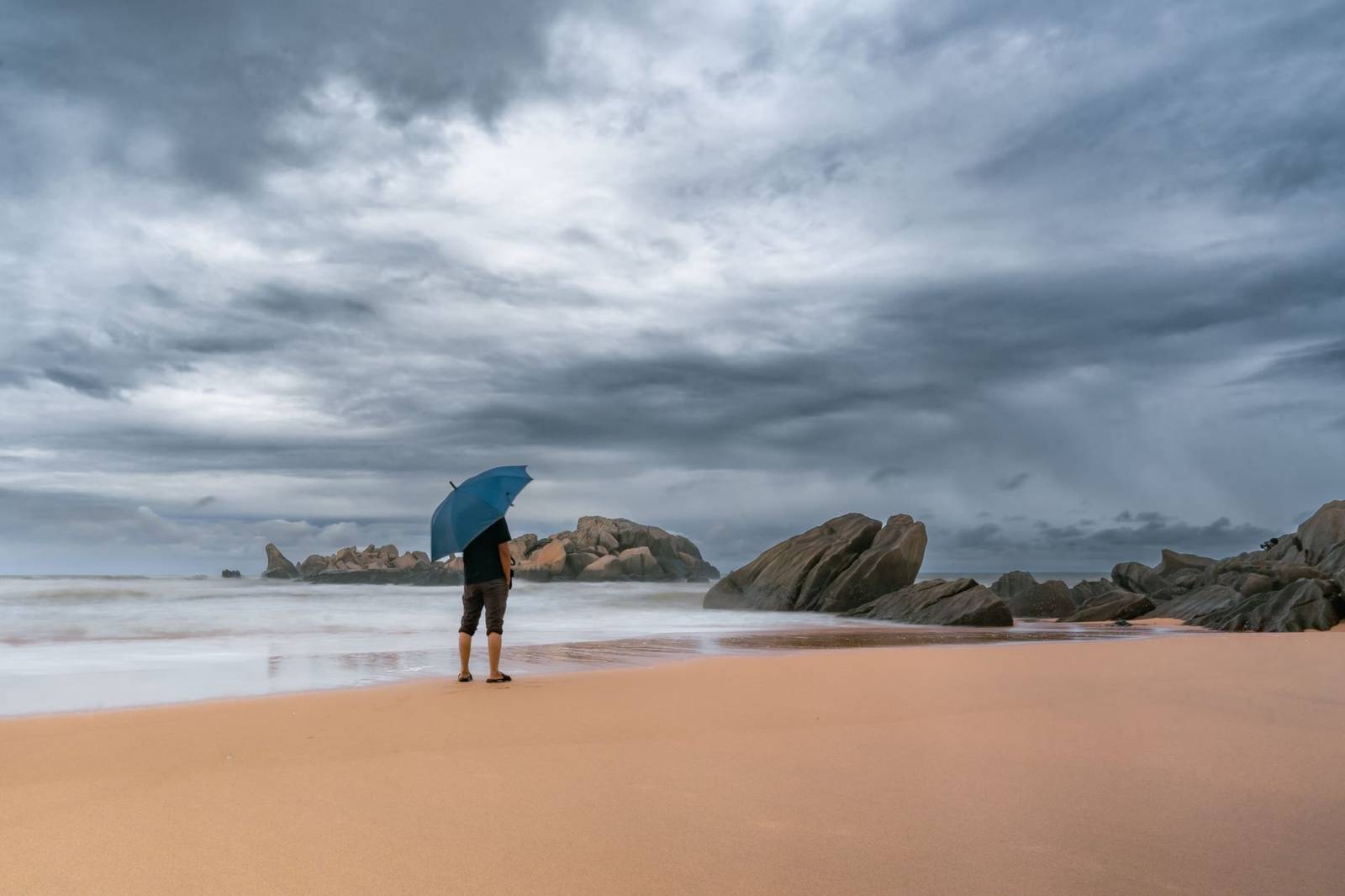
In Malaysia you never need a jumper for the weather, only for the mountains. It is around thirty degrees all year, in January just as much as in July. What does move is the rain, and it never falls everywhere at once. While the boats to the Perhentian Islands sit on the beach waiting out the monsoon, you are on Cenang Beach on Langkawi under a clear blue sky.
That makes “when should I go?” a different question here than in most countries. There is no month when all of Malaysia shuts down, and no month when everything is at its best at the same time. The real question is which coast you want to see, and whether Borneo is part of the plan.
The short version: the west coast around Penang and Langkawi is driest from December to March. The east coast, with the Perhentian Islands and Tioman, takes the northeast monsoon from roughly November to February. On Borneo the driest months fall roughly between March and October, with each place doing its own thing. Want it all in one trip? March to October is your window. Below is what each part of the year gives you, and which route goes with it.
December to February: the west coast in the sun
These are the west coast months. Penang is dry, sunny and a little less sticky, and on Langkawi you get a calm sea and the best sunsets of the year. From January Melaka, Ipoh and the Cameron Highlands also head into their driest stretch, with February the driest month in Melaka and clear mornings over the tea plantations in the Highlands. In Kuala Lumpur, January and February are a lot drier than the autumn.
The other side of the peninsula is a different story. On the Perhentian Islands the sea is too rough for the boats and most of the chalets are shut. On Tioman the ferries run far less often and most dive schools close, although Juara does get its surf season. In Taman Negara the river runs high in December and January, and in bad weather the canopy walkway closes.
On Borneo it is the wet season. Around Kuching the boat to Bako can be cancelled because of the rough sea, and on the Kinabatangan the river can burst its banks. The feedings at Sepilok carry on as normal, because the platform is covered. In Kota Kinabalu the driest stretch of the year starts in February.
If your trip falls in these months, flip the route: build it around Penang and Langkawi and save the east coast islands for next time. In the monsoon, tropical downpours can flood the interior too, so keep a spare day in your plan. And if Chinese New Year lands in your trip, in January or February, expect crowds in Kuala Lumpur and Melaka.
Our verdict: the best time for a west coast trip, with Langkawi as your beach island and Penang as your food city
March to May: the whole country opens up
These are the months when everything comes together. In March the season starts on the Perhentian Islands, still quiet and not everything open yet, and from April both coasts are fully in play. On Tioman, March to May are the best months, with a calm sea and clear water. In Taman Negara the trails dry out and the forest is still fresh and green.
Borneo is looking good too. In Kota Kinabalu, February to April are the driest months, with clear mornings over Mount Kinabalu. In Sepilok, on the Kinabatangan and in Semporna the best stretch starts in March, with calm water for the river cruises and good visibility underwater.
Two cities march to their own beat. In Kuala Lumpur this is the inter-monsoon, with heavy afternoon thunderstorms and April the wettest month, and in Ipoh too the afternoon storms roll in from April. That is no reason to leave them out: head out in the morning and duck into a museum, a mall or a coffee shop in the afternoon. The Cameron Highlands also get more rain in April and May, and the trails can get muddy. On Penang and Langkawi March is still dry, then the first showers come back late in the afternoon.
Our verdict: April is the month when you can combine everything, from the Perhentians to the orangutans of Sepilok
June to October: the east coast and Borneo at their best
Now it flips. The Perhentian Islands are at their best from April to August, with dry weather and the best visibility underwater; June, July and August are also the busiest months, with plenty of Malaysian holidaymakers, so book your first nights on Long Beach ahead. Which beach suits you is on our Perhentian Islands page. September and October are still good, with more showers, and the first places close at the end of October. On Tioman it is hot now with the odd afternoon shower, and the turtles nest in Juara.
On Borneo these are the driest weeks. Kuching is at its best from June to September, with a calm sea out to Bako and the Rainforest World Music Festival in June. Sepilok and the Kinabatangan stay good right through October, with July and August the busiest; how to sort a riverside lodge in those months is on our Kinabatangan page. In Semporna the Sipadan permits go faster in the holidays, so sort yours well ahead. Around Kota Kinabalu it is hot and humid from May to September with afternoon showers, good for the climb, and the sunsets are at their best; from October the wettest stretch starts there.
Taman Negara is hot and fairly dry from May to September, and those are also the busiest months in the park. The west coast is more changeable: Penang and Langkawi get showers late in the afternoon, and from September their wettest stretch begins. Kuala Lumpur, on the other hand, has its driest months in June, July and August, although haze sometimes hangs over the city: check the air quality when it does. Ipoh also has a second dry spell in those months, hot and sometimes hazy.
Our verdict: come in these months for the east coast islands and the Borneo jungle, because both are at their most beautiful
November: a month for cities and food
November is the wettest month of the year in Kuala Lumpur and Melaka, Penang and Langkawi are in the middle of their wettest stretch, and at the same time the monsoon starts on the east coast. That makes it the one month when both coasts are wet at once. On top of that, Sabah Parks closes Sipadan every November to let the reef recover; Mabul, Kapalai and the other dive sites around Semporna stay open.
It is still far from a lost month. In the cities a downpour usually lasts an hour, and in George Town you stay dry under the covered walkways along the shophouses. It is quieter, prices are lower, and the hawkers keep cooking. Pack a rain jacket or umbrella and plan your days around the museums, the coffee shops and the night markets.
Our verdict: the month for Kuala Lumpur, Melaka, Ipoh and Penang, with your rain jacket close to hand
Place by place: when is each one at its best?
- Kuala Lumpur: June to August
- Melaka: January to March
- Ipoh: January and February
- Cameron Highlands: January to March
- Penang: December to March
- Langkawi: December to March
- Perhentian Islands: April to August, open from March to October
- Taman Negara: March to September
- Tioman: March to October
- Kuching: June to September
- Kota Kinabalu: February to April
- Sepilok: March to October
- Kinabatangan: March to October
- Semporna: March to October
What stands out is that “the west coast” does not have one single season. Penang and Langkawi peak around New Year, Kuala Lumpur in the middle of the year, and Ipoh has two good spells. Borneo works the same way: Kota Kinabalu is driest at the start of the year, Kuching in the summer, and the east coast of Sabah has a long season from March to October.
Which route fits which month?
From December to February you follow the west coast: Kuala Lumpur, Melaka, Ipoh, the Cameron Highlands, Penang and Langkawi. That is the classic route on the peninsula, just without the detour to the east coast. Where to sleep on those two islands is on our Penang page and our Langkawi page. Want to add Borneo in February? Start in Kota Kinabalu, where the dry season is just getting going.
From March to October anything goes, and that is the window for combining the west coast, the east coast and Borneo in one trip. Want the east coast islands at their best? Plan them between April and August. Which of the three islands suits your month is in Perhentian, Tioman or Langkawi.
Diving Sipadan? Come between March and October, when the sea is calmest and the water clearest, and sort your permit first. In November the island is closed. If your trip falls in the summer holidays, the permits go faster. More on that in diving Sipadan and Semporna.
How those stops connect in three weeks is in our 3-week Malaysia itinerary, and which side of Borneo suits your month is in Borneo: Sabah or Sarawak.
How hot is it really?
In the lowlands it is around thirty to thirty-three degrees during the day all year, and the difference between the months is small. The thirty-three degree peaks hit Kuala Lumpur and Ipoh in spring, among others, and Taman Negara and Kuching in summer; in the monsoon months the east coast and Borneo drop to thirty or a little below.
The exceptions are up high. In the Cameron Highlands it is about twenty-two degrees in the day all year and fourteen at night, and a few degrees colder still in the Mossy Forest. On the summit of Mount Kinabalu it can freeze around sunrise, whatever month you go. So a jumper, a warm layer and gloves belong in your bag, even if you only use them for a few days. Doing Taman Negara or the Kinabatangan after rain? Pack leech socks too.
Our verdict: pack for the heat, but bring a jumper and a rain jacket, because you will need both more often than you think
Can you visit Malaysia in December?
Definitely, as long as you pick your route to match the season. December to March is the best time for Penang and Langkawi, and Melaka, Ipoh and the Cameron Highlands head into their driest stretch in January too. That is plenty for a full trip down the west coast.
What you leave out is the east coast. Most of the Perhentian Islands is shut, the ferries to Tioman run on a reduced schedule, and in Taman Negara the canopy walkway can close in bad weather. Borneo is wet in those months, although the feedings at Sepilok carry on as normal.
Want it all in one trip, with the east coast islands and the Borneo jungle included? Come between March and October. All fourteen stops with their own season are on our Malaysia page.


