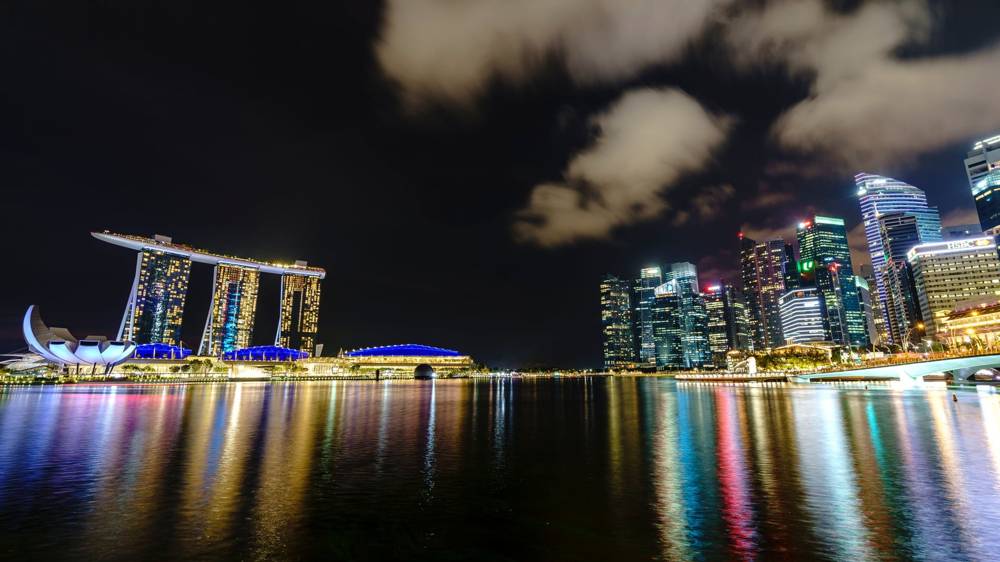
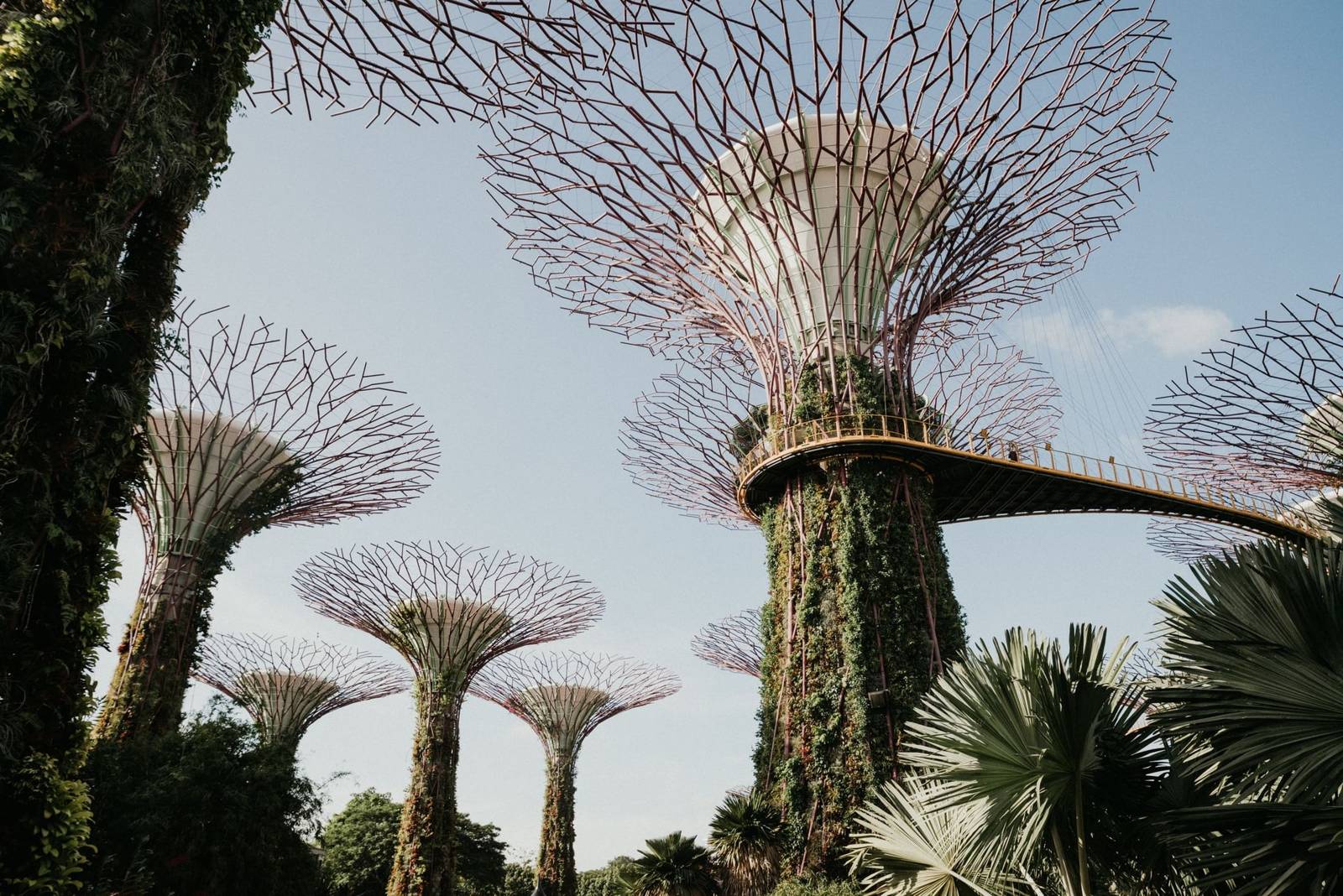
Singapore is a whole country that fits inside one city. An island of 735 square kilometres at the very tip of the Malay Peninsula, where one afternoon takes you from a Chinese temple past a Hindu temple to a mosque, and the evening ends flat on your back under the glowing Supertrees of Gardens by the Bay. Everything works, everything is spotless, and the metro gets you from the airport to the centre in half an hour to 45 minutes.
Most backpackers write Singapore off as the expensive stopover. And yes, a dorm bed here costs more than a hotel room in Vietnam. But backpacking Singapore on a budget is very doable once you know where to go. In the hawker centres a plate of chicken rice costs a few euros, from a stall that has spent decades perfecting that one dish. The best views and light shows in town are free. And the green stuff, from the Botanic Gardens to the little island of Pulau Ubin, costs you a boat ticket at most.
That makes Singapore the ideal start or finish to a Southeast Asia trip. Fly in, spend a few days getting used to the heat and the jet lag in a city where nothing goes wrong, then cross by train or bus into Malaysia. On your first big trip, there is no gentler way in.
Why Singapore?
Singapore is the easiest country in Southeast Asia, which makes it the perfect place to start or end your trip. In a few days you taste three cuisines, walk through four cultures and see a skyline you won't find anywhere else in the region.
- Hawker centres with the best cheap meals in the city
- A futuristic skyline with free light shows
- Chinatown, Little India and Kampong Glam within walking distance
- Tropical green in the middle of the city and on Pulau Ubin
- Changi, an airport you will happily hang around in for a day
- Safe, clean and English everywhere
Singapore suits foodies, anyone going to Asia for the first time and backpackers who want a stopover before heading into Malaysia.
Best time to visit Singapore
Singapore sits just north of the equator, so it is hot all year: around 31 degrees by day, and the nights barely cool off. There is no dry season like in Thailand. It rains all year round, usually as a short, heavy thunderstorm late in the afternoon, after which the sun comes straight back out. December and January are the wettest: the northeast monsoon can bring a whole day of grey sky and rain. February is the driest month of the year, with a breeze that makes the heat bearable.
So when is the best time to visit Singapore? February to April is the most pleasant, but honestly, Singapore always works: the city is built for rain, with covered walkways between the metro stations and air con in every mall. Rebels on the Road tip: do your walks and the Southern Ridges in the morning, and save the museum or the mall for the afternoon. That way you are indoors when the storm breaks, and standing dry under the Supertrees at a quarter to eight for the light show.
Practical information
Most passports on our visa page get you in visa free for up to 90 days; on a Canadian passport it is 30. On arrival you get a digital e-Pass, and that shows how many days you are actually allowed to stay. Your passport needs at least six months left on it when you leave the country again. Fill in the free SG Arrival Card within three days before you arrive, also if you come in by bus or train from Malaysia, and also if you only pop into the city during a layover. The full rundown per passport is on our visa page.
The currency is the Singapore dollar (SGD), written S$. Reckon on roughly one and a half dollars to the euro. You pay contactless almost everywhere, the metro included: just tap your own bank card or credit card on the gate. Plenty of hawker stalls take cards too, but carry some cash for the older ones. Tipping is not the custom; in restaurants you often see "++" after the price, which means another 10% service charge and 9% GST on top. Which card to bring is on our travel cards page.
Singapore has four official languages: English, Malay, Mandarin and Tamil. English is the language of the street, the signs and the government, so you get by everywhere. It does take some getting used to Singlish, the local English full of Malay and Chinese words. When someone says "can lah", it simply means "no problem".
Singapore is one of the safest cities in the world, at night too and when you travel alone. You can drink the tap water everywhere, so just refill your bottle. The country is famous for its strict rules, and they apply to you as a visitor too. What you need to know is below under culture. Before you go, check your own government's travel advice and what your travel insurance covers.
No jabs are required for Singapore unless you arrive from a yellow fever country, and there is no malaria. Travel health services have no general recommendations for Singapore itself, but if you carry on through the region you usually need the jabs for those countries anyway. Dengue does occur: put on mosquito repellent during the day. Which jabs you need is on our vaccinations page.
Singapore is the most expensive country on our route, almost twice the price of Malaysia. Our daily budget of €55 is a budget for the smart backpacker: a dorm bed for €20 to €30, three hawker meals at a few euros a plate, the metro and, above all, free stuff. The money goes on two things here: drinks and attractions. A big bottle of Tiger at the hawker centre is about €6, in a bar one glass easily sets you back €8 to €12, and a ticket for the domes at Gardens by the Bay or a rooftop bar adds up fast. So pick one or two and let the rest go. Staying online is easy: with an eSIM you are connected the moment you land, and many public buildings have free wifi through Wireless@SG.
Backpacker budget: around €55 a day
- €25hostel bed
- €3.50local meal
- €6beer
- €1.20MRT ride
Guide prices for one backpacker. Add a night out or a dive and it climbs fast.
Singapore culture, rules and etiquette
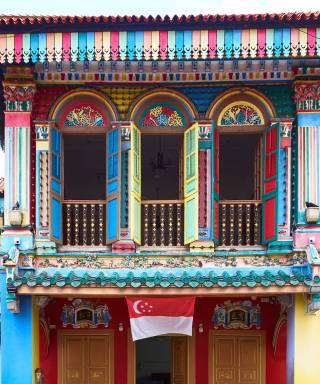
Singapore is a city of migrants. Most people have Chinese roots, alongside Malay and Indian Singaporeans, and each group has kept its own neighbourhood. In Chinatown the red lanterns hang at the Buddha Tooth Relic Temple, in Little India you smell jasmine and curry between the brightly painted shophouses, and in Kampong Glam the golden dome of the Sultan Mosque closes off the end of Arab Street. Then there are the Peranakan, descendants of Chinese traders and Malay women, with their pastel houses in Joo Chiat and a cuisine all of their own.
What brings all those cultures together is food. Singaporeans talk about food the way the British talk about the weather, and since 2020 hawker culture has even been on UNESCO’s list of intangible heritage.
On South Bridge Road in Chinatown a mosque, a Hindu temple and a Chinese temple stand within five minutes' walk of each other.
Then the rules, because that is what Singapore is famous for. They sound strict, but they are easy to follow once you know them. Chewing gum is not allowed into the country and is not sold anywhere, so leave that pack at home. Vapes and e-cigarettes are banned outright: get caught with one and you lose it and get a S$700 fine, about €470, tourists included. No eating or drinking on the metro or the bus, not even a sip of water, and durian, the famously smelly fruit, is not allowed on public transport. Drugs, soft drugs included, carry extremely heavy penalties. Stick to all that and what you mostly notice is the result: a city that is clean, calm and safe.
- "Reserve" your table like the locals do, with a packet of tissues on the seat
- Take your tray back to the rack in the hawker centre yourself
- Take your shoes off in mosques and most temples
- Cover shoulders and knees in the Sultan Mosque (they lend you a robe)
- Bring chewing gum or a vape in your luggage
- Eat or drink on the metro or the bus
- Drop litter in the street or smoke outside the marked spots
- Grab a table with a packet of tissues on it: it is taken
Singapore food
Eating in Singapore means eating in a hawker centre: a covered hall full of stalls, with tables in the middle where everyone sits together. Every stall makes one thing, often for generations, and a plate costs a few euros. There are more than a hundred of them across the city, from Maxwell Food Centre in Chinatown to Lau Pa Sat between the office towers, and the rule of thumb is simple: join the longest queue.
On the road you will be eating things like:

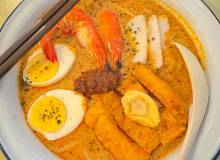
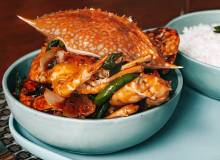
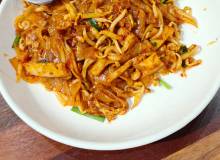

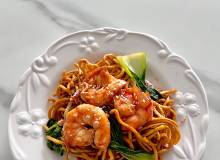
Start your day the Singaporean way: kaya toast, two soft boiled eggs with a splash of soy sauce and a cup of kopi, strong coffee with condensed milk. Chilli crab is the dish Singapore is famous for, but you eat it in a restaurant and it is not a budget meal. Want to splash out once? This is the moment. Order fried buns on the side to mop up the sauce.
Hawker centres and free things to do in Singapore
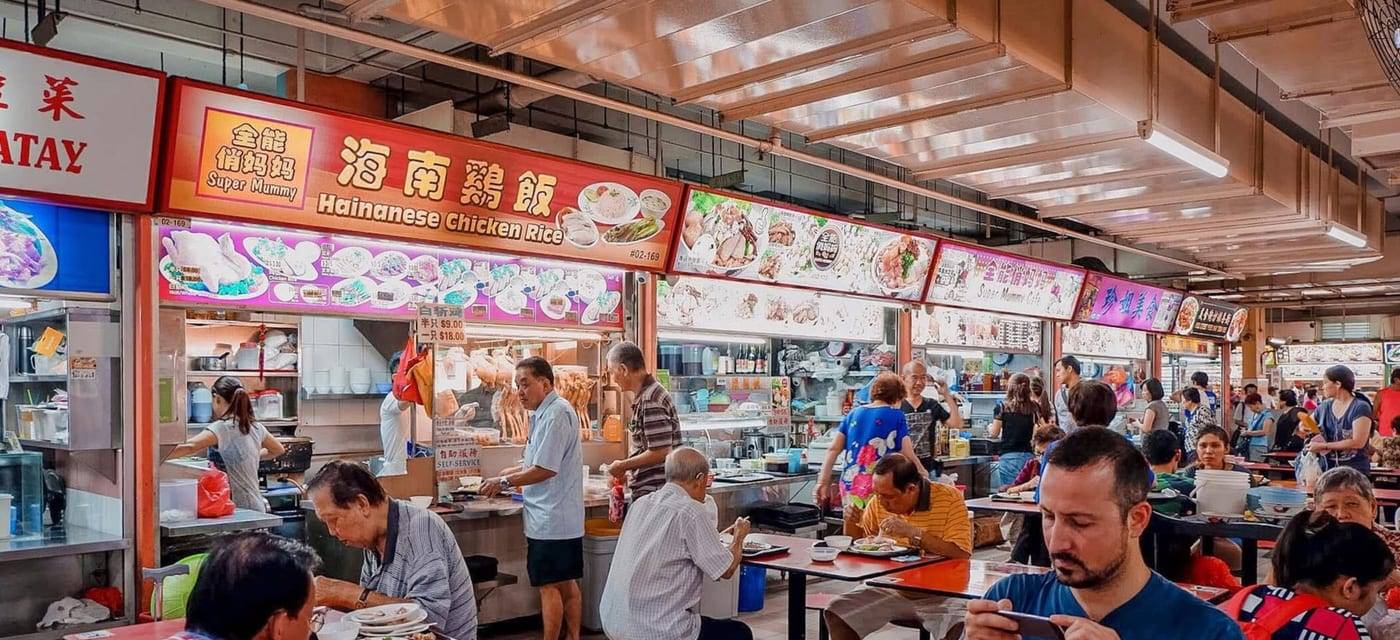
The secret to an affordable Singapore is simple: eat where Singaporeans eat, and do what the city gives away. Which turns out to be a lot. Every evening at 7.45 and 8.45pm the Supertrees at Gardens by the Bay switch on for Garden Rhapsody, a fifteen minute light and music show. You just lie on the ground and look up. The park around them is free too; you only pay for the two big glass domes. Then walk down to the water for Spectra, the light and water show at Marina Bay Sands, at 8pm and 9pm, plus 10pm on Fridays and Saturdays.
By day, wander the Botanic Gardens, a UNESCO World Heritage Site since 2015 and free to enter, or walk the Southern Ridges, a trail through the treetops and over the wavy Henderson Waves bridge. Want a day out of the city? Take a bumboat from Changi Point to Pulau Ubin: for S$4 per person, about €3 and cash only, ten minutes on the water lands you on an island of wooden houses, mangroves and cycle paths, the way all of Singapore used to look. More free things to do, neighbourhood by neighbourhood, are on our Singapore page.
Stopover via Changi: how many days in Singapore?
You don’t need weeks for Singapore. Three to four days covers the highlights: a day for Marina Bay and Gardens by the Bay, a day through Chinatown, Little India and Kampong Glam, and a day for Sentosa, Pulau Ubin or the Botanic Gardens. Want to see Tiong Bahru and the Peranakan streets of Joo Chiat too, or simply spend longer eating from stall to stall? Take that fourth day.
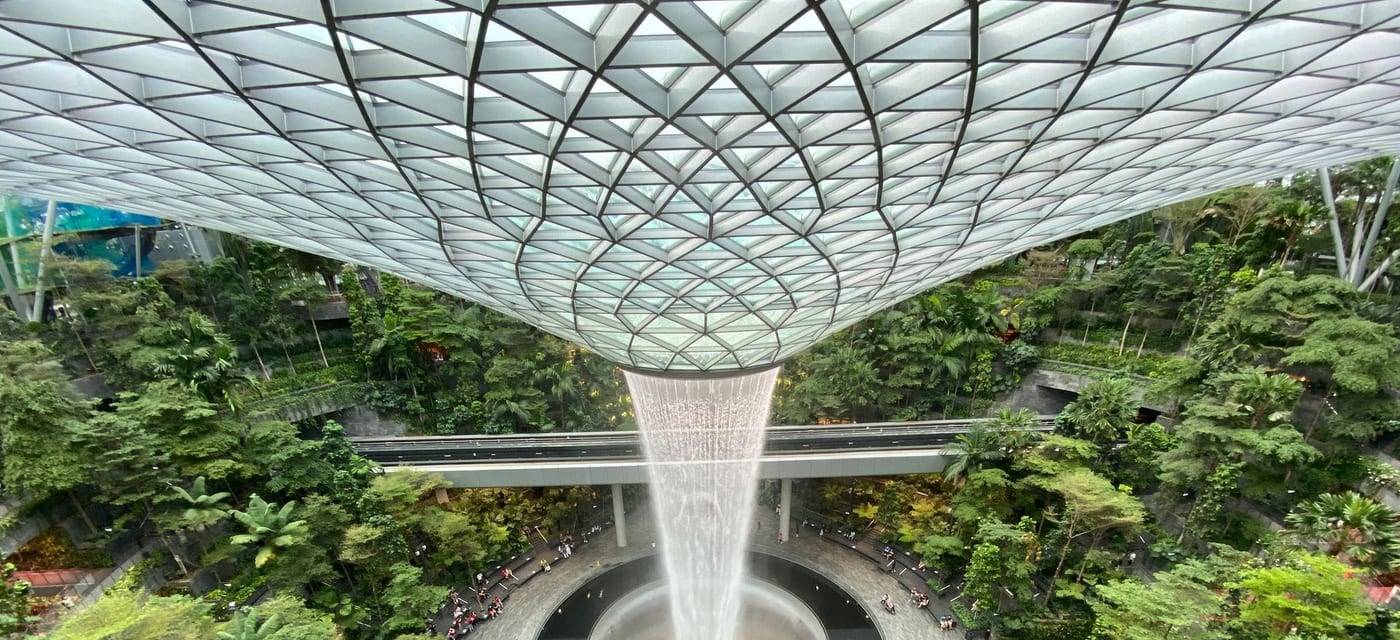
That is why Singapore works so well as a stopover. You fly long haul into Changi, and from there the budget airlines take you on to almost any city in the region. The airport is a sight in its own right: in Jewel, the building opposite Terminal 1, the Rain Vortex plunges 40 metres, the tallest indoor waterfall in the world, in the middle of a covered rainforest. Looking is free. Only got a layover? With a connection of five and a half to 24 hours you can sign up as a transit passenger for the Free Singapore Tour, a free bus loop past the skyline. Don’t forget the SG Arrival Card then either.
Getting around Singapore and on to Malaysia
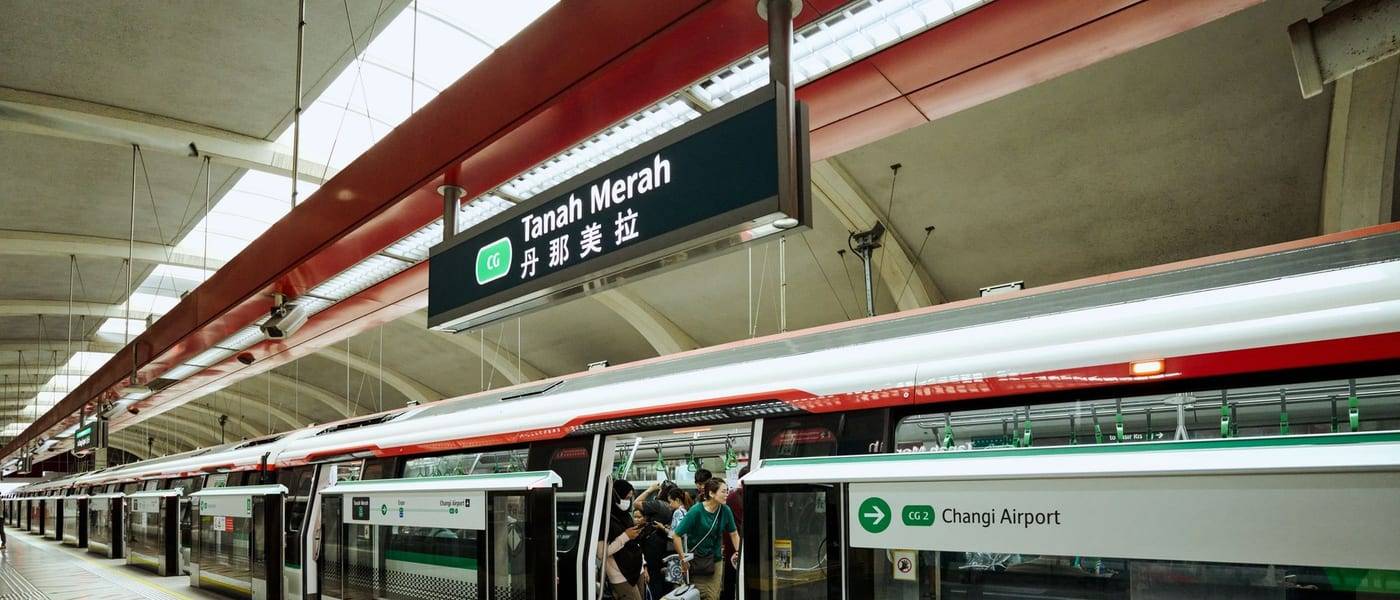
In Singapore itself you need one way of getting around: the MRT. The metro is fast, cool and cheap, with rides from about a euro, and gets you from Changi into town with one change at Tanah Merah. You pay by tapping your own contactless bank card or credit card on the gate, in and out with the same card. For late rides there is Grab, the app for taxis at a fixed price, just like everywhere else in the region.
Maybe the best thing about Singapore is that Malaysia is a stone’s throw away. Over the Causeway at Woodlands you cross to Johor Bahru, and from there the whole peninsula lies open. Comfy buses run straight from Singapore to Melaka, in four to five hours from about €18, and to Kuala Lumpur in five to six hours, for €14 to €30. Those times assume a good run: on Friday evenings, at weekends and around public holidays the Causeway jams solid, and then you can easily be on the road a few hours longer.
Our insider tip is the train. The KTM Shuttle Tebrau slides past the traffic in five minutes, from Woodlands to JB Sentral in Johor Bahru, for S$5 (about €3.50). Since December 2025 the electric ETS train leaves from there to KL Sentral, in around four and a half hours from about €16. Only a handful of trains run each day, so book your ticket a few days ahead. Heading for the beach? Take the early bus to Mersing, about four hours, and the ferry to Tioman, another hour and a half to two hours. Good to know: the RTS Link, a short metro between Woodlands and Johor Bahru, is scheduled to open in February 2027, and the Shuttle Tebrau stops half a year later. So check what is running before you go.
- MRTFast and cheap across the whole city
- GrabFixed price, at night too
- BusTo Melaka, Kuala Lumpur and Mersing
- Shuttle Tebrau & ETSVia Johor Bahru to KL
- PlaneFrom Changi to the whole region
Singapore for every traveller
Singapore is small, but it bends easily to however you travel: eating from stall to stall, a day out in the green, or just recovering after a long flight.
Good hostels in Chinatown and around Bugis, and a budget kept in check with hawker food and free shows.
Chinese, Malay, Indian and Peranakan cooking, often all under the roof of one hawker centre.
Get used to the heat, the food and the time difference here without any stress.
Cycle around Pulau Ubin, hike the rainforest at MacRitchie and find out how green this global city really is.
Going solo? There is no easier city to start in: safe, easy to find your way around, and everyone speaks English.