
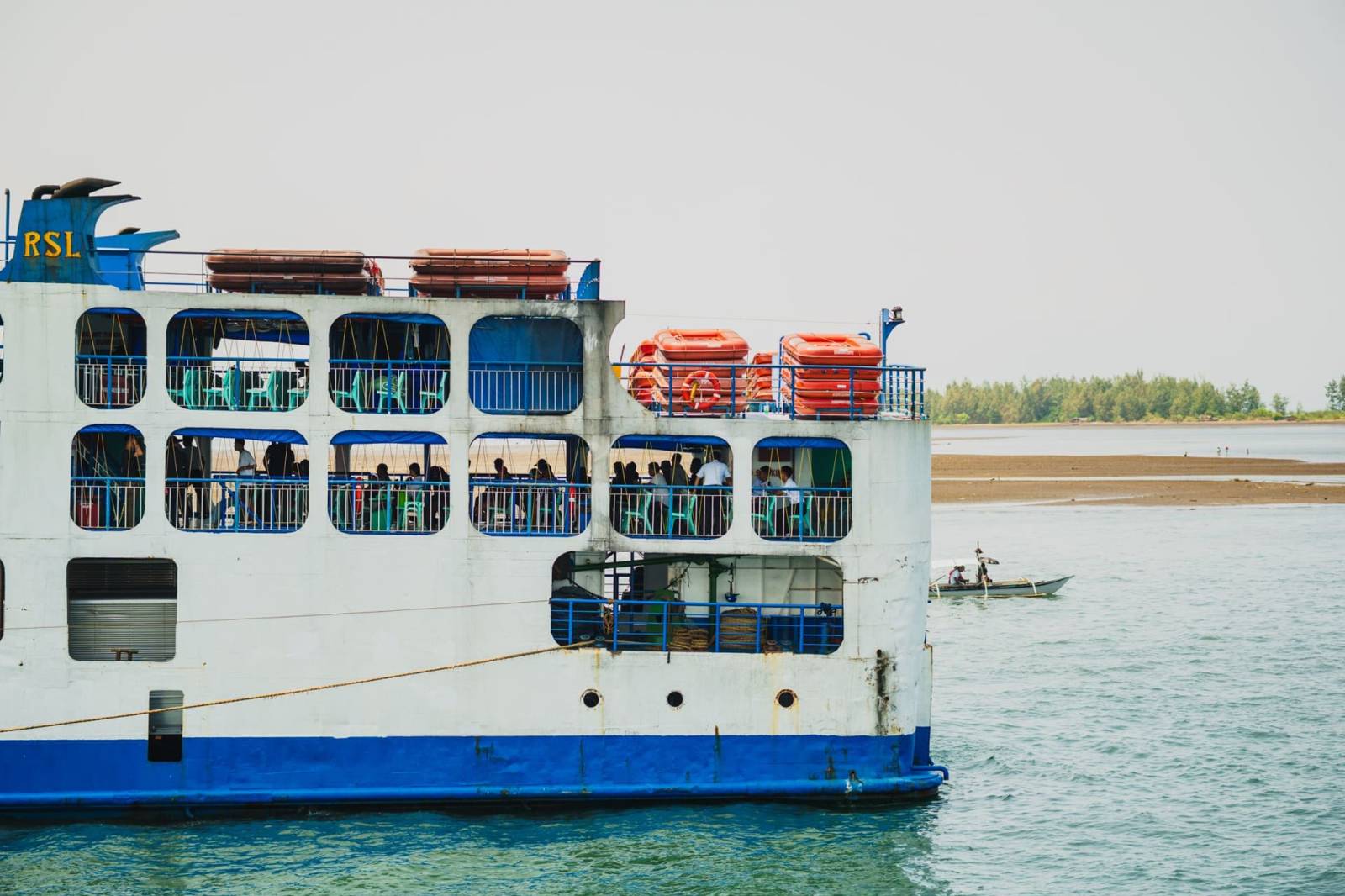
Travelling through the Philippines takes more planning than anywhere else in Southeast Asia, and it comes down to one thing: water. The country is made up of more than 7,000 islands, so you are nearly always combining domestic flights, ferries and buses. Treat the islands like a checklist and you lose days to boats that do not sail and flights that are full.
That island hopping is also exactly what makes a trip here so special. The journeys are part of the experience: the bangka that picks you up off the beach in the morning, the van over the dirt road to Port Barton, the propeller plane to Siargao. It is slower than Thailand, and that is precisely what you come for.
Below, transport by transport: what it does, what it costs and where it tends to go wrong, plus how to get around the cities and the islands themselves. The full route past eleven islands, with the crossing from each stop to the next, is in our Philippines itinerary.
Flying: the fastest way between island groups
For the big jumps you fly. Manila, Cebu, Puerto Princesa, Coron, Caticlan and Siargao are all one to two hours from each other, and booking well ahead gets you the lowest fares. From Manila it is an hour and a half to Puerto Princesa, an hour to Coron, Cebu or Caticlan, an hour and a half to Bohol and two hours to Siargao. From Cebu you fly to Siargao or Coron in an hour, and to Puerto Princesa in an hour and a half.
Not every airport is equally handy. In Puerto Princesa you land in the middle of town, ten minutes from the centre. On Bohol you land on Panglao and you are straight on the right island. Coron’s airport is thirty kilometres out of town, about an hour in a shared van. On Siargao it is another forty minutes from Sayak to General Luna. El Nido has its own little airport, Lio, with direct flights from Manila and Cebu, but it quickly costs several times as much as the bus. And Boracay has no airport at all: you land at Caticlan or Kalibo on the neighbouring island of Panay and cross by boat.
About Manila itself: the four NAIA terminals are a long way apart, so check which one you need before you go. A Grab gets you into the centre for about €5, but in rush hour count on an hour or more.
Our verdict: fly between the island groups, and book well ahead once your dates are fixed, because the planes to Siargao are small and fill up fast
Ferries: between the islands within a group
Where the islands sit close together, the boat does the work. The fast boat from Cebu City to Bohol takes two hours and sails several times a day. From Dumaguete on Negros you are on Siquijor in an hour, also with several sailings a day, and from Siquijor to Bohol it is about two hours, but with fewer departures, so plan that one ahead. Between El Nido and Coron the fast boat takes about four hours, does not run every day and in the rainy season sometimes not at all: check the timetable before you lock in your nights.
For Malapascua you sail from Maya, at the northern tip of Cebu, in thirty minutes, or at low tide in a smaller boat off the beach. To Boracay it is ten minutes from Caticlan. And from Surigao on Mindanao a ferry crosses to Dapa on Siargao: it is slow, but it is also your fallback when the flights are cancelled.
The big ferries from Manila to the Visayas exist too, but they are slow: reckon on days rather than hours.
Our verdict: the ferry for Bohol, Siquijor and Malapascua, and in rough weather ask the evening before whether it is really sailing
Bangkas: the island hopping itself
The bangka is the wooden outrigger boat you see in every photo of the Philippines, and it is what island hopping runs on. Bangkas do the day trips in El Nido and Coron, the island trip with the turtles in Port Barton and the boat trips around Boracay and Bohol, and they take you from Caticlan to Boracay in ten minutes and out to the islands south of Coron for a day.
Before you leave, always ask how many people are coming and whether there are enough life jackets on board, because the cheapest tour is often the fullest. When it is windy a bangka stays on the beach, and in the rainy season the coastguard in El Nido sometimes keeps every boat ashore for a day or two. Take water and sunscreen, because there is no shade anywhere.
Our verdict: the bangka is the reason you are here, but never book a boat trip for the last day before a flight
Overland: vans, buses and the road to Port Barton
On the bigger islands you travel by road. On Palawan the van from Puerto Princesa takes about three hours to Port Barton and five to six hours to El Nido, both from the San Jose terminal outside the centre. The vans leave in the morning and the last one goes in the afternoon, so do not count on leaving in the evening. The last twenty kilometres to Port Barton are partly unsurfaced, and the vans only run once or twice a day: sort out your departure the evening before.
On Cebu the bus to Moalboal leaves from the South Bus Terminal in Cebu City, about three hours for a couple of euros, and the one to Maya for Malapascua goes from the North Bus Terminal in about four hours. That second ride plus the boat takes a whole day, so leave early enough not to arrive in the dark. Count on a couple of euros for a bus ride and about €10 for a boat trip.
Our verdict: the van on Palawan is fine, as long as you check the departure times the evening before
In the villages and cities: tricycle, jeepney and Grab
In the villages and on the islands you take a tricycle, a motorbike with a sidecar, from about 30 to 50 cents for short hops. On Boracay ordinary vehicles are banned and you ride an electric trike for about a euro a ride. In Manila, Grab is the easiest because you know the price up front. The jeepney is by far the cheapest at about 20 cents a ride, and the LRT and MRT are the fastest, although they are packed at rush hour. On the jeepney and the train, keep your phone in your pocket.
For the area around, you rent a scooter, from about €6 to €7 a day. On Siquijor it is the way to ride the 102 kilometre ring road, on Bohol a bridge joins Panglao to the main island, and on Siargao you do everything by scooter. Carry your international driving permit, keep your helmet on, photograph the scooter before you ride off and stay off the dirt roads after dark. On Malapascua and in Port Barton you need nothing: you walk across the island in an hour and through the village in ten minutes.
Our verdict: a tricycle for short rides, a scooter for the islands with a road, and Grab in Manila
Typhoons and the spare day
This is the rule that outranks everything above. June to November is the rainy season, with a chance of tropical storms, and when a typhoon hits, domestic flights are cancelled in bulk and boats stay in for days. So never plan a tight connection to your international flight, keep a spare day for every crossing, and if you are travelling July to October, always build in a spare day before you leave Manila. When to go, and why Siargao has a different season, is on our Philippines page.
How to book it
Two things that make travel days easier. Bring more cash everywhere than you think you will need, because there is no cash machine in Port Barton and the ones on Malapascua and in Coron are often empty. And take money out in Puerto Princesa before you head up Palawan.
Fly or take the boat: which do you pick between the islands?
Fly between the island groups, sail within them. Palawan, the Visayas and Siargao are connected by air, because the ferries between them take days. Within Palawan you take the van and the boat between El Nido and Coron. Within the Visayas the fast boat does the work: Cebu to Bohol, Dumaguete to Siquijor, Maya to Malapascua.
And when in doubt, pick the option with the most departures. A boat that sails four times a day will still be sailing tomorrow. A boat that goes twice a week, or a flight on a small plane in typhoon season, is exactly what you build in a spare day for.


