
Vietnam looks narrow on the map, but it is 1,650 kilometres long and the distances are bigger than most travellers expect. Hanoi to Hue is thirteen hours on the train, Hoi An to Da Lat fourteen hours on the bus. Do that in daylight and you lose a quarter of your trip staring out of the window.
The good news: you can do almost every long stretch overnight. Vietnam has sleeper buses between nearly all the stops, a night train running the full length of the country and cheap domestic flights for the big jumps. The trick is knowing which one to take where.
Below, transport by transport: what it does, what it costs and where it wins, plus how to get around the cities themselves. The full route from north to south, with the journey from each stop to the next, is in our Vietnam itinerary.
The night train: sleeping your way down the country
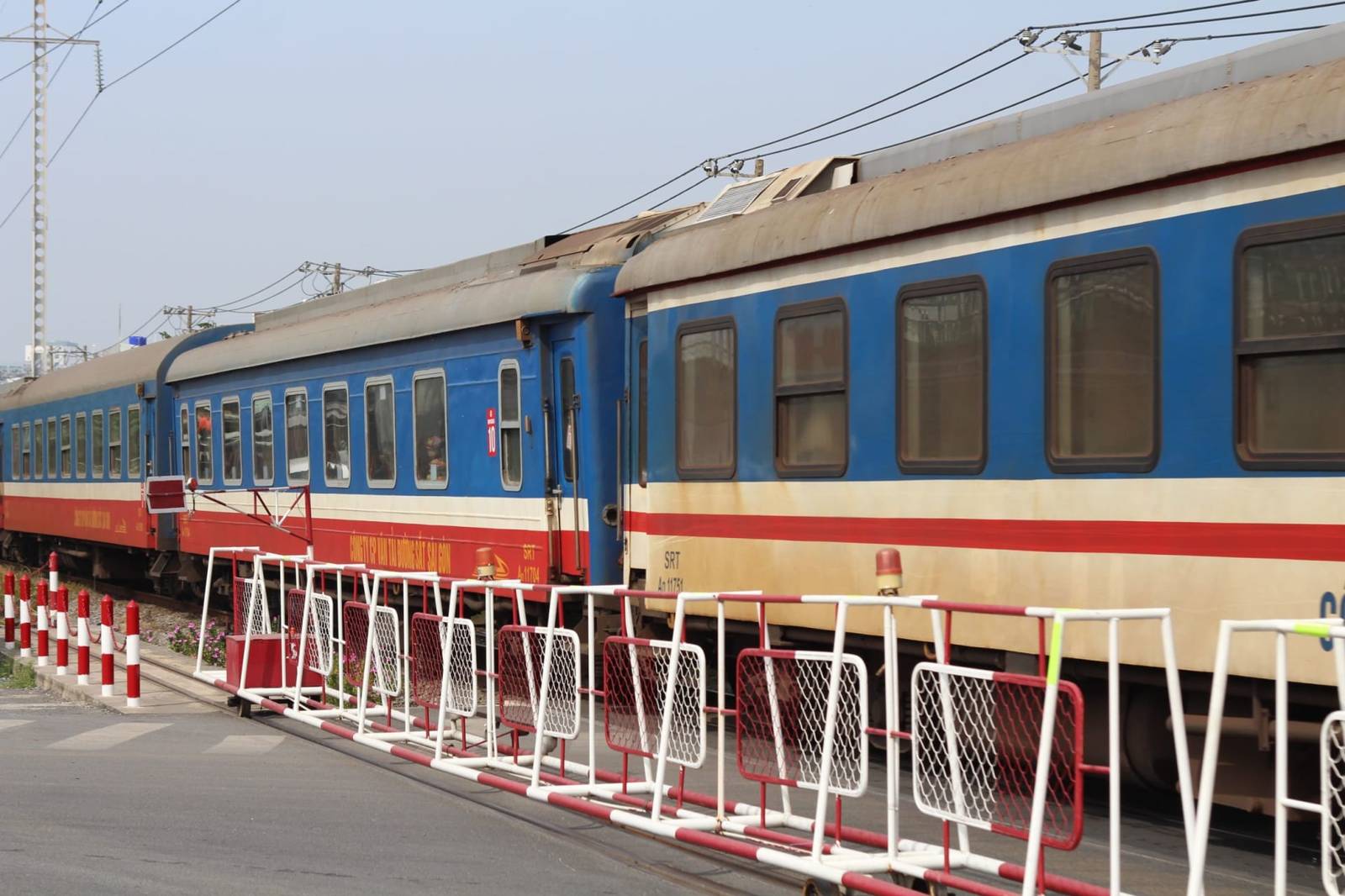
The train runs from Hanoi to Saigon and stops at almost every city on your route. You book a sleeper cabin, get on in the evening and wake up in a different city. It is more comfortable than the bus: you lie flat, you can walk around, and you have a window you can actually see something through in the morning.
The main line
From Hanoi, Ninh Binh is the first stop, two to two and a half hours for a few euros. Further south, Hue takes thirteen hours and Da Nang sixteen, and both work well as an overnight ride. From Saigon the train runs overnight to Nha Trang in about eight hours, and from Da Nang, Nha Trang is ten. For Phong Nha you get off at Dong Hoi, forty-five minutes from the village, and for Mui Ne at Phan Thiet, with half an hour on a bus to the coast after that.
The best ride: over the Hai Van Pass
Between Hue and Da Nang the train climbs over the Hai Van Pass along the coast in three hours, and it is one of the finest train rides in Asia. Do this stretch in daylight, even though it is only three hours, because this is exactly the bit you do not want to sleep through. Want something more memorable? Ride the same pass on the back of an easy rider’s bike and make a whole day of it.
To Sapa
For Sapa, the night train runs to Lao Cai in about eight hours, followed by an hour on a bus up into the mountains. More comfortable than the sleeper bus, which takes six hours, but it does mean a change.
Our verdict: the night train for the long stretches from Hanoi to Hue and Da Nang, and the ride over the Hai Van Pass always in daylight
The sleeper bus: cheap, everywhere and overnight
The sleeper bus is the workhorse of Vietnam. It runs between nearly every stop on the route, costs around €10, leaves in the evening and drops you off early the next morning. You get a bed rather than a seat, in two or three rows, and you sleep less deeply than on the train, but you save a night’s accommodation and a travel day in one go.
The north: Sapa, Ha Giang and Cat Ba
The sleeper bus to Sapa leaves Hanoi at around ten at night and drops you off at around six in the morning. To Ha Giang it is six to seven hours, and you arrive at around five in the morning at the hostel that runs your tour, where you can usually sleep on until breakfast. Between Sapa and Ha Giang a local bus takes about six hours via Lao Cai, so you do not have to go back to Hanoi. For Cat Ba you take a combined ticket: bus to Hai Phong, boat to the island and a minibus into Cat Ba Town, about four hours in total, and from Cat Ba a through ticket for bus and boat takes you on to Ninh Binh in six hours.
Along the coast
From Ninh Binh the night bus takes about eight hours to Phong Nha, and from Hanoi nine. Phong Nha to Hue is four hours, Hue to Hoi An three and a half. From Hoi An the evening buses leave for Nha Trang, about eleven hours, and straight to Da Lat, about fourteen hours, which skips the whole coast in a single night.
Into the mountains and the south
Nha Trang to Da Lat is four hours climbing through the mountains, one of the most beautiful bus rides in the country, and not a fun one if you get travel sick easily. Da Lat to Mui Ne is four hours back down, Mui Ne to Saigon five, Da Lat to Saigon seven and Nha Trang to Saigon nine. All of these buses leave in the evening, so your last day in a place is usually still a full day.
Our verdict: the sleeper bus for everything the train does not do, especially in the north and between Hoi An and Da Lat
Flying: the big jumps
Domestic flights are affordable and ideal for the distances that even a night is not long enough for. Hanoi to Da Nang takes an hour, Hanoi to Saigon two, Saigon to Phu Quoc forty-five minutes and often under €30, Hanoi to Phu Quoc two hours. Short on time? This is how you do the north and the south in one trip without spending a week on buses.
Not every airport is equally handy. Da Nang’s is two kilometres from the centre, ten minutes by Grab. Noi Bai near Hanoi is 35 kilometres outside the city: Grab gets you there in forty-five minutes for about €10, the Vietnam Airlines minibus for €2. Tan Son Nhat near Saigon is seven kilometres from District 1, half an hour by Grab for €5 to €7, or bus 109 for under a euro. Da Lat, Nha Trang and Hue have smaller airports half an hour to an hour from town.
Our verdict: fly between Hanoi and the centre or the south if you have less than three weeks, and always fly to Phu Quoc
Boats: Cat Ba, the bay and Phu Quoc
You reach Cat Ba on the combined ticket above, with a crossing of about 45 minutes from Hai Phong. In stormy weather, always check the boats are running before you set off, and keep a spare day in storm season, because if your boat trip does not go, your whole plan shifts. From the island, boats run to Ha Long City every day.
Phu Quoc is cheaper to reach by fast boat than by plane, from the southwest coast: about an hour and a half from Ha Tien, two and a half from Rach Gia. In the rainy season the sea can get properly rough. Carrying on into Cambodia? Take the boat back to Ha Tien and cross the border from there.
Our verdict: the boat to Cat Ba is a fixed part of the route, the boat to Phu Quoc is the one to take when you are already in the southwest
In the city: Grab, the metro and walking
In the cities, Grab is king. You see the price up front, there is nothing to haggle over, and for short hops you take a Grab motorbike, usually under €1.50. Do not get in with a driver who walks up to you at the airport, and in a regular taxi make sure the meter is on. In Saigon, metro line 1 has run from Ben Thanh to Suoi Tien since late 2024, with tickets from about 25 cents.
Walk wherever you can. Explore Hanoi’s Old Quarter on foot, or you miss exactly what you came for, and the old town of Hoi An is car-free. There you rent a bicycle for about €2 a day, same as in Ninh Binh, where a bike is all you need for the loops around Tam Coc. Hue is flat enough to cycle, and in Sapa and Phong Nha you can walk through the village in ten minutes.
For the surrounding area you rent a scooter, from about €4 to €6 a day. In Hanoi and Saigon themselves that is a bad idea if you do not have much experience, because the traffic there is more unpredictable than anywhere else in Vietnam. Always wear a helmet, never hand over your passport as a deposit, and check that your travel insurance covers riding one. What the law says about your licence is in Vietnam etiquette.
Our verdict: Grab in the big cities, a bicycle in Hoi An and Ninh Binh, and a scooter only outside town
The easy rider: on the back, through the mountains
For the most beautiful stretches of Vietnam there is one more option: sitting on the back behind a local driver who rides those roads every day. On the Ha Giang Loop that is the right choice for most backpackers, at about €45 a day all-in. Over the Hai Van Pass between Hue and Hoi An it is a full day out. And from Da Lat you can do a multi-day trip through the highlands. You leave your big bag behind and only take what fits on the bike. How that works on the loop is on our Ha Giang Loop page.
Our verdict: an easy rider on the Ha Giang Loop, unless you have hundreds of kilometres of mountain road experience
How to book it
Most hostels will book your sleeper bus and have you picked up at the door. Want to compare first, or lock in a night train with a sleeper cabin? You can do that in one place.
Four things that make travel days easier. Book the night train to Hue and Da Nang a few days ahead, because the sleeper cabins are limited. Bring a jumper on the sleeper bus, because the air con is cold. Keep a spare day around every boat in storm season. And if you are arriving from outside Vietnam via Hanoi, Saigon, Da Nang or Phu Quoc, fill in the digital arrival form beforehand, and be ready to show a return or onward ticket. What applies to your passport is on our visa page, and we explain the onward ticket separately.
Night train or sleeper bus: which should you choose?
The train where it runs, the bus where it does not. On the long stretches from Hanoi to Hue and Da Nang, and from Saigon to Nha Trang, you sleep better on the train and arrive rested. The bus wins everywhere there is no track: to Sapa, Ha Giang and Cat Ba in the north, to Phong Nha, and on the jump from Hoi An to Da Lat that skips the whole coast in a single night.
Got less than three weeks? Fly once, between Hanoi and the centre or the south. It saves you a full day and often costs under €30. And whatever you do, do one stretch in daylight: the three hours over the Hai Van Pass between Hue and Da Nang. That is the ride you spent the rest of the country travelling at night for.


