
Ipoh has no list of famous monuments, and that makes it easy to underestimate. Hop off for a photo of one mural and ride on, and you have missed half of it. Because the best of Ipoh is not in the centre but around it: in the green limestone cliffs that rise like walls around the city.
Inside those walls, everything is about food and timing. The coffee shops are at their best before nine in the morning, the cave temples close at the end of the afternoon, and the last little boat at Gunung Lang goes around five. Plan your day the wrong way round and you are standing in front of a closed door three times. Plan it right, and in two days you do more than you would ever expect from a stopover.
So which places are really worth it, and in what order do you do them?
Where to sleep, how to get there and how many days to give it are all on our Ipoh page.
The cave temples in the limestone
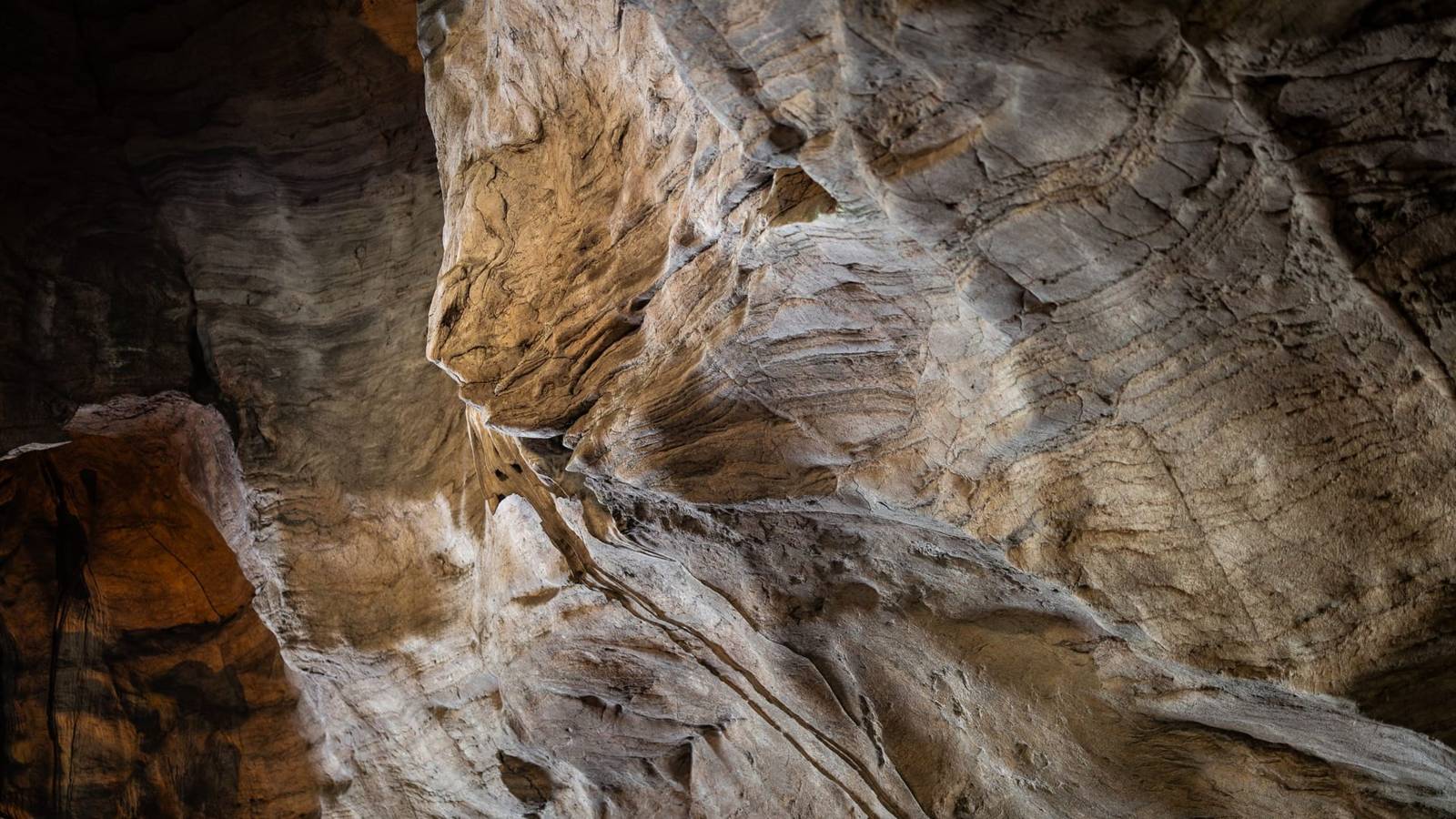
As far as we are concerned, this is the moment Ipoh surprises you. You step out of a Grab at the edge of town, walk into a cliff face and suddenly you are standing in the half dark among Buddhas, in a coolness that feels almost unreal after the hot street.
Sam Poh Tong is the first stop. You walk right through the cave and come out in a courtyard with a pond full of turtles. Kek Lok Tong is a huge cave full of Buddha statues, with a koi garden out the back. Save Perak Tong for last, because there you climb a steep staircase to a view high above the city.
Entry is free, and a small donation is appreciated. A Grab takes fifteen minutes and costs about €2 a ride. Cover your shoulders and knees, wear something other than flip flops for the Perak Tong stairs, and keep food in your bag: there are monkeys around the caves. Be there before four, because they close early.
Our verdict: the high point of Ipoh, and three temples fit perfectly into one afternoon
Gunung Lang and the one euro boat
On the north side of the city is a lake beneath sheer limestone walls that rise straight out of the water. A little boat takes you across, and on the other side a walking trail leads up to a viewpoint above the water. It is the kind of place you expect on the cover of a guidebook, and it costs you about €1 there and back.
The best light falls here late in the afternoon, when the sun slides low across the cliffs. That is also exactly when you need to pay attention, because the last boat back goes around five. Linger too long at the viewpoint and you are on the wrong side of the lake.
So go at around three, after the cave temples or instead of the last one. It is quiet, it is just outside the city and a Grab gets you there in no time.
Our verdict: the prettiest picture in Ipoh for the price of a coffee
White coffee at seven in the morning
Ipoh starts early. At seven the coffee shops on Jalan Bandar Timah are already full of old men behind their newspapers, and every marble table has the same thing on it: white coffee, from beans roasted in palm oil and whipped up with condensed milk. Smooth, sweet, with a layer of froth on top.
Sin Yoon Loong has been pouring it since 1937, and Nam Heong is on the same street. A cup costs from about €0.60, and you order an egg tart or kaya toast with it. On a hot day, do what the locals do and order it iced.
Come early, and not just to be polite. The old places often close by the afternoon, and at weekends there is a queue of day trippers from KL and Penang. On a weekday at seven, you get a table and a city that is still waking up.
Our verdict: the best hour of the day in Ipoh, so set that alarm
Street art and Concubine Lane
In 2014 Ernest Zacharevic painted a series of murals between the shophouses of the old town: an old man with a cup of coffee, a girl with a paper plane. Plenty more have appeared around them since, so you walk from one wall to the next.
In the middle of it all is Concubine Lane, a narrow alley full of little shops and lanterns. You can walk the lot in a morning, for free, and along the way you pass enough colonial buildings to understand how rich tin once made this city. Ask your hostel for a map of the murals, so you do not miss any.
Start straight after your coffee. The old town has little shade, and early on the murals are still in the shade too, which is a lot nicer for your photos as well.
Our verdict: a lovely morning walk that follows on perfectly from breakfast
Bean sprout chicken and the rest of the menu
Ipoh is a food city, and in Malaysia that is saying something. The dish the city is famous for is bean sprout chicken: poached chicken with rice and a plate of fat, juicy bean sprouts on the side. The water from the limestone hills is supposedly why the bean sprouts here are so crunchy.
On top of that you eat curry mee, noodles in a spicy coconut curry, char kway teow from the wok, nasi kandar with a pile of curries of your choice, and roti canai in the morning. Most of the famous places are tiny and do one thing. See a queue? Then you know enough: join it.
Have lunch at a plastic table on the street in the old town, and in the evening cross the river to the new town, where the good places to eat and a few famous names are. A meal costs about €2, so two dinners in one evening is no excess here.
Our verdict: come hungry, because you might eat better here than anywhere else in the country
Kellie’s Castle
Half an hour’s drive from Ipoh, near Batu Gajah, a castle stands in the jungle that was never finished. A Scottish planter started building it around 1915 and died before it was done. What is left is a romantic ruin with towers and corridors, and the ghost stories come free.
Entry is about €2 to €4 for foreigners, and it is about half an hour by Grab. Go late in the afternoon, when the light turns warm. The story behind it tells you a lot about the tin barons who made Perak rich.
It is a separate ride in the other direction, so on your second day pick either Kellie’s Castle or Gunung Lang to finish with. Both want that late afternoon light.
Our verdict: an atmospheric finale if you have an afternoon left
Got time to spare in Ipoh?
The night market and the Sunday flea market
In the evening you wander the night market, and on Sundays there is a flea market too. Staying at Dé Cafe & Rest House? Then you can join their night market food tour: there is no easier way to find the good stalls.
The white railway station
Ipoh’s railway station is so grand and so white that locals call it the Taj Mahal of Ipoh. You can walk there from the old town, and you pass it on arrival anyway. Look back over your shoulder when you get off the train.
Keeping cool in the afternoon
Ipoh is warm all year. Do the old town in the morning and head for the caves in the afternoon, where it is lovely and cool. In April and May, and from September to December, a heavy afternoon downpour is common: a coffee shop is the best place to shelter.
Midweek or early
At weekends lots of Malaysians drive up from KL and Penang just to eat in Ipoh. Plan the most famous coffee shops for a weekday or early in the morning, and you will not queue anywhere.
Our top five in Ipoh
Only got two days? Our five for Ipoh, in this order:
- Sam Poh Tong, Kek Lok Tong and Perak Tong in one afternoon, before four
- The little boat across the lake at Gunung Lang, with the last light on the cliffs
- An iced white coffee on Jalan Bandar Timah at seven in the morning
- The murals by Ernest Zacharevic and Concubine Lane, straight after breakfast
- A plate of bean sprout chicken, and dinner in the new town
Still got an afternoon after that? Take a Grab to Kellie’s Castle near Batu Gajah and stay until the sun is low.
So what do you really have to do in Ipoh?
If you only do one thing: go into the rocks. The old town is pretty and the coffee is famous, but the cave temples are what make Ipoh different from every other stop on the route. Three temples, a Grab in between, and you are done before four.
And stay a night. That is the difference between seeing Ipoh and actually experiencing it. Arrive in the afternoon and leave in the evening, and you miss the moment the city is at its best: early morning, when the shutters roll up and the murals are still in the shade.
So set your alarm, order an iced white coffee with an egg tart that is still warm, and then walk into the old town. At that hour Ipoh belongs to the locals, and you get to join in for a while.


