
Backpacking Ipoh
Ipoh starts with coffee. By seven in the morning the coffee shops on Jalan Bandar Timah are already full, and what is on the table is white coffee: beans roasted in palm oil, whipped up with condensed milk until a layer of froth sits on top. Sin Yoon Loong has been pouring it since 1937. Order an egg tart with it and you instantly get why Malaysians drive here just for a weekend.
The city got rich on tin, and it still shows. The old town is lined with colonial shophouses, with narrow alleys like Concubine Lane and murals by Ernest Zacharevic, the artist who also made Penang famous. The railway station is so white and so grand that locals call it the Taj Mahal of Ipoh.
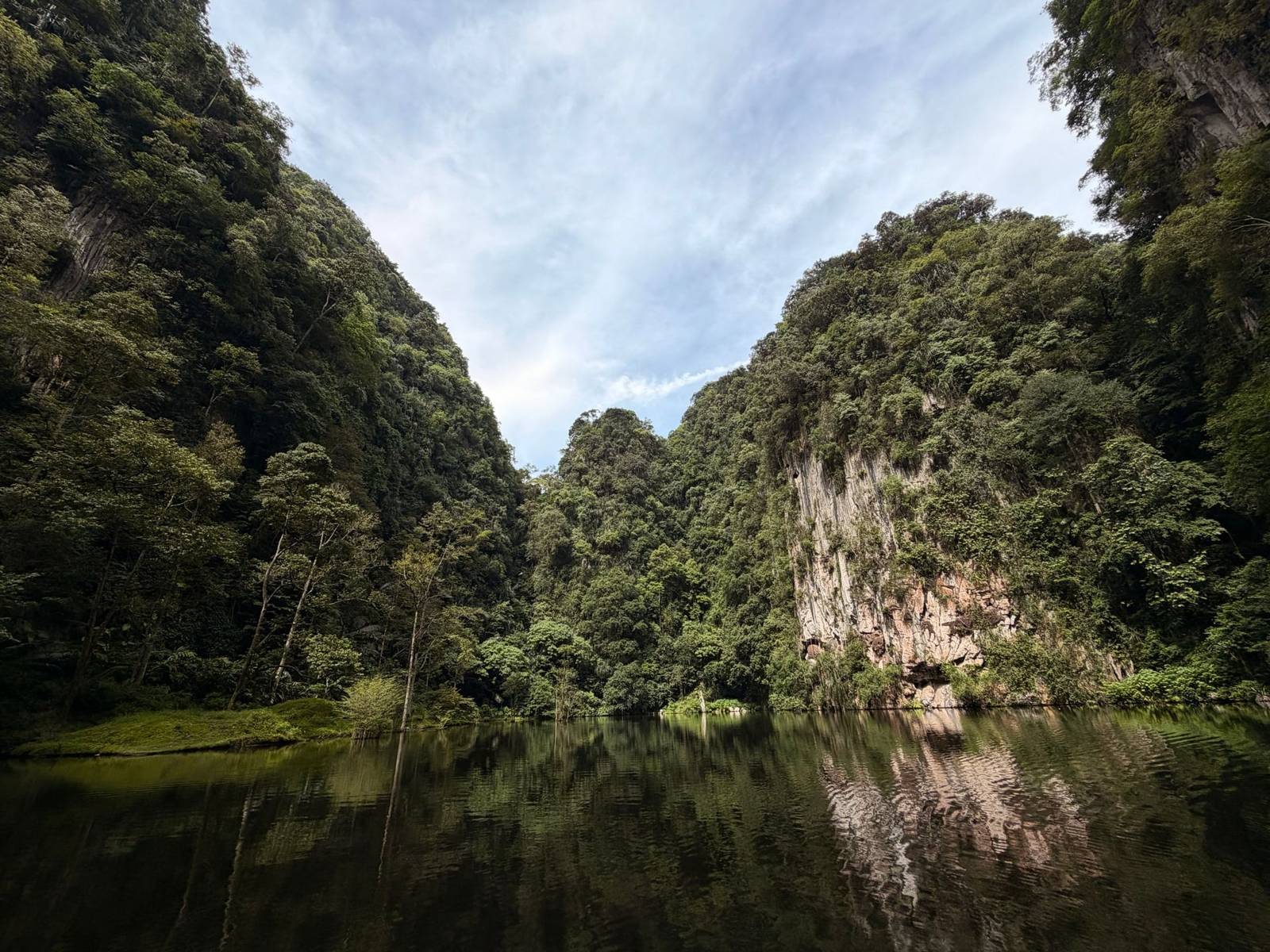
And then the limestone. Around the city green cliffs shoot straight up out of the flat land, and inside them monks built temples: deep in caves, with Buddhas in the half dark and ponds full of koi. Is Ipoh worth visiting? Easily: it is quiet, cheap and right on the route, two hours by train from Kuala Lumpur. Two days is enough, and you might eat better here than anywhere else in Malaysia.
Why Ipoh is popular with backpackers
- White coffee in the coffee shops where it was invented
- Bean sprout chicken and curry mee worth the detour on their own
- Street art all over the old town
- Temples inside limestone caves
- Quieter and cheaper than Kuala Lumpur
- A fast train to KL and Penang
- Right on the way to the Cameron Highlands
- Lovely hostels in old shophouses
Best time to visit Ipoh
Ipoh sits in a valley between limestone cliffs and is warm all year. The rain usually arrives as a short, heavy downpour late in the afternoon.
At weekends Malaysians pour in from KL and Penang just to eat. Heading for the famous coffee shops? Go midweek or early in the morning and skip the queue.
Backpacker budget: around €20 a day
- €8hostel bed
- €2local meal
- €3beer
- €2Grab to the cave temples
Guide prices for a backpacker's day in Ipoh. Add a tour or a night out and it climbs fast.
Best area for backpackers
Ipoh Old Town
Sleep in the old town, on the west side of the Kinta River. That is where the colonial buildings, the coffee shops, the street art and most of the hostels are, and the railway station is walking distance.
The new town across the river has good places to eat too, and a few famous ones. It is a short walk over one of the bridges, so there is no need to sleep there to eat there.
Why the old town?
- Where Ipoh’s hostels cluster
- Coffee shops and street art on your doorstep
- The railway station within walking distance
- Atmospheric colonial streets
- Quiet in the evening
If you sleep in Ipoh, you sleep in the old town.
Best hostels in Ipoh
Dé Cafe & Rest House
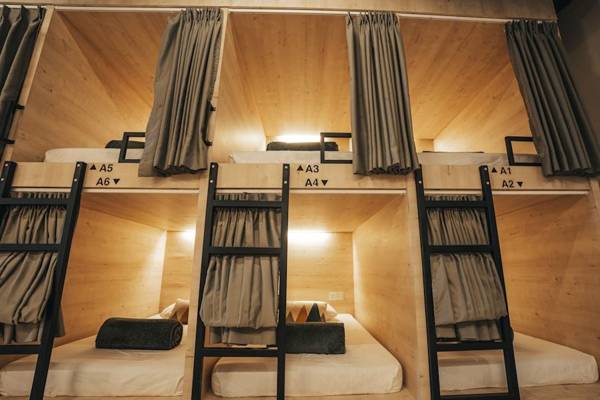
A capsule hostel with a café in the old town, and at 9.7 one of the best rated addresses in Ipoh. They run all sorts: a night market food tour, a games night and a movie night. Lights out at ten, so you actually get some sleep here.
For solo travellers and foodies who want to be social and still well rested.
The Brownstone Hostel & Space
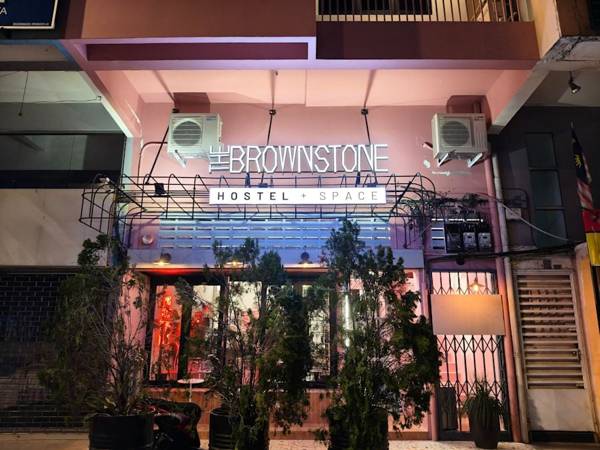
A converted townhouse built around a bright inner courtyard, with dorms and small private rooms. There is a roof garden, the courtyard and a TV room, and the park, the night market and the Sunday flea market are all walking distance.
Good for couples, digital nomads and anyone who likes a bit of design.
Miner’s House Ipoh
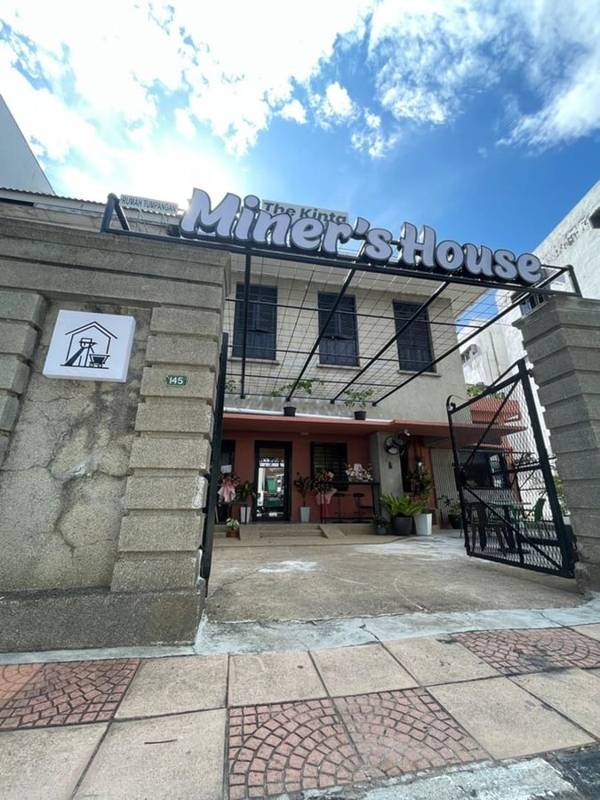
A small, characterful hostel on Jalan Raja Musa Aziz, its name a nod to the city’s tin mining past. Breakfast is free, the rooms are spotless and the staff get close to a perfect ten in almost every review.
For tight budgets, quiet seekers and anyone who loves a free breakfast.
Best things to do in Ipoh
Coffee in the morning, the old town on foot, and the cave temples in the afternoon. Ipoh is small enough that two days feels unhurried.
Street art and Concubine Lane
In 2014 Ernest Zacharevic painted a series of murals in the old town: an old man with a cup of coffee, a girl with a paper plane. They are dotted between the shophouses, and plenty more have appeared around them since. Concubine Lane, a narrow alley full of little shops and lanterns, sits right in the middle.
Why go?
- Murals by the artist who put Penang’s walls on the map
- Concubine Lane and its lanterns
- Colonial shophouses
- Easy to combine with a coffee stop
Ask your hostel for a map of the murals, so you do not miss any.
White coffee in the old town
White coffee in Ipoh is a ritual. The beans are roasted in palm oil and whipped up with condensed milk, and you drink it in a marble topped coffee shop with an egg tart or a slice of kaya toast.
Highlights
- White coffee where it comes from
- Egg tarts and kaya toast
- Coffee shops that are generations old
- Breakfast for a few euros
Order it iced on a hot day: that is exactly how the locals drink it.
The cave temples
Ipoh sits among limestone cliffs, and inside those cliffs are temples. At Sam Poh Tong you walk through a cave into a courtyard with a pond full of turtles, Kek Lok Tong is a huge cave full of Buddhas with a garden out the back, and Perak Tong has a staircase up to a view high above the city.
Why go?
- Temples deep inside limestone caves
- Cool when the afternoon is baking
- A view over the city from Perak Tong
- A koi garden behind Kek Lok Tong
You can do all three in one afternoon, with a Grab in between.
Gunung Lang
A lake beneath sheer limestone walls on the north side of the city. A little boat takes you across, where a walking trail leads up to a viewpoint.
Highlights
- Limestone walls all round the lake
- A short boat ride
- A calm spot outside the city
- Gorgeous light late in the afternoon
This is what the cover of a Malaysia guidebook looks like, and it costs you a euro.
Kellie’s Castle
A half finished castle in the jungle, half an hour’s drive from Ipoh. A Scottish planter started building it around 1915 and died before it was done. What is left is a romantic ruin with towers, corridors and ghost stories.
Why go?
- A mysterious ruin in the green
- Towers and corridors to wander through
- A great photo spot
- The story of Perak’s tin barons
Got a free afternoon after the caves? This is where it goes.
How to plan your days in Ipoh
Two days is enough for Ipoh: a day of old town and food, a day of temples and limestone. Pick how many days you have.
Coffee and the old town. Start with white coffee and egg tarts on Jalan Bandar Timah, then follow the murals to Concubine Lane and the white railway station. At lunch, a plate of bean sprout chicken with rice.
Tonight: dinner in the new town across the river.
Caves and limestone. Grab a ride to Sam Poh Tong and Kek Lok Tong, and finish at Perak Tong for the view. Late in the afternoon head to Gunung Lang or Kellie's Castle.
Tonight: the night market, or the bus to the Cameron Highlands the next morning.
Food and drink in Ipoh
Ipoh is a food city, and in Malaysia that means something. The water from the limestone hills supposedly makes the bean sprouts here extra crunchy, which is why in Ipoh you eat bean sprout chicken: poached chicken with a plate of fat, juicy bean sprouts and rice.
Breakfast in a coffee shop, lunch at a plastic table on the street, dinner in the new town. Most of the famous places are tiny and do one thing. Look for the queue and join it.
What to eat in Ipoh:





Getting there and onward
Ipoh sits right between Kuala Lumpur and Penang, on the railway north. That makes it the perfect stopover.
Getting there. The ETS train from KL Sentral takes about two to two and a half hours, from about €5. From Melaka there is a direct bus of about five hours, or you change to the train in Kuala Lumpur.
Around town. You do the old town on foot. For the cave temples, Gunung Lang and Kellie’s Castle take a Grab, usually a few euros a ride. Long distance buses leave from the Amanjaya terminal, a fair way north of the centre.
Onward. The bus to the Cameron Highlands takes two to two and a half hours, up the mountain to Tanah Rata. Want to head straight for the coast? Take the train to Butterworth in about an hour and a half and the ferry across to Penang.
- ETS trainKL Sentral 2 hrs · Butterworth (Penang) 1.5 hrs
- BusCameron Highlands 2 to 2.5 hrs · Melaka about 5 hrs
- GrabTo the cave temples about €2
- Little boatGunung Lang, about €1 there and back
- On footThe whole old town and the railway station
Staying safe in Ipoh
Ipoh is a calm, safe city. What you need to know here is mostly about temples, heat and opening hours.
- Cover shoulders and knees in the cave temples
- Head out early, the old town has little shade
- Book the train a few days ahead at weekends and in holidays
- Carry cash for the coffee shops and stalls
- Leave the cave temples until late afternoon, some close early
- Climb the Perak Tong stairs in flip flops, they are steep
- Expect to get back across at Gunung Lang after dark, the last boat goes around five
- Walk round the caves with food in your hand, there are monkeys
Rebels on the Road tip
Stay a night in Ipoh and set an alarm. At seven you are in a coffee shop on Jalan Bandar Timah, among old men reading the paper, with an iced white coffee and an egg tart still warm from the oven. Then walk the old town while the shutters roll up and the murals are still in the shade. At that hour Ipoh belongs to the locals, and it is the best hour of the day.
Frequently asked questions
How many days do you need in Ipoh?
Two days is enough: one for the old town and the food, one for the cave temples and the limestone.
What is Ipoh white coffee?
Coffee from beans roasted in palm oil and then whipped up with condensed milk. It is smooth, sweet and creamy, and it comes from the coffee shops of Ipoh.
Where is the best place to stay in Ipoh?
The old town, on the west bank of the Kinta. Hostels, coffee shops and murals are all on the same few streets, and you can walk from the station with your pack.
Is Ipoh expensive?
No, it is cheaper than Kuala Lumpur. €20 a day covers a bed, three meals, white coffee and a Grab out to the cave temples.
Can you do Ipoh as a day trip from Kuala Lumpur?
You can, with the train of about two hours. But Ipoh is on the way to the Cameron Highlands and Penang, so it is smarter to stay a night and then travel on.
What is Ipoh famous for?
White coffee in the old town, the street art and Concubine Lane, the cave temples Sam Poh Tong and Kek Lok Tong, and the lake at Gunung Lang. Do not leave without them.
How do you get from Ipoh to the Cameron Highlands?
By bus from the Amanjaya terminal, two to two and a half hours up the mountain to Tanah Rata. Only a handful run each day, most of them before mid-afternoon, so do not leave it late.
Is Ipoh or Penang better for food?
Both are brilliant, each in their own way. Penang has the big hawker centres and asam laksa, Ipoh has the white coffee, the bean sprout chicken and a quieter, more local feel.
Sources: hostel ratings from Hostelworld, tours and reviews from GetYourGuide, transport and travel times from 12Go, visa rules from the official immigration sites (see our visa page). The daily budget is our own estimate based on hostel, food and transport prices. How we work.
