
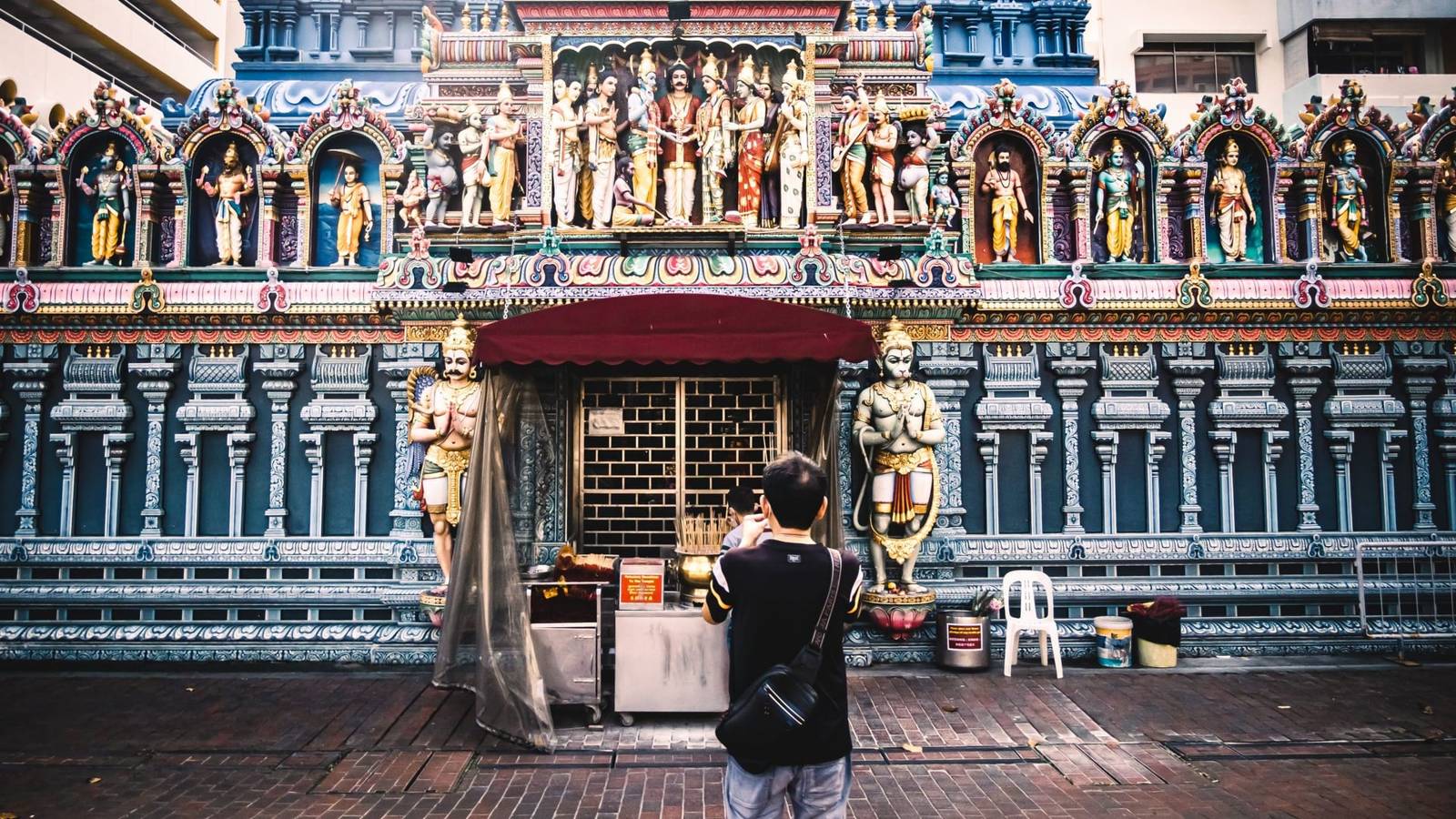
On South Bridge Road in Chinatown you walk past a mosque, a Hindu temple and a Chinese temple in five minutes. A few stops on you smell jasmine and curry in Little India, and at the end of Arab Street the golden dome of the Sultan Mosque gleams. Singapore is a city of migrants, and they all stayed.
It is also the city of rules. You have probably heard the stories: no chewing gum, no vape, not even a sip of water on the metro. They are true, and they really are enforced, tourists included. But there are fewer of them than you think, and they are easy to follow once you know them.
And you get something back for it. You walk from the MRT to your hostel at midnight with your backpack on without giving it a second thought, the tap water is drinkable and the streets are clean. Below are the rules you need to know, the customs you pick up without trying, and the cultures that make this city so special. What to eat here is in a blog of its own: food in Singapore.
Four cultures on one island
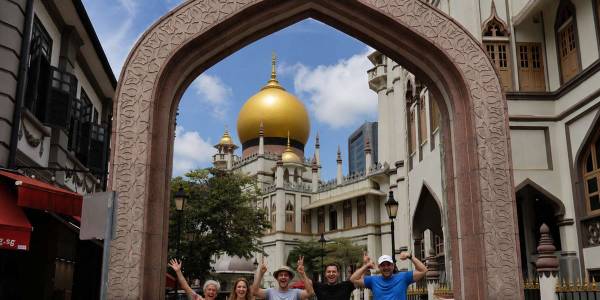
Most Singaporeans have Chinese roots. Alongside them live Malay and Indian Singaporeans, and each group has kept its own neighbourhood. Chinatown has the Buddha Tooth Relic Temple and the Sri Mariamman Temple, Little India has the Sri Veeramakaliamman Temple and the sari shops of Serangoon Road, and in Kampong Glam the Sultan Mosque looks out over Arab Street and the murals of Haji Lane.
The fourth layer is the Peranakan: descendants of Chinese traders and Malay women. They have a cuisine and a style of house all their own, and you see them in Joo Chiat and Katong, where the shophouses stand in rows of mint green, pink and yellow. It is the neighbourhood where you see Singapore the way the locals know it.
What holds all of that together is food. It is the national conversation, and hawker culture, where all those cuisines cook side by side in one hall, has been on UNESCO’s list of intangible heritage since 2020.
English, Singlish and “can lah”
Singapore has four official languages: English, Malay, Mandarin and Tamil. English is the language of the street, the signs and the government, so you get by everywhere, right down to the smallest stall.
What does take some getting used to is Singlish, the English of the street, full of Malay and Chinese words. After a few days you hear it everywhere. If someone answers your question with “can lah”, that is no riddle: it simply means “no problem”.
Singapore rules for tourists
Chewing gum
Chewing gum is not allowed into the country and is not sold anywhere. It sounds like a joke, but it is simply the rule. Leave that pack at home, or bin it before you cross the border.
Vapes and e-cigarettes
This is the rule most travellers trip up on. Vapes and e-cigarettes are completely banned in Singapore: bringing them in, using them and selling them. That goes for you even if you are only changing planes at Changi, and even as a tourist. Get caught with one and you lose it and get a S$700 fine, about €470. So leave it at home, or bin it before you cross the border.
No eating or drinking on the MRT and the bus
On the metro and the bus you eat and drink nothing, not even a sip of water from your own bottle. The fines for it are steep. Finish your bottle on the platform and take your breakfast to the hawker centre, not onto the train. And durian, the famously smelly fruit, is not allowed on public transport at all.
Litter and smoking
Litter goes in a bin and nowhere else, and you only smoke in the spots marked for it. You see the result all around you: one of the cleanest cities you will ever visit.
Drugs
There is one rule with no room for negotiation. Drugs, soft drugs included, carry extremely severe penalties in Singapore. On top of that you can be tested on arrival for what you used before, and what you did legally in another country counts too. Just come from a party somewhere else in the region? Keep that in mind.
Before you even arrive: the SG Arrival Card
Singapore’s first rule applies before you land. Within three days before you arrive, counting the day of arrival, you fill in the free SG Arrival Card. That also goes if you come in by bus or train from Johor Bahru, and also if you pop into the city during a layover.
Only do it through the ICA website or the MyICA app. Some sites charge for it, but the form is free. Coming in overland? Then filling in the card in advance is extra smart: the checkpoint at Woodlands is one of the busiest border crossings in the world, and with everything done already your time in the queue is a lot shorter. Everything else to do with your passport is on our visa page.
The unwritten rules of the hawker centre
The hawker centre has its own etiquette, and it is as fixed as the law. If there is a packet of tissues on a table or a chair, that seat is taken. It is how Singaporeans claim their table before they join the queue. So do not sit there, even if the rest of the table is empty. And do it yourself too: put down your own packet and you can go and order in peace.
When you have finished eating, take your tray back to the rack yourself. Everyone does, from the office workers to the grandad at the next table. You are a guest at the city’s table here, and that is exactly how it feels.
Temples and mosques: how to go in
The temples and the mosque are free and you are welcome. There are just a few things to know. In mosques and most temples your shoes come off, and your shoulders and knees are covered. At the Sultan Mosque in Kampong Glam they lend you a robe if you are showing too much skin, but a thin scarf or long trousers in your day bag is easier: then you can walk in anywhere.
Not sure whether your shoes should come off? Look at the door. If there is a row of shoes there, put yours next to them.
Plan your neighbourhoods around the day a little. Little India is at its busiest on Sundays, which is exactly when it is most fun if you want to see the neighbourhood at its liveliest. Haji Lane comes to life at night.
Tipping in Singapore and the ”++” on your bill
Tipping is not the custom in Singapore. Not at the hawker centre, and not in a restaurant either. In a restaurant do check the menu, though: if there is ”++” after the price, another 10% service charge and 9% GST go on top. Nothing more needs adding to that.
You pay contactless almost everywhere, right down to the MRT, where you tap your own bank card on the gate. Only at the older hawker stalls and on Pulau Ubin, where the bumboat and the bike hire want cash, do you need a few Singapore dollars. Which card to bring is on our travel cards page.
Festivals in the neighbourhoods
Each culture celebrates its own festivals, and then the whole neighbourhood changes. Around Chinese New Year Chinatown is hung with lanterns. For Deepavali, in October or November, Little India puts up its festival lights. Travelling in those weeks? Make sure you go and see it.
There is also one event you notice in your wallet: the Formula 1 race in the autumn. That weekend hostels charge a lot more, so book early if your dates overlap. Which months are best is in the best time to visit Singapore.
Then on to Malaysia
Cross the Causeway to Johor Bahru and more changes than the price of your plate. Malaysia is a Muslim country with customs of its own, from using your right hand at the table to Ramadan. So have a quick read of Malaysia etiquette before you catch the bus. How best to travel the two countries back to back is in our Singapore and Malaysia itinerary.
The attitude that works everywhere
Leave your chewing gum and your vape at home, do not eat or drink on the MRT, put your tissues on the table and take your tray back. Cover your shoulders and knees in a place of worship and take your shoes off where you are asked to. That is all you need to remember. The rest of the time, all you notice of those rules is the result: a city that is clean, calm and safe.
Are the rules in Singapore really that strict?
Yes, and they are enforced on tourists too. But the list you need to know is short: no chewing gum into the country, no vape or e-cigarette (not even if you are only in transit, the fine is S$700, about €470), no eating or drinking on the MRT and the bus, litter in the bin and smoking only where it is allowed. And drugs, soft drugs included, carry extremely severe penalties.
Stick to that and you will not notice anything else. Then Singapore does not feel like a strict country at all, but like one of the easiest and safest cities you will come across on your trip.


