
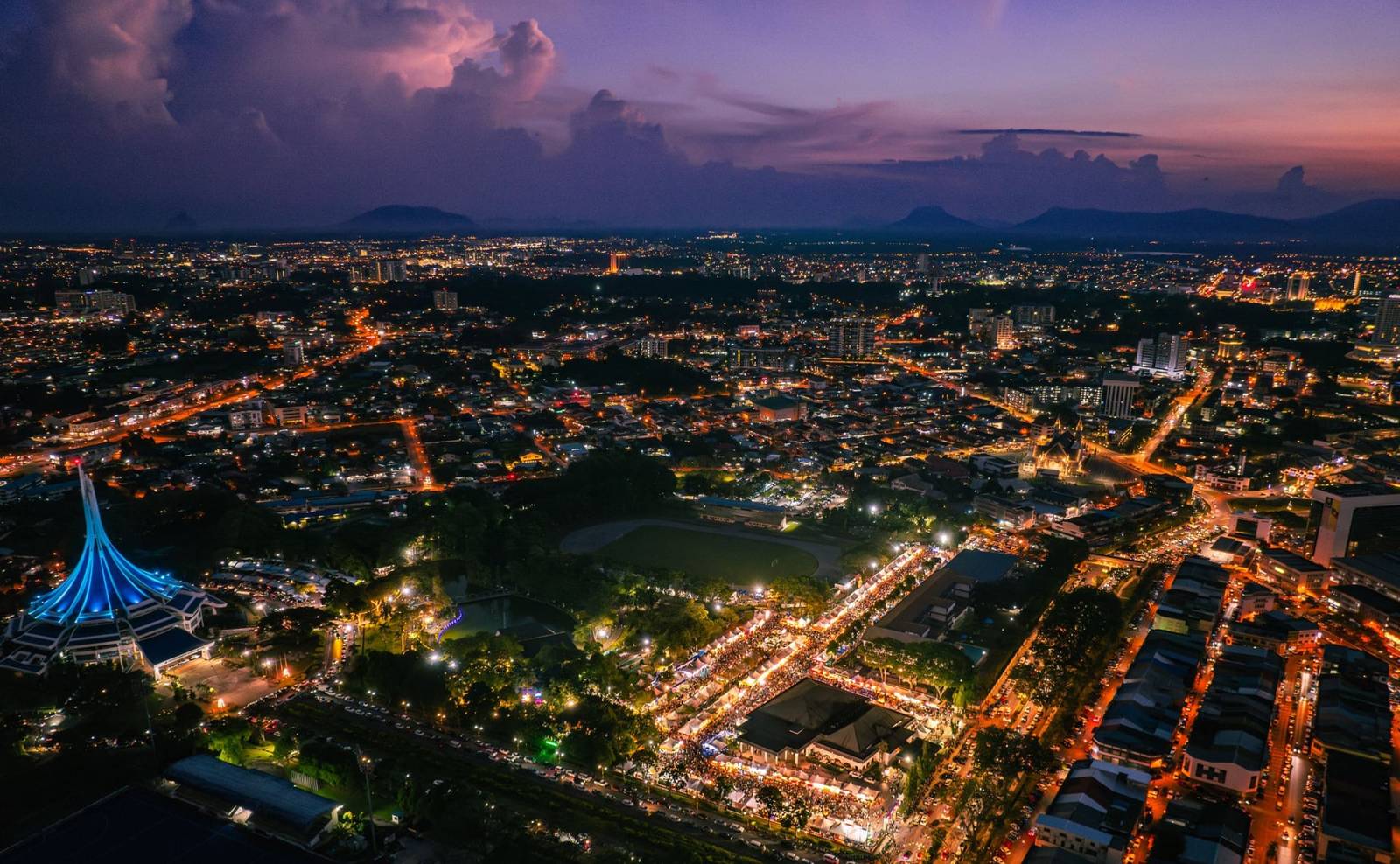
Backpacking Kuching
Kuching is the Borneo city where you stay a day longer than you meant to. At Semenggoh, just outside town, an orangutan drops out of the canopy in the morning and swings down to the feeding platform. A vine bends under the weight, you are a few metres away, and nobody says a word. Half an hour later you are back in town with a bowl of Sarawak laksa. That is a normal day here.
It is the capital of Sarawak and it feels like a big village on a brown river. Colonial buildings and old Chinese shophouses line the waterfront, there are cat statues all over town (kucing is Malay for cat), and for twenty cents a wooden sampan ferries you to the other bank. Nobody here is in a hurry.
The real stuff is outside the city. Bako National Park, with proboscis monkeys in the mangroves and wild pigs on the beach, is a day trip on a city bus and a little boat. For Borneo backpacking, this is the gentlest start you will get: three to four days, about €22 a day, and laksa every single morning, just like the locals.
Why Kuching is popular with backpackers
- Wild orangutans at Semenggoh
- Proboscis monkeys in Bako National Park
- A laid-back city on the river
- Sarawak laksa for breakfast, every single day
- Cheap and easy to get around
- The softest landing on Borneo
- Up close with the culture of the Dayak peoples
- Mulu and the rest of Sarawak within reach
Best time to visit Kuching
Kuching sits just north of the equator and it rains all year. What changes is how much: the northeast monsoon arrives at the start of the year, and the summer is a lot drier.
In the wet season the orangutans at Semenggoh actually turn up at the platform less often, because the forest is full of fruit. Great for them, less great for your photo. So go twice.
Backpacker budget: around €22 a day
- €6hostel bed
- €1.50local meal
- €2.50beer
- €2Grab ride in town
Guide prices for a backpacker's day in Kuching. Add a tour or a night out and it climbs fast.
Best area for backpackers
The old centre
Sleep in the old centre, between the waterfront, Carpenter Street and Padungan Road. That is where the old Chinese shophouses are, the temples, the kopitiams for breakfast and most of the hostels.
Everything you want to see in town is walkable from here: the waterfront, the cat statues, the museums and Main Bazaar. The stop for the city bus to Bako and Semenggoh is a short walk away.
In the evening you sit by the river or in one of the little bars and cafés around Carpenter Street and Padungan.
Why stay in the old centre?
- Everything within walking distance
- Kuching’s hostels, clustered in a few streets
- The waterfront round the corner
- Kopitiams serving laksa and kolo mee
- Buses to Bako and Semenggoh close by
- Lively and safe, in the evening too
Every day in Kuching starts and ends here, so this is where you want your bed.
Best hostels in Kuching
Marco Polo
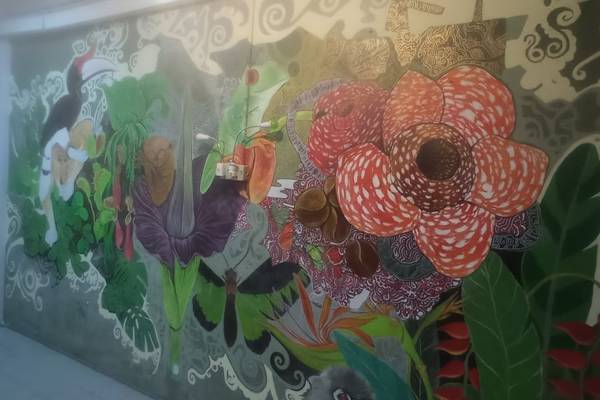
Marco Polo has been the Kuching classic for years: a guesthouse on Padungan Road with dorms and private rooms, walls covered in Bornean paintings, and owners who will sort out Bako, Semenggoh or a longhouse for you without breaking a sweat. The cat statues are round the corner and the waterfront is a fifteen-minute walk.
Ideal for
- Solo travellers
- Anyone who wants help planning
- Making your money last
The Wheelhouse
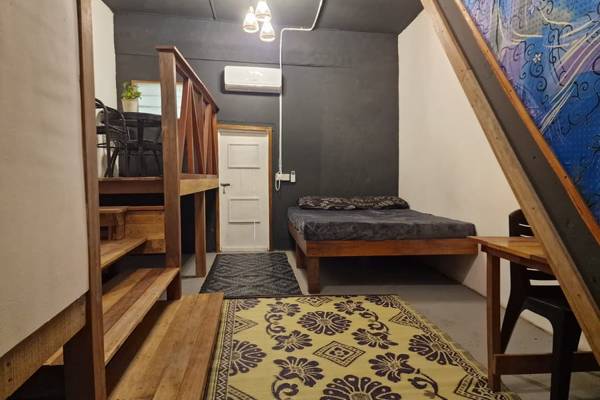
The Wheelhouse is in a restored nineteenth-century shophouse on Carpenter Street, two minutes from the waterfront. You sleep in a capsule dorm, each pod with a curtain, a light and a socket, on one of the oldest streets in the city. You cannot sleep any closer to old Kuching than this.
Ideal for
- Sleeping right in the old town
- Fans of old buildings
- Backpackers who like a bit of privacy
Check In Lodge
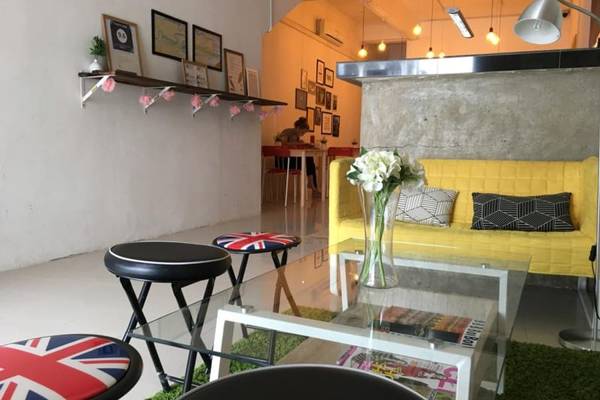
Check In Lodge is modern, sleek and quiet, with a roof terrace, a small indoor pool and a help-yourself breakfast. It is on Padungan Road, between the old shophouses and the coffee places, ten minutes on foot from the waterfront. Mostly private rooms, plus one dorm.
Ideal for
- Couples
- Backpackers after some quiet
- Working from a roof terrace
Best things to do in Kuching
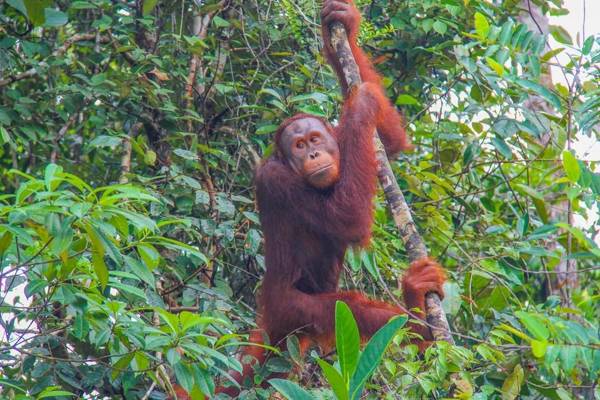
Semenggoh: orangutans at the feeding platform
Semi-wild orangutans live in the forest at Semenggoh Wildlife Centre. Twice a day there is fruit on the platform, and whoever is hungry comes down to eat.
Why go?
- Orangutans a few metres away
- They live free in the forest here
- Cheap and easy from town
- Two chances a day
Go in the morning, and come back in the afternoon if nobody showed up.
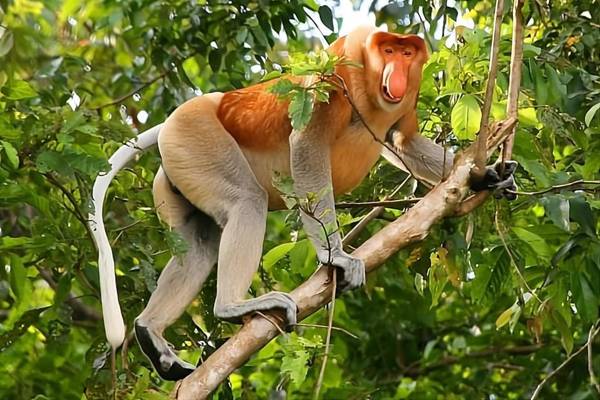
Bako National Park
Sarawak’s oldest national park: rainforest, mangroves, sandstone cliffs and beaches with wild pigs wandering along them.
Highlights
- Proboscis monkeys in the trees around park HQ
- Bearded pigs on the beach
- The sea stack at Teluk Pandan Kecil
- Jungle trails along the coast
- Pitcher plants beside the path
Go early, split the boat with other backpackers and book your return as late as you can (three o’clock at the latest). Want the proboscis monkeys in the late afternoon? Stay the night.
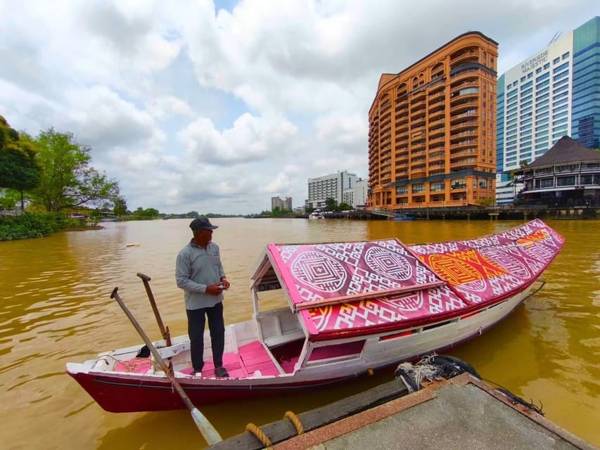
The waterfront and the sampan
The waterfront along the Sarawak River is the heart of the city, and the old wooden sampans still shuttle back and forth across it.
Why do it?
- The Darul Hana Bridge lit up at night
- Crossing the way locals have for centuries
- The golden parliament building on the far bank
- Little evening markets and street performers
Pay with exact change when you get off: the crossing is one ringgit.
The cat city
Kuching means cat, and the city leans all the way into it: cat statues on roundabouts and squares, and even a cat museum.
Highlights
- Photos with giant cats
- A museum full of cat art and cat history
- An easy half day between the wildlife trips
- Perfect for a rainy afternoon
Slightly bonkers, and the city knows it.
Sarawak Cultural Village
An open-air museum at the foot of Mount Santubong, with the traditional houses of Sarawak’s peoples, a longhouse among them.
Why go?
- Learn how the peoples of Borneo lived
- Walk inside traditional longhouses
- A dance show with live music
- Easy to combine with Santubong and the beach
The Rainforest World Music Festival happens here every June too.
Mount Santubong
The green mountain above the coast near Kuching, with a steep jungle trail to the top.
Highlights
- Views over the coast and the South China Sea
- A proper jungle hike right next to the city
- A cooling dip in the sea at Damai afterwards
- Good training if you plan to hike further into Borneo
A brutal morning you will still feel at the end of the week. Worth every step.
Kuching itinerary: three or four days
Three days gets you the city, the orangutans and Bako. Add a fourth and Santubong and the Cultural Village come into it. Pick how many days you have.
The old town. Sarawak laksa for breakfast, then Main Bazaar, Carpenter Street, the cat statues and the Chinese temples. Late in the afternoon, the sampan to the other bank.
Tonight: the waterfront as the Darul Hana Bridge lights up.
Semenggoh. Early out to the feeding platform for the orangutans, then back into town for kolo mee and an afternoon in the museums or the cat museum.
Tonight: dinner at the city's seafood stalls.
Bako National Park. Bus 1 to Kampung Bako and the boat into the park. Proboscis monkeys around HQ, the trail to the sea stack and the pigs on the beach.
Tonight: back on the last bus, or sleep in the park (check with Sarawak Forestry beforehand that there is space).
Santubong or the Cultural Village. Climb Mount Santubong in the morning, or see the longhouses and dances at the Sarawak Cultural Village.
Tonight: a flight to Kota Kinabalu or Mulu.
Food and drink in Kuching
Kuching eats in kopitiams: old coffee shops where every stall does one thing and you sit at a shared table. Order your noodles from one stall and your drink from the next.
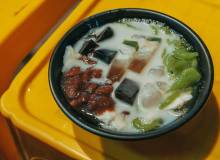
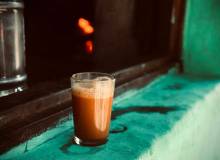
Two dishes you have to eat here. Sarawak laksa is a creamy, spicy soup with prawns, chicken and vermicelli, and it is breakfast: the best places sell out around midday. Kolo mee is dry noodles with roast pork, and locals eat it pretty much every day.
What to eat in Kuching:




Getting there and onward
Kuching is on Borneo, and from the peninsula the only way here is by plane. Flights are short and often cheap.
Getting there. There are direct flights from Kuala Lumpur and Johor Bahru, including if you are coming from Tioman. Heads up: Sarawak runs its own immigration. Even arriving from the peninsula you go through passport control and get a new stamp, so keep your passport handy.
In town. You can walk the old centre. For Semenggoh and Bako take the city bus or a Grab; a ride across town is about €2.
Onward. Kota Kinabalu in Sabah is about an hour and a half by plane, with several flights a day. Overland, buses run to Pontianak in Indonesia.
- PlaneKota Kinabalu 1.5 hrs · Kuala Lumpur 2 hrs
- MuluFlights only, just over an hour and a half
- City busBako 45 minutes · Semenggoh too
- SampanAcross the river for about €0.20
- OnwardBus to Pontianak in Indonesia
Staying safe in Kuching
Kuching is one of the calmest, safest cities in Malaysia. The places to keep your wits about you are the parks, where the animals are wild and the sea makes its own rules.
- Register your Bako visit online with Sarawak Forestry before you go
- Listen to the rangers at Semenggoh and keep your distance
- At low tide in Bako, have your shoes off and a towel ready for the last stretch through the water
- Carry your passport on every flight within Borneo
- Leave food lying around in Bako: the macaques take everything
- Get between a mother pig and her piglets
- Feed or touch an orangutan
- Miss the last boat back from Bako if you have no bed in the park
Rebels on the Road tip
Got time to spare? Fly to Gunung Mulu National Park. No road goes there; the only way in is by plane, just over an hour and a half from Kuching. Waiting for you are enormous caves, including one of the biggest cave chambers in the world, and at sunset millions of bats pour out into the sky in long, twisting ribbons. Give it at least two nights, because the weather sometimes scrambles a flight.
Frequently asked questions
How many days do you need in Kuching?
Three to four. Three gets you the city, Semenggoh and Bako; a fourth adds Mount Santubong or the Sarawak Cultural Village.
Are you guaranteed to see orangutans at Semenggoh?
No. They live free in the forest and only come in when they are hungry. In fruiting season they stay away more often. Go in the morning and come back in the afternoon if you missed them.
Can you do Bako as a day trip?
Yes. Bus 1 to Kampung Bako and then a boat of twenty to thirty minutes. If you want the proboscis monkeys at the end of the day, stay a night in the park. Check with Sarawak Forestry beforehand that there is space.
Do you need a separate visa for Sarawak?
No, but Sarawak does run its own immigration. Even coming from the peninsula you go through passport control and get a new stamp. Check our visa page for what applies in Malaysia.
Where to stay in Kuching?
The old centre, between the waterfront, Carpenter Street and Padungan Road. You can walk to the river, the cat statues and your breakfast laksa, and the Bako bus stop is close by.
What should you eat in Kuching?
Sarawak laksa for breakfast and kolo mee for lunch. Every kopitiam has both, and the best laksa is gone by midday.
How do you get from Kuching to Kota Kinabalu?
Fly. It is about an hour and a half with several flights a day. Overland it is a long trip through Brunei.
How do you get to Mulu?
By plane only, from Kuching or Miri. There is no road to the park.
Is Kuching expensive?
No. €22 a day does you fine here, with dorm beds from €6. A meal in a kopitiam is a euro or two; the only thing that is pricey in Malaysia is beer.
Sources: hostel ratings from Hostelworld, tours and reviews from GetYourGuide, transport and travel times from 12Go, visa rules from the official immigration sites (see our visa page). The daily budget is our own estimate based on hostel, food and transport prices. How we work.
