
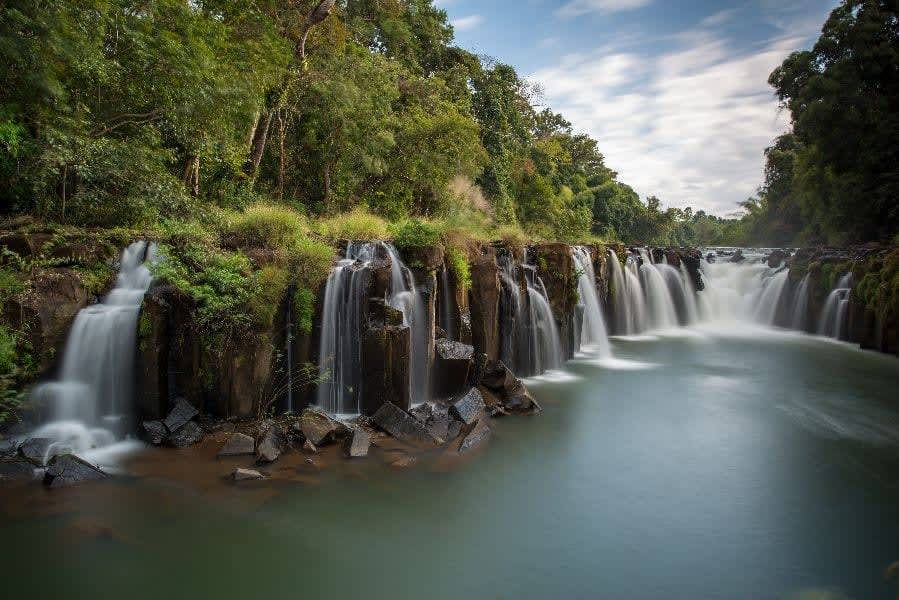
Backpacking Pakse
Pakse is the second loop town in Laos, and the gentler of the two. Where Thakhek is caves and hard riding, the Bolaven Loop out of Pakse is waterfalls, coffee farms and a plateau at twelve hundred metres where you actually need a jumper.
The town itself is a working river city at the junction of the Mekong and the Xe Don, with a market, a couple of hostels and not much reason to linger. You come for what is around it: three days on a scooter through the coffee highlands, and a Khmer temple a hundred and twenty kilometres south that was built before Angkor Wat.
It is also the last stop before Cambodia, which means a lot of people arrive here with their Laos trip almost finished and leave with the best part of it done.
Why Pakse is popular with backpackers
- The Bolaven Loop, the friendlier of Laos’s two motorbike routes
- Waterfalls with a hundred-metre drop, and some you can stand behind
- Coffee farms you ride between, taste at and sleep on
- Twelve hundred metres of altitude, so it is genuinely cool up there
- Wat Phou, a Khmer temple older than Angkor and with nobody at it
- The gateway to the 4000 Islands and to Cambodia
Best time to visit Pakse
Pakse is the start of the Bolaven Loop, which you ride on a scooter. The plateau is over a thousand metres up, so it is noticeably cooler than the town.
For the waterfalls on the Bolaven Plateau the end of the rainy season, September and October, is the moment: they are thundering and the roads have already started to dry out. In April they can be a trickle.
Backpacker budget: around €17 a day
- €5hostel bed
- €2local meal
- €1beer
- €8scooter per day
Guide prices from our own days in Pakse. Add a tour or a night out and it climbs fast.
Best hostels in Pakse
Stay in the centre near the rental shops, because your day starts with picking up a bike and leaving your big bag behind.
Sanga Hostel
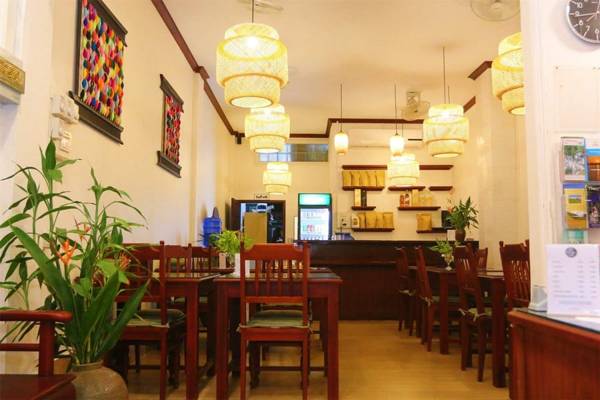
A 9.7 from over a thousand reviews, which makes it the highest rated hostel in southern Laos. They rent the bikes, brief you on the loop, store your bag, and the common room is where the groups form.
You Empire Hostel and Bar
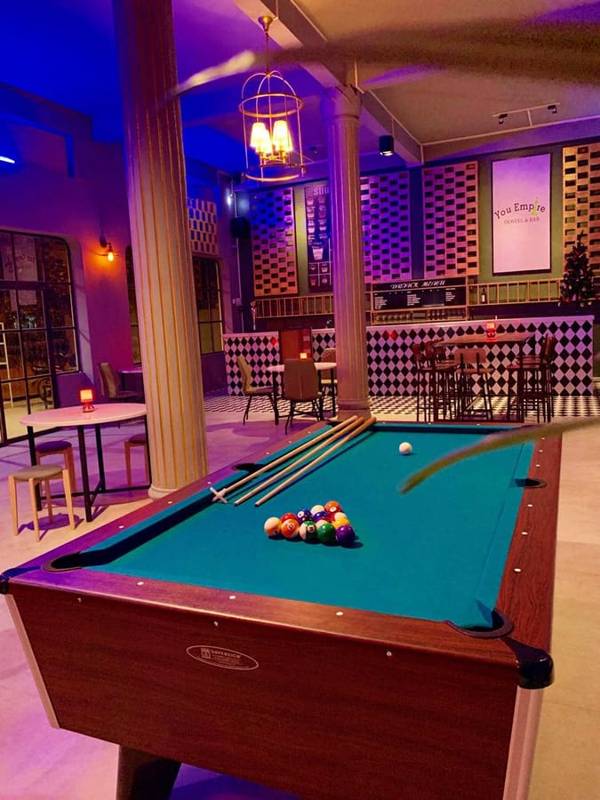
The sociable alternative: central, a bar downstairs, and walking distance to the restaurants. Fewer reviews and a solid score, and the easier place to find a beer at ten.
There is also Pakse Backpacker Hostel, which does not sell through the booking sites but is cheap, central and a reliable place to find other people about to ride the loop.
Best things to do in Pakse
Riding the Bolaven Loop
Two versions: the small loop is about 200 kilometres over two days, the big one about 350 over three. Both climb onto the Bolaven Plateau through coffee country, past a string of waterfalls, and through villages belonging to several different ethnic groups.
It is easier riding than Thakhek: better roads, shorter days, more places to stop. If you have never done a multi-day ride before and you want to, this is the one to start with.
The waterfalls of the plateau
Tad Fane is the big one: two falls dropping a hundred metres side by side into a gorge, seen from a platform across from it. Tad Yuang you can swim at the bottom of. Tad Lo has a village built around it. And a handful of smaller ones you can walk behind.
Waterfalls and temples in one day
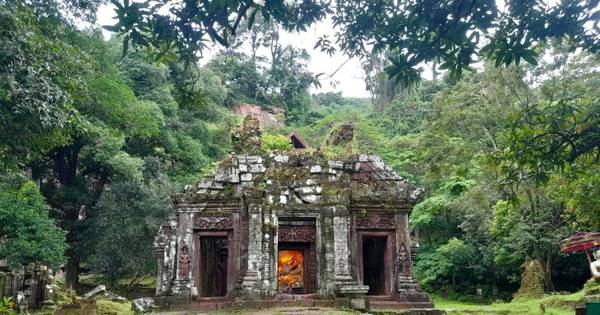
If you are not riding, this is how you see the good bits: the main falls on the plateau and a temple stop, with transport and a guide. A day, and it saves you renting a bike you are not confident on.
Cycling the 4000 Islands
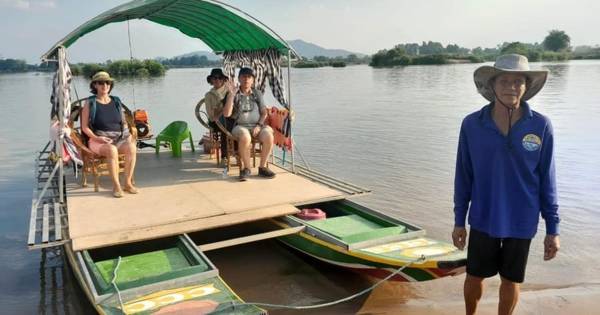
Si Phan Don sits a hundred and forty kilometres south of Pakse, where the Mekong spreads out into a delta of islands and the whole country drops a gear. Flat roads, almost no traffic, a bicycle, and a boat between the islands.
Three reviews so far, so treat the rating as a rumour rather than a verdict. The islands themselves are the reason people carry on south from Pakse at all.
The coffee farms
The Bolaven Plateau is where Laos grows its arabica, at over a thousand metres, and the farms along the loop will show you the whole process and then pour you a cup of what you just watched being roasted. Several of them have rooms, and waking up on a coffee farm is worth arranging deliberately.
Wat Phou
A Khmer temple complex on a hillside a hundred and twenty kilometres south, built from the eleventh century and on the same religious axis as Angkor, which came later. Terraces, a stone stairway up through frangipani trees, and almost nobody there.
The market and the riverfront
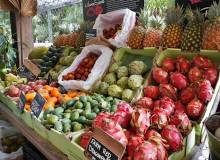
Pakse’s Dao Heuang market is one of the biggest in Laos and is a working market rather than a tourist one: coffee by the sack, fish, herbs, tools and clothes. In the evening the stalls come out along the Mekong and you eat looking at the water.
Best area for backpackers
The town centre
Pakse is small and flat, and everything a backpacker needs sits in the grid between the two rivers: hostels, scooter rental, restaurants, the market and the bus connections.
Stay near your rental shop. You are leaving on a bike in the morning and coming back to the same place three days later to pick up your bag.
Good to know about this area
- Hostels and scooter rental in the same few streets
- Rental shops store your big bag free while you are on the loop
- The night market and the food stalls are along the Mekong
- Dao Heuang market is a short tuk-tuk ride, and worth it for the coffee
- Take cash out here. On the plateau the ATMs are few and fussy
- Buses to Don Det, Thailand and Cambodia all leave from here
How to plan your days in Pakse
The town is half a day. The loop is two or three. Pick how long you have.
Pakse and Wat Phou. The town takes a morning. Wat Phou, a Khmer temple complex from the era before Angkor, is an hour and a half south and on the UNESCO list.
Tonight: eat on the Mekong, where the night stalls set up.
Bolaven Loop, day one. Up onto the plateau past Tad Fane and its hundred-metre double drop, and into the coffee country around Paksong. It gets noticeably colder as you climb.
Tonight: sleep on a coffee farm, with the good stuff at breakfast.
Bolaven Loop, days two and three. On past Tad Yuang, Tad Lo and the villages of the plateau. The big loop is about 350 kilometres, the small one about 200.
Tonight: back in Pakse, or straight on to Don Det in the 4000 Islands.
Food and drink in Pakse
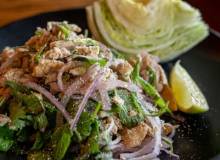
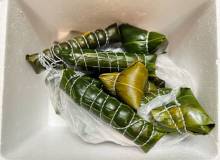
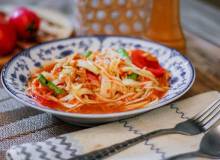
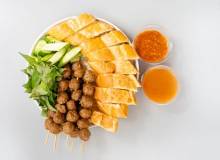
This is the south, so the Lao kitchen here picks up Thai and Khmer influences, and portions get a little sweeter. What sets Pakse apart is the coffee: this is the growing region, and it is genuinely good.
The Bolaven Plateau grows arabica at over a thousand metres. At the farms along the loop you can taste it and buy it by the kilo for a fraction of what the same beans cost at home.
Buy your coffee at a farm on the plateau, not in town. Same beans, half the price, and you get to watch them roast it.
Getting there and onward
Pakse is the hub of southern Laos: buses from Vientiane, Thailand, Cambodia and Vietnam all meet here.
Getting there. The night bus from Vientiane takes about ten hours. From Thailand you come in via Ubon Ratchathani, from Cambodia over the border at Nong Nok Khiene.
Around here. The town is small and flat. For the Bolaven Loop, rent from one of the shops that also stores your big bag.
Onward. Don Det and the 4000 Islands are three hours south. For Vietnam, buses go via the Bo Y border, which is a long ride.
- ScooterFrom about €8 a day, for the Bolaven Loop
- Night busVientiane 10 hrs · Thakhek 6 hrs
- MinibusDon Det 3 hrs · Ubon Ratchathani 3 hrs
- CambodiaVia Nong Nok Khiene, towards Siem Reap
- PlaneVientiane and Siem Reap, from a small airport
Staying safe in Pakse
Pakse is calm and safe. What needs attention is the same as at Thakhek: a few days on a motorbike a long way from a hospital.
- Check that your travel insurance covers riding in Laos, on your licence category
- Carry a 1949-convention international driving permit. That is the one Laos recognises
- Take a warm layer. The plateau is twelve hundred metres up and it gets cold at night
- Photograph the bike before you leave, and check the brakes and the tyres yourself
- Ride the loop after dark. No lighting, and animals on the road
- Swim above a waterfall, however calm the pool looks from the top
- Leave the marked paths in the countryside. There is still unexploded ordnance in this region
- Count on ATMs on the plateau. Take the cash with you
Rebels on the Road tip
Sleep on the plateau, not in a town. Several of the coffee farms around Paksong rent out simple rooms, and it is the best night on the loop: fifteen degrees, a blanket, the smell of roasting coffee, and the whole plantation in mist when you open the door. Then ride down to Tad Yuang before nine, when you will have a hundred-metre waterfall entirely to yourself.
Frequently asked questions
How long do you need in Pakse?
Half a day for the town, and then two or three days for the Bolaven Loop. Add half a day if you want Wat Phou as well.
Bolaven Loop or Thakhek Loop?
Bolaven is shorter, easier and built around waterfalls and coffee farms. Thakhek is longer and wilder, and has Kong Lor cave on it. If you can only ride one and you are not a confident rider, ride Bolaven.
Can I do the Bolaven Loop without riding?
Partly. Day tours from Pakse cover the main waterfalls and a temple with transport included, which gets you the highlights. The villages and the farms in between are the part you only get on a bike.
Is Wat Phou worth the trip?
If you like ruins, yes: it predates Angkor Wat, it is on the UNESCO list, and there is almost nobody there. If you are going on to Cambodia and Angkor afterwards, it is a good primer rather than a rival.
Is Pakse expensive?
No. €17 a day, and the loop costs about the same once the bike, the petrol and the guesthouses are in.
When is the best time to visit Pakse?
November to February for dry roads and cool air on the plateau. September and October if the waterfalls are what you came for, because that is when they are at their most powerful.
