
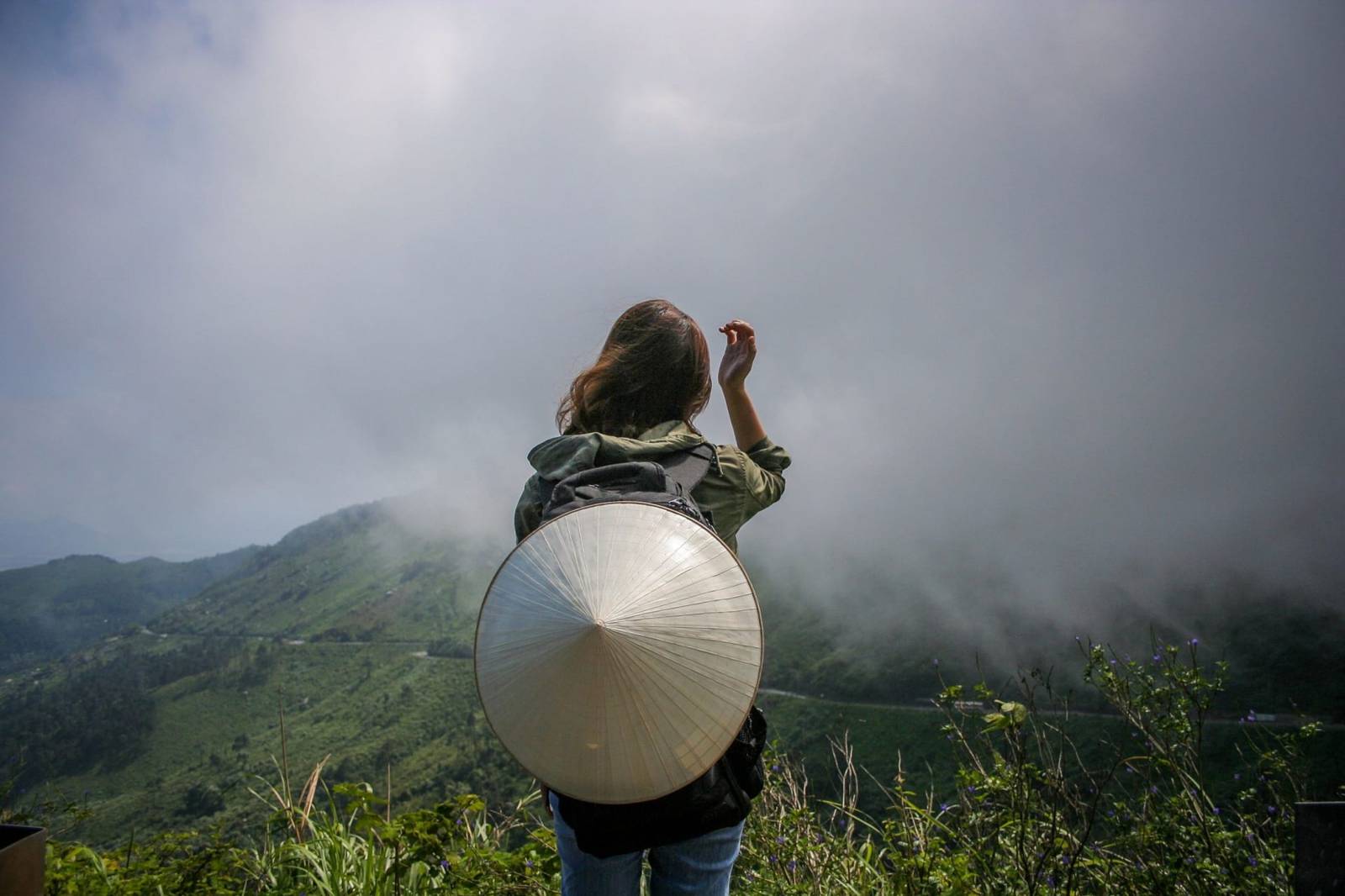
Most people who set off alone are not worried about the route or the money. They are worried about a picture in their head: eating alone at a little table, standing alone at a bus station, going a whole week without talking to anyone who knows their name.
That picture holds for about one evening. Usually the first. After that someone in the hostel common room starts talking to you because they are on the same bus tomorrow, and within two days you are at a table for five that you sat down at on your own. Southeast Asia is the busiest backpacking region in the world, which means that wherever you arrive, you run into people doing exactly what you are doing: travelling alone and looking for company.
That is not luck, it is how the whole region works. So this is not a pep talk telling you to be brave. It is the practical part: where it happens by itself, what it costs extra, how to be smart with your stuff and your evenings, and the few things worth keeping an eye on.
Leaving alone is not the same as travelling alone
This is the difference almost nobody feels before they go. You leave on your own, but you spend most of the trip in company, and you decide when.
Here is how it works. The backpacker routes through these countries are set: everyone does roughly the same places in roughly the same order. So you do not meet people once, you meet them three times in three towns, and by the third time you are friends. At the same time, nobody bats an eyelid when you say you fancy dinner on your own tonight. That is the luxury: company when you want it, and your own pace the moment you would rather have that.
In practice that means three things:
- Sleep in a dorm, at least for the first week. A bed costs €6 to €10 and it is the fastest way to meet people. You can always book a private room later when you want a quiet night.
- Pick a hostel with a common room. That is where it happens, not in the room. Our destination pages say for every hostel what it is known for.
- Say yes to everything for the first few days. A day trip, a breakfast, a beer on the rooftop. After two weeks you get pickier on your own.
Where it happens by itself
In some places you do not have to do anything at all. The hostels are big, there is something on every evening, and half the guests arrived just as alone as you did.
- Pai in northern Thailand, where everyone stays longer than planned
- Koh Tao, where a dive course hands you the same group for a whole week
- Koh Phangan and Koh Rong for the beach and party side
- Vang Vieng, small enough to know everyone within a day
- Chiang Mai and Luang Prabang if you prefer temples and cafés to parties
- Siargao and Moalboal in the Philippines, both built around surfing and diving
If you want a break from all that, the quieter places work just as well on your own: Nong Khiaw on the river, Kampot by the water or Siquijor. You meet fewer people there, but you keep meeting the same ones, and that works just as well.
What solo travel costs extra
Honestly: a bit. Not much, and it sits in predictable places.
Your daily budget barely changes, because a hostel bed, a plate of food and a bus ticket are all priced per person. Reckon on about €25 a day in Vietnam, Laos and Cambodia, €30 in Thailand and €35 in the Philippines, the same as everyone else.
Where it does add up is the stuff you would normally split:
- A private room costs the same for one person as for two. If you want the odd night to yourself, add the difference with a dorm bed a few times over the trip.
- A scooter is rented per day, not per person. Two people split that, you do not.
- A taxi or a private transfer costs twice as much per head. On most routes the shared minivan or the bus solves that, and it is the more fun way to travel anyway.
- A boat trip or day tour sometimes has a minimum price per boat. That is when being in a hostel pays off: you find three people to come along within an evening.
What you get back is that you never get stuck somewhere because someone else wants to stay. That is worth more than it costs.
Staying safe on your own
For solo travellers this is one of the calmest regions in the world, and the problems backpackers run into here are almost never about violence. They are about money and distraction: paying too much, signing something you do not understand, or holding your phone loosely by the side of the road.
That makes it manageable, because you can do something about all of it. The local points to watch are on each destination page itself, under “Staying safe”. This is what applies everywhere:
- Use Grab instead of flagging down a taxi on the street: you see the price up front and the ride is on record
- Use an ATM inside a bank branch or a mall, and choose your own bank's exchange rate
- Keep your phone in your pocket along busy roads, and wear your bag at the front with the zip facing you
- Let someone at home know which town you are in and where you are sleeping, even if it is just a quick message
- Carry two bank cards, in two different places in your luggage
- Leave your drink unattended, or accept one from someone you have only just met
- Go along with a tuk-tuk or a "guide" who spontaneously offers a quick stop at a shop or a jeweller
- Hand over your passport as a deposit at a scooter rental: a copy or a cash deposit is enough
- Walk alone at night through areas you do not know. Just take a Grab
- Keep all your travel money in one bag
Two more things that matter for solo travellers in particular. Bring a padlock for the locker in your dorm: almost every hostel has lockers, and almost none of them give you a lock. And keep one paper copy of your passport and your insurance separate from your phone, so you never lose everything at once.
Travelling solo as a woman
There is a reason Southeast Asia is known as the region where a lot of women do their first solo trip. You will see along the way how many are travelling alone, and in the hostels groups often form within a day.
That does not mean there is nothing to be more aware of than at home, and those things are practical:
- Female dorms exist in almost every bigger hostel. Even if you are not set on one, they are usually quieter.
- Cover your shoulders and knees at temples. That is not a safety thing but an entry requirement, and it saves you an improvised sarong at the gate.
- Arrive in a new town in daylight. Night buses sometimes drop you at four in the morning at a station outside the centre. Book the earlier departure if you can, or wait in the waiting room until it gets light.
- Trust what other travellers tell you. In a hostel people know within a day which rental place is decent and which bar is better left alone at night. That network is your best source of information, and it is free.
On the road alone
Buses, boats and trains you just book yourself, at the hostel desk or on your phone, and you are never the only backpacker on board. On the longer routes the night bus or night train is the easiest option, and the standard rule applies: valuables in your daypack, daypack on your seat with you, big bag in the hold.
On a scooter it is different when you are on your own, and that is worth saying straight. The loops people ride here (Ha Giang, Thakhek, the Bolaven Loop out of Pakse) run through areas where nobody passes every ten minutes. Riding alone is perfectly doable, but do it with signal on your phone, set off in the morning rather than the afternoon, and tell someone which way you are heading.
On the Ha Giang Loop there is an even simpler answer: you can ride on the back with an easy rider. A local driver does the riding and you look at the mountains, which on that road is simply the better experience anyway. What it costs and how to choose between riding yourself and an easy rider is on our Ha Giang Loop page. The rules per country, including which licence you need, are in renting a scooter in Southeast Asia.
When you have had enough of your own company
Every solo trip has a week where you are done with it. That is normal, and it is easy to fix: do something that puts you with the same people for a few days in a row.
- A dive course. Four days, a fixed group, and a certificate at the end. Koh Tao is the cheapest place in the world to do it.
- A multi-day trip or loop. The Ha Giang Loop, the slow boat down the Mekong or a trip on Cheow Lan Lake in Khao Sok: you spend days with the same group.
- A day tour. The simplest version, and over again straight away if it is not your thing. Each destination page lists them.
- Just stay a week longer. In places like Pai, Kampot and Koh Rong you know half the village after a week, and that is a different kind of travelling from packing your bag every two days.
What to sort out at home when you go alone
The same as everyone else, plus three small extras. The basics (visa, vaccinations, insurance, money) are in first time backpacking. With your travel insurance, check extra carefully that scooter riding and diving are covered, because those are two things you will end up doing alone too.
On top of that: give someone at home your travel plan, even if it is only a rough one. Save your insurer’s emergency number in your phone before you leave, not when you need it. And make sure you land with internet, through an eSIM or a local SIM card, because arriving alone with no signal is the only genuinely awkward combination in this whole piece.
Is it really that easy to meet people, or are you just saying that to reassure me?
It really is, and it has very little to do with your personality. It is down to how this region works: everyone does roughly the same route, everyone sleeps in the same hostels, and a big share of the people around you left home just as alone as you did. So you never have to talk to anyone who is not up for it.
What is true: it happens faster in the busy places than in the quiet ones, and faster in a dorm than in a private room. If you land somewhere quiet and you want company, moving on to the next stop usually sorts it within a day. And if you want to go a week without talking to anyone: you can do that here too, and nobody will think twice about it.


