
Thailand is the easiest country in Southeast Asia to travel on your own. A night train carries you from the capital to the mountains while you sleep, buses and minivans run to every village, and the island boats are timed to meet the trains and night buses. The connections you have to puzzle together elsewhere in the region, you buy here as one combined ticket.
That does not make every ride the same. The night train to Chiang Mai is one of the best journeys of your trip, while the minibus to Pai is the toughest one for a lot of people. A domestic flight sometimes costs less than a day on the road, except to Koh Samui, where it is the priciest option going. And the boats do not run equally often all year.
Below, transport by transport: what it does, what it costs and where it goes wrong, plus how to get around the cities and islands once you are there. The full route, with the journey from each stop to the next, is in our Thailand itinerary.
The night train: the ride you do not want to miss
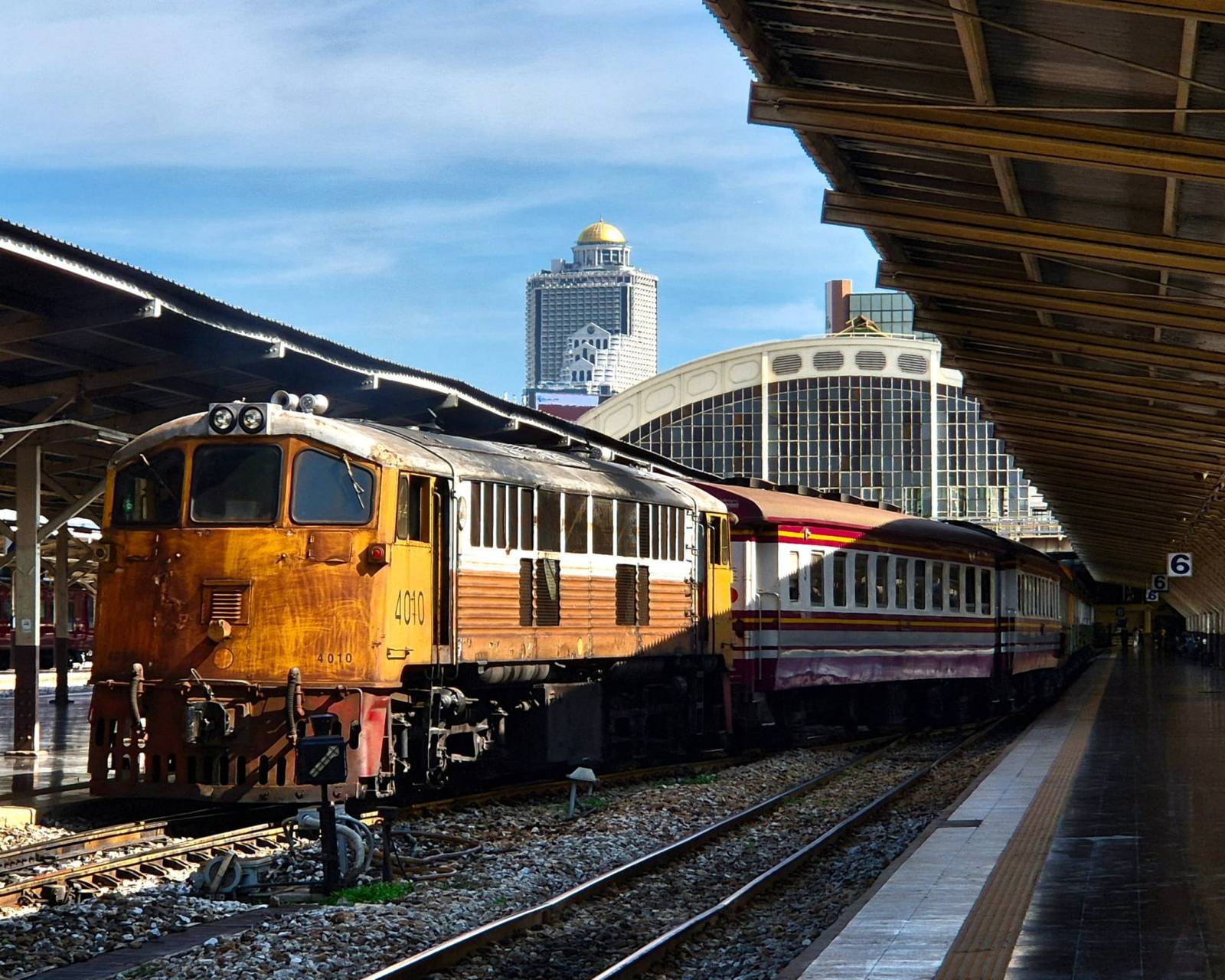
In Thailand the night train is not a fallback, it is one of the best ways to travel. You book a sleeper berth, climb into bed after dark and step off the next morning in a completely different part of the country. From Bangkok to Chiang Mai it takes thirteen hours and is more comfortable than the bus. Heading south it takes about nine hours to Surat Thani and about eight to Chumphon, and those are exactly the two towns where the boats to the islands leave from.
There is one more reason to take it: you save a night’s accommodation and you do not lose a travel day. Board in Bangkok in the evening and the next morning you are in the jungle of Khao Sok or on the pier for Koh Tao. Do book your berth ahead, especially in high season, because the trains fill up.
Our verdict: take the night train to Chiang Mai and to the Gulf islands, and book as soon as your dates are fixed
Bus and minivan: everywhere, always cheap
Where there is no train, there is a bus. Count on about €8 for a standard bus ride and around €5 for the shorter minivans. From Chiang Mai the bus takes about three hours to Chiang Rai for around €6, and the minibus three hours to Pai for around €5. From Bangkok the night bus to Krabi takes about twelve hours, and from Chiang Rai the night bus gets you back to the capital in about twelve hours too.
In the south the minivans do most of the work. Surat Thani to Khao Sok is two hours, Krabi three and Phuket four and a half. Between Krabi and Phuket the bus takes two hours. Nearly every hostel arranges these transfers for you, which saves you hassle at the bus stations.
About that minibus to Pai: the road has 762 bends and a lot of people get sick on it. Take something for motion sickness, even if you never normally need it. The whole ride, alternatives included, is in Chiang Mai to Pai.
Our verdict: the bus is fine and dirt cheap, and for the long stretches take the train or a plane if you can
Flying: worth it more often than you think
Domestic flights in Thailand are cheap. From Bangkok you fly to Chiang Mai in an hour, often for under €30, and that is less than a day on the road. Chiang Rai has its own airport with cheap flights to Bangkok, eighty minutes, and so does Krabi, which puts the whole south within easy reach. On top of that, Bangkok has cheap flights to nearly every capital in the region.
The exception is Koh Samui. The flight from Bangkok takes an hour, but the airport is privately owned and the fares show it. The cheaper way is the night bus or night train to Surat Thani with the ferry after it.
Diving on Koh Tao? Then one more thing applies. Leave eighteen hours between your last dive and your flight, so do not squeeze your departure in straight after a dive day.
Our verdict: fly north or south if you are short on time, and for Koh Samui go by night train and ferry
Boats: how you get to the islands
Thailand has two coasts, and the boats work differently on each side. In the Gulf of Thailand, Koh Samui, Koh Phangan and Koh Tao sit close together: Samui to Phangan is half an hour, Phangan to Koh Tao an hour and a half, and Samui to Koh Tao two and a half. To the mainland it is an hour and a half from Samui to Don Sak, two and a half from Koh Phangan to Surat Thani, and from Koh Tao the catamaran takes an hour and a half to Chumphon or three hours to Surat Thani. All of those boats connect with the trains and buses, and the combined ticket is by far the easiest way to do it. Door to door, Bangkok to Koh Tao takes fifteen to eighteen hours.
On the Andaman coast the crossings are shorter. Krabi to Koh Phi Phi is an hour and a half, Phuket to Phi Phi two hours, Phi Phi to Koh Lanta an hour and a half and Phuket to Koh Lanta three hours. From Phi Phi there is a direct boat to Railay, and Railay itself is longtail only, straight off Ao Nang beach. In high season the speedboat from Krabi to Koh Lanta takes two hours; when it stops running you go overland in about three and a half hours, with two short car ferries on the way.
What you need to know about the seasons: in low season fewer boats run, and sometimes none at all. In November the ferries around Koh Tao can sit still for days on end because of the monsoon, so do not plan a tight connection to a flight off the mainland that month. And if you want to go from the Andaman coast to the Gulf, there is no boat: that trip is overland via Surat Thani.
Our verdict: buy the combined ticket with the bus or train included, and in low season always leave a spare day before your flight home
In the city: Skytrain, songthaew and Grab
In Bangkok the BTS Skytrain and the MRT metro are the fastest, coolest and cheapest way around, and they get you past the traffic the city is famous for. For everything else use Grab, where you know the price up front, or the boat on the Chao Phraya, which is often quicker than the road. Tuk-tuks are fun for the experience, but you always haggle over the price.
Outside the capital it looks different. In Chiang Mai you can walk the Old City in an hour, and for the rest you take a red songthaew: stick your hand out, say where you are going and pay about a euro. Near Krabi, songthaews link Krabi Town and Ao Nang, half an hour apart. On Phuket the airport is an hour from the beaches, and the Airport Bus Express takes you to Old Town for a couple of euros; a taxi costs roughly ten times that. On Koh Phangan songthaews run between the beaches, but they are expensive.
Our verdict: in Bangkok always the Skytrain or the boat, and everywhere else the songthaew
The scooter: where you need one and where you do not
On the islands and up north, the scooter is how you get around. Count on €4 a day in Pai, €5 in Chiang Rai and Khao Sok, and €6 on Koh Lanta, Koh Phangan, Koh Samui, Koh Tao, Krabi and Phuket. In some places you can barely do without one: Koh Lanta is thirty kilometres long with one main road, the Koh Samui ring road is fifty-one kilometres, and around Pai and Chiang Rai the best spots are well outside town.
There are also places where you will not need one. Koh Phi Phi has no cars or scooters at all: everything is on foot or by boat, and that is exactly what makes the island so relaxed. On Phuket the traffic is a lot heavier than on the smaller islands. And on Koh Tao the hills are steep and plenty of backpackers are riding for the very first time, which makes it the biggest risk on the island.
Two things you always do. Film the scooter before you ride off, because the damage trick when you return the bike is a known problem on Koh Tao, and rent from the place your hostel recommends. And keep your helmet on and wear proper shoes: the scrape down your leg is not called the Pai tattoo for nothing, and riding slowly is how you avoid it.
Our verdict: rent a scooter on Koh Lanta, Koh Samui, in Pai and in Chiang Rai, and on Koh Tao only once you are genuinely comfortable on one
How to book it
Heading on to Laos? The classic overland route goes via Chiang Rai and Chiang Khong, across the Friendship Bridge and then down the Mekong on the slow boat. The whole crossing is in Chiang Rai to Laos.
Night train or night bus in Thailand?
The train, if it runs where you need to go. You get a real bed instead of a seat, you can get up and walk around, and the thirteen-hour ride to Chiang Mai is more comfortable than the same distance by bus. Heading south it takes nine hours to Surat Thani and eight to Chumphon, where the boats to the islands leave from.
The night bus covers the places without a railway, like Krabi, about twelve hours from Bangkok. Both save you a night’s accommodation and a travel day, and in a country with distances this big, that is the real win.


