Deep in the rainforest of northern Laos sits one of the strangest and best adventures in Southeast Asia. Ziplining across a valley, hours of trekking through thick forest, and sleeping tens of metres above the ground in a treehouse.
It is also the most expensive thing you can book in Laos, which turns it into a genuine decision rather than something you tack on. The same money moves you around this country for a week, so you want to know exactly what you are saying yes to.
Below is how it works, which of the three versions suits you, what it costs and what to pack. Plus an honest word about those gibbons, because they are the one part nobody can promise you.
Where it is
The Gibbon Experience runs out of Huay Xai, in the far northwest of Laos, right on the Thai border. For most backpackers that is the first town in the country: you come in from Chiang Khong and it is the departure point for the slow boat to Luang Prabang.
From that border town the tours head into the Bokeo Nature Reserve, a huge protected stretch of rainforest laced with footpaths, ziplines and treehouses.
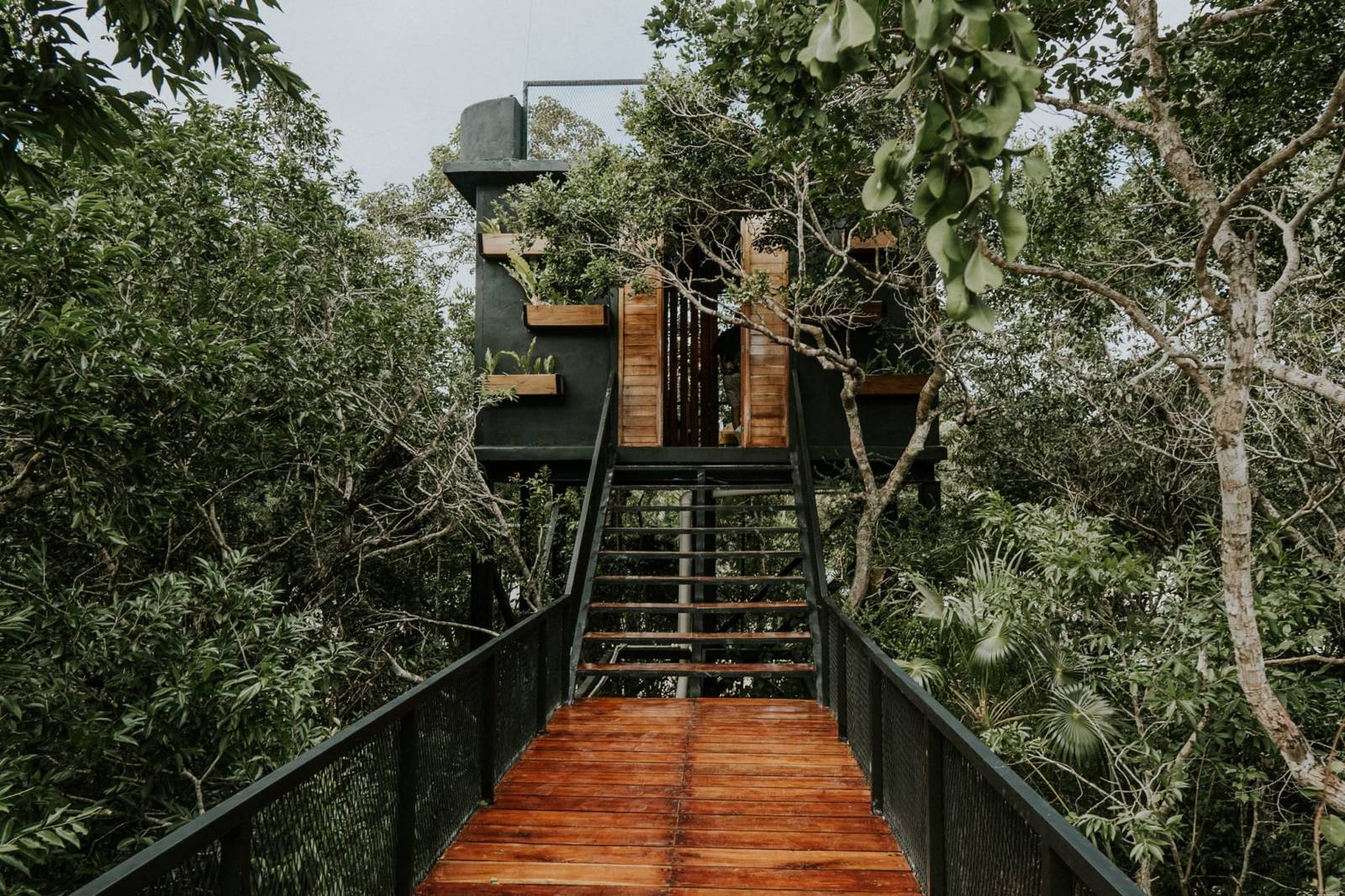
The treehouses are not just a bit off the ground. They sit thirty to forty metres up, and some of them can only be reached by zipline. You are sleeping in the canopy, literally.
It all starts in Huay Xai
Every tour leaves from the office in Huay Xai, which means you need to sleep in town the night before. Coming in by bus from the Thai border? Time it so you arrive with room to spare. More on the town itself is in things to do in Huay Xai.
Your big backpack stays behind at the office. You take a daypack with only what you genuinely need for those days, and that is less than you think.
First you walk, then you fly
The tour does not open with a zipline. From Huay Xai you get driven into the Bokeo Nature Reserve and from there you continue on foot, along jungle paths and over hilly ground.
In the rainy season, roughly June to October, those paths turn into a mud bath. Sturdy closed shoes with real grip stop being a nice-to-have and become the thing your day depends on, and a walk that looks short on paper can land twice as heavy.
Then comes the first zipline platform. The lines in the network run from about fifty metres to five hundred. You get clipped on, you step off the platform, and you are flying across the valley with nothing but jungle underneath you. The feeling settles faster than you would expect, and for a lot of people this ends up being the best part of the whole trip.
Sleeping in a treehouse
The treehouses are where this adventure gets its reputation. Some can only be reached by zipline, which means that arriving at and leaving your bed is part of the experience too.
Inside you get mattresses with mosquito nets and the basics. Do not expect anything beyond that: no air conditioning and no plug sockets. What you get instead is a view over kilometres of rainforest, and at night the sound of insects, birds and a long list of things you cannot identify.
So charge everything beforehand. Your power bank is the only electricity you have for those days.
Getting up early for the gibbons
The Bokeo Nature Reserve is home to black-crested gibbons, the animals the tour is named after. Worth being clear about: this is not a zoo. They are wild animals moving freely through the forest and an encounter is never guaranteed.
Early morning gives you the best chance of hearing their call, which is unmistakable once you have heard it. Actually seeing one is a good deal less certain, and anyone who does has had proper luck.
Our advice: set an alarm for sunrise, grab something to drink, sit at the edge of your treehouse and stay still. You get to hear the jungle wake up, one bird first and then all of them. See a gibbon and it is wonderful. See none and you have still had one of the best mornings of your trip through Laos.
Which tour to pick
There are three versions, each with a different pace and point.
Classic, three days and two nights
The best known and the most complete. Enough time for the jungle, the treehouses, the ziplines and your shot at the gibbons, at a pace that lets you enjoy it. This is the one where you wake up in a treehouse twice instead of once, and that is a bigger difference than it sounds.
Giant Loop, two days and one night
Shorter, but physically harder. More walking, more climbing and spectacular ziplines. This is the pick if you are here mainly for the adventure and short on time.
Honeymoon, three days and two nights
Same length as the Classic, but with a private treehouse for two. Despite the name it works just as well for two mates who would rather not share a treehouse with a bigger group.
Our verdict: take the Classic. You are spending the money and the travel time either way, so give yourself enough days to properly get used to the ziplining.
What it costs
By Lao standards this is expensive. The two-day version starts at about €190 per person, and the longer tours cost more. For context, an ordinary backpacking day in Laos runs you around €25.
That price does include your transport from Huay Xai, the guides, every meal, the nights in the treehouses and the run of the whole zipline network. It is a complete multi-day package, not a ticket for an afternoon of ziplining.
What to pack
Your big backpack stays in Huay Xai, so travel light. This is what you need:
- a head torch
- sturdy closed shoes with grip
- insect repellent
- a refillable water bottle
- a small daypack
- light clothing and a pair of long trousers
- a rain jacket in the rainy season
- warm clothing in the cooler months
- a fully charged power bank
- a camera if you want one
How hard is it
You do not need to be in great shape, but a basic level of fitness makes it a lot more pleasant. You are outside for several days, walking over hilly ground, dealing with heat and humidity.
The Classic is the calmer choice and the Giant Loop is the physical one. And again: in the rainy season everything lands heavier than the distances suggest.
Mildly uneasy about heights? Most people find that fades after the first zipline. If heights genuinely frighten you, think it through properly beforehand. There are no stairs down out there: once the tour has started, the route is the only way through.
More than just the ziplines
This is not a zip park that happens to sit in a jungle. The project is tied to the protection of the Bokeo Nature Reserve: tourism income goes partly into conservation, and it creates work for people from the surrounding communities.
Which means your ticket puts money straight into keeping the forest, and the habitat of the animals living in it, standing. For something at this price, that is a good thing to know.
One last thing: across most of the area you have little or no phone signal. For nearly everyone that is not a drawback, that is the entire point.
The trip starts in Huay Xai, the border town where the slow boat leaves from as well. Where to sleep there and how to reach it is on our Huay Xai page.
Is the Gibbon Experience worth the money?
Honestly: the same budget travels, feeds and houses you in Laos for a lot longer. From about €190 for the two-day version against the €25 an ordinary backpacking day costs here, this is the most expensive decision on your whole route through the country.
And we would still do it. Days of trekking through protected rainforest, ziplining over a valley, sleeping forty metres above the ground and the chance of hearing wild gibbons: that does not come along every trip, and there is very little in the world like it.
What matters is that you do not book it for the gibbons alone, because you may not see them. Book it for the walking, the flying, the sleeping in the canopy and the waking up in the middle of the forest. All of that you get, and it is worth it. If you have the time and the budget, take a longer tour rather than the shortest one, or it is over right as you are getting the hang of it.


