
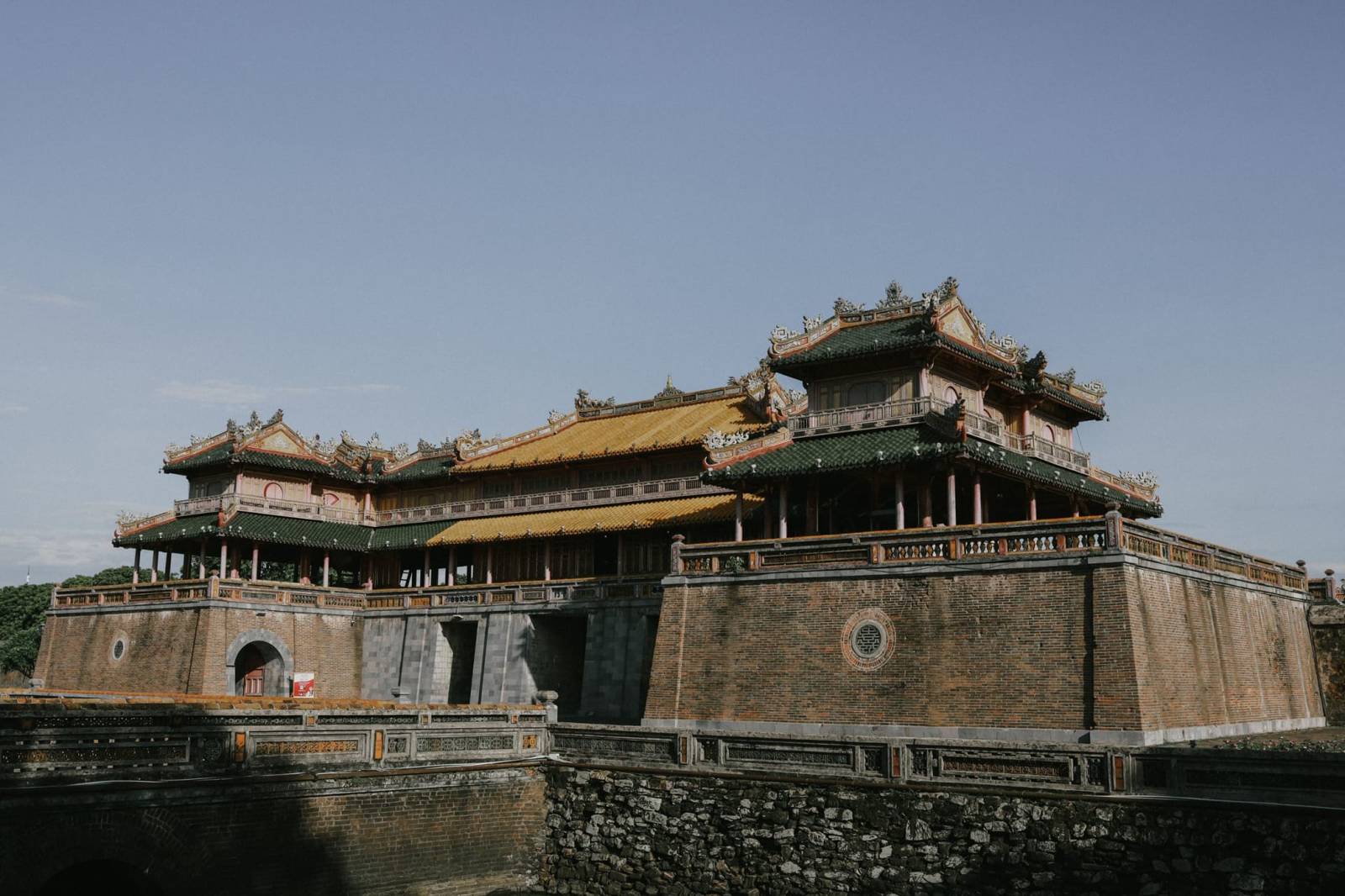
Hue has one walled Citadel, seven imperial tombs and a kitchen half of Vietnam is jealous of, and most backpackers give it two days. The maths does not work, and it does not have to. You are going to leave something out whatever you do, so choose on purpose rather than cramming your days and standing burnt out in the sun by noon.
A few things really belong on a first visit: a morning on the scooter along the river, one bowl of soup for breakfast, and the gates of the Citadel before the coaches arrive. Others are part of Hue as a history city and ask for a whole day, so you save those for when you stay longer.
So where do your two days in Hue go, and what do you keep for next time?
How many days to give Hue and where to base yourself is all on our Hue page.
The royal tombs by scooter
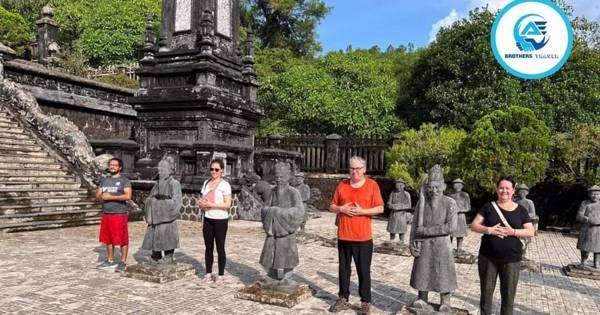
This is why you stay the night in Hue instead of riding straight through. Outside the city, seven imperial tombs are spread out along the Perfume River, and the ride out to them is almost as good as the tombs themselves: narrow roads through rice fields, with a stretch of river every so often. Khai Dinh and Minh Mang get named most often as the most beautiful, and Tu Duc is the third one most travellers do.
A scooter costs about €4 a day here, and that gives you the whole day to do as you please. Park it in a guarded spot at each tomb, which costs next to nothing and saves hassle, and keep your helmet on: they check on that road. Rather not ride yourself? You can also combine the tombs with the pagoda on a dragon boat trip.
Do not try to see them all. Pick two or three, take your time with them, and use the hours you have left to stop somewhere along the river. Try to tick off all seven and by the end of the day you are not really seeing any of them.
Our verdict: absolutely, and give it a whole day
Bun bo Hue for breakfast
Plenty of Vietnamese people call Hue the culinary capital of the country, and that is not tourist talk: for centuries this is where the emperor’s food was cooked. You still see it in how people eat here. Small portions, lots of courses, more chilli than in the rest of Vietnam. Next to the soup you mostly eat banh here: little rice cakes in all sorts of shapes that you will not find like this anywhere else.
The best-known dish is bun bo Hue, a spicy noodle soup with lemongrass and beef. The trick is the clock: here it is a breakfast dish, not dinner. Find a place that is already open at six in the morning and sit down there. A street meal costs about €1.50, so you can easily pull up a stool three times in one day.
Want the places you would walk straight past on your own? Then a guided food tour is worth the money. You stop at around eight tastings and get the stories with them, and after that you know what to order for the rest of your stay.
Our verdict: do not miss it, even if soup is not normally your breakfast
The Imperial Citadel
The Citadel is the reason Hue is on the UNESCO World Heritage list and the biggest thing the city has to offer: about ten square kilometres inside the walls, with the Forbidden Purple City, the gates and the pavilions inside. Parts of it are still in ruins, and that is exactly what makes it feel a lot less like a museum than you might expect.
Entry is about €7 and the complex is open daily from 7.00 to 17.30. Allow three to four hours, because it is big and you walk more than you think. Bring water and a hat: there is almost no shade anywhere, and in summer it climbs to 35 degrees.
Go in right at opening time. You get the first hour almost to yourself and you are out before the real heat starts. Afterwards, walk on to the Dong Ba market, which is on the same side of the river.
Our verdict: absolutely, but be at the gate at seven
Over the Hai Van Pass to Hoi An
The coast road between Hue and Da Nang runs over the Hai Van Pass and is one of the most beautiful stretches of road in Vietnam: mountains on one side, sea on the other, and at the top of the pass a view everyone stops for. The best part is that this does not have to be a day trip, because you need to go that way anyway.
There are two ways to do it. With an easy rider you sit on the back behind a local guide who takes you from Hue to Da Nang or Hoi An, stopping at the viewpoints and in small villages along the way. Or you take the train to Da Nang, about three hours, which runs over the same pass and counts as one of the finest train rides in Asia. By bus you are in Da Nang in about 2.5 hours and in Hoi An in 3.5, but that way you see the least of it.
Plan this as your travel day, not as a separate trip. That way you pay once for something you had to do anyway, and you arrive in Hoi An with the best ride of your route already behind you.
Our verdict: for a lot of backpackers the highlight of their whole trip through Vietnam

Ho Quyen, the abandoned arena
Almost nobody comes here, and that is exactly the point. Ho Quyen is the old imperial arena where fights between tigers and elephants were once staged in front of the royal family. What stands there now is a round, overgrown wall you can simply walk into, usually without a single other visitor.
It is just outside the city, so you fit it in on the day you are already on the scooter for the tombs. Pair it with the Voi Re temple nearby; together they keep you busy for about an hour.
Do not expect signs or explanations. That is part of it: this is the side of Hue no tour goes past, and it is the place you will end up talking about most.
Our verdict: our own tip, and well worth the detour
The Thien Mu Pagoda across the water
This pagoda on the bank of the Perfume River is one of the best-known symbols of Hue and turns up in almost every photo of the city. It sits four kilometres upstream, above the water, and the view over the river is at least as good as the building itself.
Entry is free. You can get there by scooter, but the dragon boat along the river is more fun, and you can often combine it with one or two tombs on the same trip. Agree the price of that boat before you get on and say clearly that the way back is included, or you will find yourself negotiating on the jetty later.
Go before nine in the morning. After that the groups arrive and the calm you came for is gone.
Our verdict: free, and with the dragon boat there it becomes one of your better afternoons
An evening by the Perfume River
By day Hue is about history, by night it is about the river. As soon as the sun goes down the Trang Tien bridge lights up in colour and the riverfront fills with local families, buskers and stalls. It costs you nothing and you do not need a plan.
Walk from the walking street to the bridge and back, take in the night market on the way, and then sit down somewhere. The walking street itself only runs on Friday to Sunday evenings. A local beer costs about €0.50 here, which makes this the cheapest evening of your whole route.
Do not count on nightlife like in Hanoi or Ho Chi Minh City. It is calmer, it finishes earlier, and that is exactly why people like Hue.
Our verdict: free, every evening, just go
Got time to spare in Hue?
Another tomb or two
The seven tombs are more or less on one route, and you have the scooter anyway. Pick two or three, because every tomb has its own entry fee and after the third they start to look alike. Stay a bit longer at each, and spend the rest of the day simply riding along the river, which is the best way to fill a day here.
Hue by bike
Hue is flat, compact and one of the most bike-friendly cities in Vietnam, so rent a bicycle or just walk. Still fancy a cyclo? Agree the fare up front or take a Grab: the price you hear on the street sometimes turns out to have meant something else afterwards.
The DMZ tour
The Vinh Moc tunnels and the Khe Sanh Combat Base are impressive and the tour gets excellent reviews. Read up a little on the Vietnam War beforehand, and this is one of the strongest day trips in the country. If you only have two days, spend them on the tombs and the food, and keep the DMZ for when you stay longer.
Hue in October and November
Hue is the wettest city in Vietnam, and in those two months the Perfume River can burst its banks. Travelling then? Keep Hue a bit shorter and spread your days over Hoi An and Da Nang, which gives you the best chance of good weather. From February to April, when it is dry and mild, this is one of the nicest cities in central Vietnam.
Our top five in Hue
Only got a few days? These are the five we would do no matter what:
- The royal tombs by scooter, the best two or three
- Bun bo Hue for breakfast, at a place that is already open at six
- The Imperial Citadel, through the gate at seven when it opens
- The ride over the Hai Van Pass, with an easy rider or on the train to Da Nang
- Ho Quyen, the abandoned arena where nobody goes
Still got time after that? Take the dragon boat to the Thien Mu Pagoda, or let a food tour show you the places you would never have walked into yourself. And keep every evening free for the riverfront: it costs nothing and it is the best moment of the day.
So what do you really have to do in Hue?
Honestly? Nothing on this list is compulsory. Hue is a city where you set the pace yourself, and the travellers who got the most out of it are almost never the ones who saw the most tombs. This list is here to help you choose, not to fill every hour of your two days.
If we had to pick just one thing: get up before eight at least once. Walk into the Citadel as it opens, or get on the scooter towards the tombs with the river on your left and the city still half asleep. By noon it is scorching here and everyone is hunting for shade, so everything you do in the morning is basically a free bonus.
And eat that soup. Not in the evening on a terrace with an English menu, but early in the morning at a stall where only Vietnamese people are sitting and the pot has been simmering for hours. It costs you one and a half euros, and it is the bit of Hue you will still be telling people about back home.


