
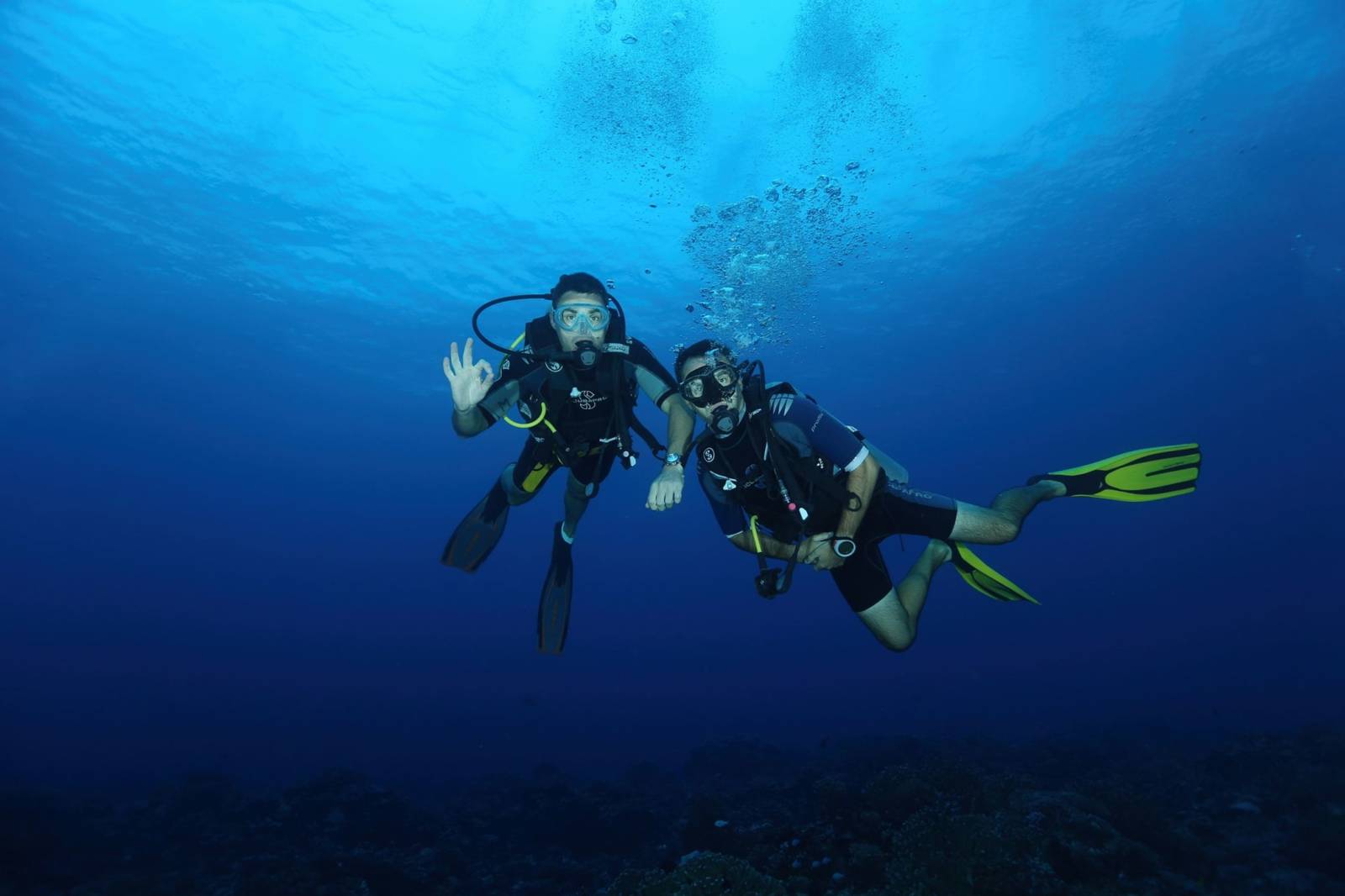
Koh Tao is one of the cheapest places on earth to learn to dive. Around ฿11,000, about €290, for an internationally recognised Open Water, on an island with twenty-five dive sites off its coast and more dive schools than restaurants. That single fact is why the island is the way it is.
What nobody tells you beforehand is what the course looks like from the inside. How many days it swallows, what you do on each of them, and what you want sorted before you get in the water. That matters more than it sounds, because a dive course is not an afternoon out.
So here it is, day by day, with the practical parts you would rather know now than halfway through. Want to know what is actually down there first? That is on our Koh Tao page. For the rest of the island, see things to do on Koh Tao.
What a PADI Open Water actually is
The PADI Open Water is the entry-level certificate of the diving world. You need no experience whatsoever: everything is built up from zero, and most people who start this course have never had a tank on their back.
You learn how your kit works, how to talk to people underwater, and above all how to control your buoyancy. That last one is the whole game. The difference between a brand new diver and somebody a few years in is that one of them is swimming and the other is simply hanging there. Alongside that you practise the skills you need when something does not go to plan: clearing your mask, finding your regulator again, surfacing with your buddy.
Once you are certified you can dive anywhere in the world with a buddy, to a maximum depth of eighteen metres. The card does not expire and it is valid everywhere, from the Philippines to Australia to the North Sea.
How long the course takes
Three to four days. That covers the theory, the skills in shallow water and the four open water dives you have to log before the certificate is yours.
Day one is theory and shallow water. You get the basics on land and then go in somewhere you can still stand up. This is where you run through every skill for the first time, slowly, with your instructor next to you. It is also the day where it all feels awkward, and that is part of it.
Day two is your first two open water dives. A boat takes you out to one of the calmer sites around the island and you repeat the same skills at real depth. In between you just swim about and see what you came for: coral, parrotfish, possibly a turtle.
Day three is the last two dives. Less drilling, more diving. You go deeper, you get time to look around, and by the end of the day you are certified.
Some schools spread it over four days, because the weather turns or because a group takes a bit longer over the skills. That is no drama at all, but leave room for it in your plan.
How many days to put aside on Koh Tao
Four at the very least, and five is better. The course itself eats three to four days, and then you want a spare one. Partly for slippage, and partly because you have to wait eighteen hours after your final dive before you can get on a plane.
Those eighteen hours are a rule rather than a suggestion: the nitrogen has to come out of your blood before you sit in a pressurised cabin. Build that day into your planning, particularly if you are going straight from Koh Tao to a flight on the mainland. And remember that the only way off this island is by boat.
Most backpackers stay three to five days here, and where to sleep is laid out on our Koh Tao page. Come to dive and you land at the top of that range automatically. Honestly, the odds are you stay longer than that anyway.
What to sort out before you go
One thing is easier to work out before you travel than once you are here: your travel insurance. Plenty of policies stop at eighteen metres, and a fair few of the sites around Koh Tao sit below that. Your Open Water keeps you inside eighteen metres so you are usually covered, but the moment you start doing fun dives or carry on to your Advanced you go deeper. Read what your policy actually says and add diving cover if it is not in there.
Then check your dive school. Ask to see its certificates and its insurance. A good school simply shows you, and on an island with this many schools that is the easiest way there is to tell them apart.
Beyond that you need nothing. The kit comes from the school, and swimwear and a towel are already in your bag.
Is it hard
For almost everybody, no. It is built up step by step and you practise every skill first in water you can stand up in, with your instructor within arm’s reach. Not getting something right first time is normal, and there is time set aside for exactly that.
The hardest part for most people is not physical but mental: that first moment of breathing underwater while your entire body insists this is wrong. It lasts about ten seconds and then it is gone.
Not sure diving is for you? Start with a half-day try dive. You get the basics and then go in with an instructor, without committing to a whole course. Already know you want to learn this? Skip that step and go straight for your Open Water, and you leave the island with a certificate rather than a nice afternoon.
What comes after
Your Open Water is an entry-level card, and you notice that at the eighteen metre line. Several of the best known sites around Koh Tao sit deeper, Chumphon Pinnacle among them, which is where the whale sharks turn up most often. That one is out of reach on an Open Water alone.
If you want those sites, the Advanced Open Water is the logical next step and you can do it here straight afterwards. It is five dives and it takes you to thirty metres. Plenty of people arrive for a three-day course and stay a week because of it. Not up for another course? Just join the fun dives on the shallower sites instead: which ones those are and what swims around them is on our Koh Tao page.
And do not forget that the card works everywhere afterwards and never expires. Carry on from Thailand to Indonesia or the Philippines and it comes with you, and the underwater life only gets better: what the diving is like over there is on our Philippines page.
Where to do it
Koh Tao has dozens of dive schools and you can certainly get certified cheaper than with the one we send people to. We do not pick on price. We pick on who is standing next to you at six metres, because that is the person who decides whether a skill that will not click gets another go or a shrug.
Below Zero Divers keeps its groups small on purpose, so you learn at your own pace and you get to know the instructors and divemasters properly. You can stay with the same school from a first try dive all the way up to divemaster. Ask the same question twice. Nobody there minds.
Is getting your Open Water on Koh Tao worth it?
We think so, and mostly because of the sums. Three to four days and about €290 for something you keep for the rest of your life. The identical certificate costs you several times that in Europe or Australia, and here you learn in warm water with visibility up to thirty metres instead of in a murky quarry.
The honest caveat: do it because you are curious about what goes on under the surface, not because it is cheap. If the curiosity is not there, three days with a tank on your back is a commitment you talked yourself into rather than a good week. In that case do the half-day try dive instead and then go and snorkel at Shark Bay, which costs nothing and is genuinely brilliant.
If the curiosity is there, this is the place. Give it four to five days, keep the night before your first dive day quiet, and expect to leave with a hobby you had not planned on.
Our own pick

Diving with Below Zero Divers
Small groups, and instructors who take the safety briefing seriously instead of reciting it. You can go from a first try dive all the way to divemaster with the same school, which means the people teaching you actually know how you dive.
Reader discount with the code REBELSONTHEROAD. Mention it when you book, because they will not apply it for you.
See Below Zero DiversOur partner on Koh Tao


