
Visiting an elephant sanctuary is on almost everybody’s Thailand list, and we get why. The problem is that plenty of places calling themselves a sanctuary are nothing of the sort, and the name on the sign will never tell you which is which.
Research by World Animal Protection from 2026 found that roughly two thirds of the elephants studied in Thailand’s tourism industry still live in conditions rated poor or unacceptable. Two thirds. Which means your odds of accidentally ending up at one of those places are better than your odds of getting it right, unless you know what to look for.
This piece is that: how to spot a good sanctuary, which activities are a red flag, and which centres World Animal Protection says actually meet the guidelines. Short version: never read the name, always read the programme.
Why the word sanctuary guarantees nothing
Search online and you will find dozens of names like Elephant Sanctuary, Elephant Rescue Centre and Ethical Elephant Experience. Reassuring words, all of them, and none of them legally protected. Any place is free to call itself a sanctuary, including one where elephants carry tourists on their backs all day.
An operation can call itself Happy Ethical Elephant Rescue Sanctuary Thailand and offer a full programme that has nothing to do with animal welfare. World Animal Protection warns travellers about exactly this: do not let words like sanctuary, rescue centre or retirement home make the decision for you.
The name tells you nothing. The programme tells you everything.
What a genuine sanctuary actually is
At a good sanctuary the welfare of the elephant comes first and your experience comes second. In practice that means a few concrete things.
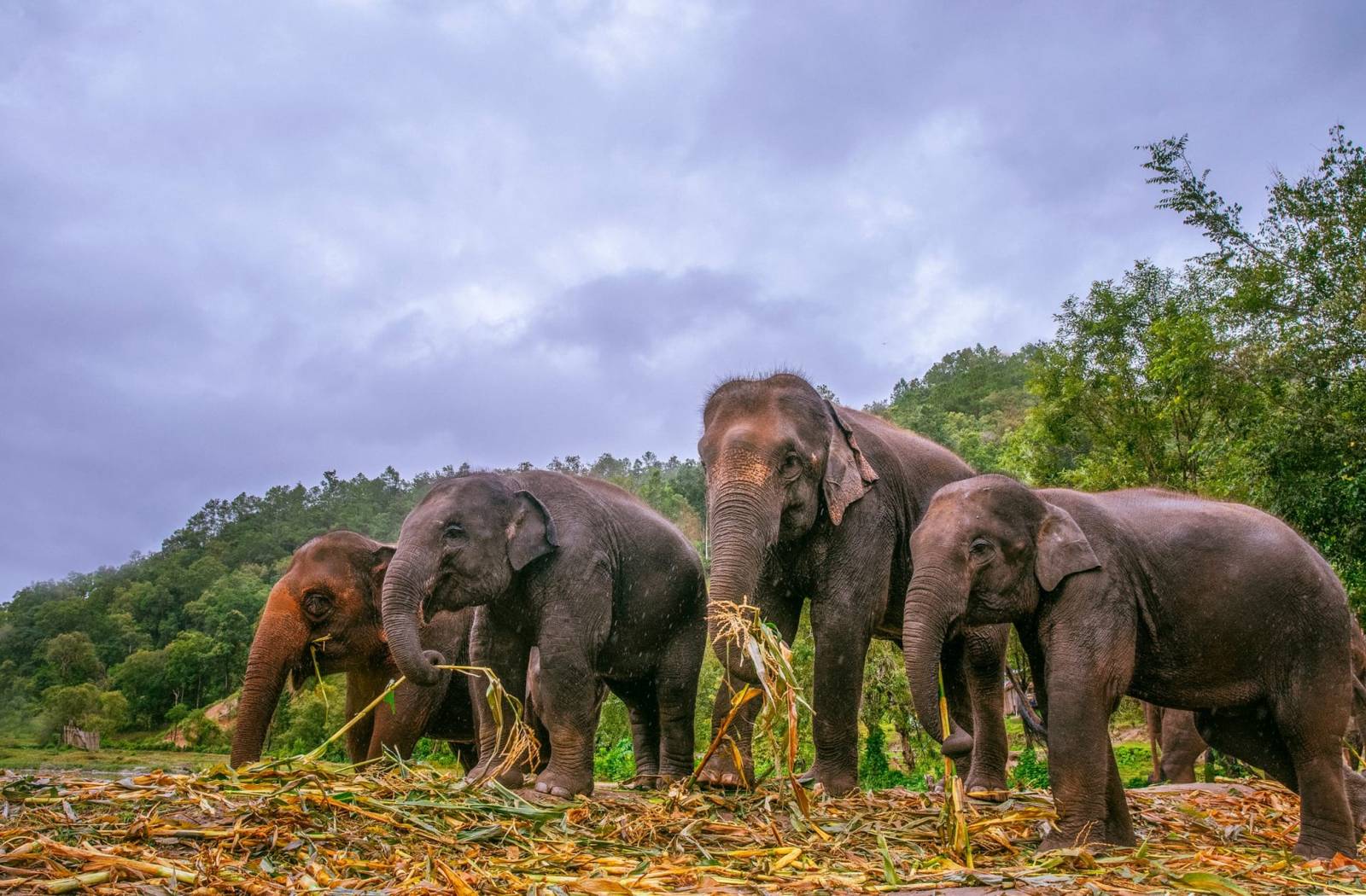
The elephants decide where they walk, when they eat and who they spend time with. There is no tight daily schedule built around visitor contact. Natural behaviour comes first: foraging, roaming, hanging out with each other. And you mostly watch, from a distance, rather than touching the animals.
The direction of travel at the good centres is clear: from touching to observing. That gets you a less showy photo, and it makes an enormous difference to the animal.
Elephant rides: always a no
This is the clearest signal there is. If a place offers rides, you do not book there. It really is that simple.
The same goes for shows where elephants paint, play with hoops or perform other tricks. The World Animal Protection research found that a sizeable share of elephant venues in Thailand still put those on.
An elephant is not an attraction that exists to entertain you. You are a guest of the animal, not the other way round.
Bathing with elephants: the biggest misunderstanding
Plenty of travellers assume that bathing with elephants is the animal friendly option. Social media is full of backpackers washing an elephant in a river, almost always sold as an ethical elephant experience.
Animal welfare organisations advise against this one too, and the reason makes sense the second you hear it. When an elephant has to go into the water daily, at set times, with a fresh group of tourists each round, that is not a spontaneous moment. It is a shift on a rota.
Hence the World Animal Protection rule of thumb, look, don’t touch: no riding, no washing, no other direct physical contact.
Feeding elephants: a grey area
At a lot of sanctuaries you can still feed the animals, usually from the other side of a barrier. Some organisations offer it, others have stopped.
The strictest guidelines are moving towards fully hands off tourism, where visitors have no physical contact at all. World Animal Protection separates venues that are fully elephant friendly from venues with a good welfare standard where feeding over a barrier is still allowed.
So: feeding over a fence is not a reason to walk away, but it is not the best there is either.
How to spot a good sanctuary
Judge a place on its activity programme rather than its name. That programme is right there on the website, and it tells you where you stand within thirty seconds.
Good signs
- No elephant rides
- No shows or tricks
- No scheduled bathing sessions with groups of visitors
- Minimal direct physical contact
- Plenty of room for the elephants to move freely
- Elephants find their own food
- Natural social behaviour is encouraged
- Openness about where the elephants came from
- Education and animal welfare are the point of the visit
Red flags
- You can ride an elephant
- The elephants perform shows or tricks
- Extended cuddling or petting is allowed
- Daily bathing with groups of tourists
- Elephants stand still for long stretches for photos
- Young elephants are used to pull in the crowds
- The programme is clearly built around getting as many photos as possible
Watch out for baby elephants too. A sanctuary that keeps producing new babies is not automatically a good sign: World Animal Protection says elephant friendly venues should not be breeding for tourism. A genuinely rescued orphan is a different story.
And read the language on the website. If it says bath with elephants, feed elephants, hug elephants, take amazing pictures, keep looking. If it says observe elephants roaming, foraging and socialising naturally, you are probably in the right place.
Where you can go
The centres below are in the current Elephant Friendly Tourist Guide from World Animal Protection, sorted by where they are.
Chiang Mai and around
ChangChill works on a model where you observe the elephants as they roam freely, with no rides and no scheduled bathing. Burm and Emily’s Elephant Sanctuary, BEES for short, sits south of the city and focuses on older, injured and retired elephants. Kindred Spirit Elephant Sanctuary is a small scale project where the animals live largely in natural forest, and Mahouts Elephant Foundation runs several projects with the same emphasis. The Global Vision International projects in this region are on the list as well.
This is the obvious place to do it, because a sanctuary visit is one of the classic days out from Chiang Mai. What else fills those days is on our Chiang Mai page.
Sukhothai
Boon Lott’s Elephant Sanctuary is on the elephant friendly list too and makes a logical stop if Sukhothai is on your route.
Phitsanulok
Elephant Forest Phitsanulok is a good option if you are travelling through northern or central Thailand and do not want to go to Chiang Mai specifically for a sanctuary.
Kanchanaburi
Somboon Legacy Foundation sits on the road out of Bangkok towards Kanchanaburi and meets the guidelines.
Koh Lanta and Krabi
Following Giants has sites on Koh Lanta and in Krabi and is built entirely around observation without direct contact: elephants roaming, foraging and doing their own thing while you watch. Handy if your route runs down the south rather than up north.
Phuket
Phuket Elephant Sanctuary is on the list and announced that from April 2026 it is also phasing out hand feeding by visitors.
And what about Elephant Nature Park?
This is the name you will see everywhere, so it deserves the nuance. Elephant Nature Park near Chiang Mai is one of the best known names in Thai elephant tourism and scored highly on animal welfare in the most recent World Animal Protection assessment.
Even so, it is not on the full elephant friendly list at the moment, because of an ongoing legal matter. That says nothing about how the animals are cared for, and everything about why you should never take an old blog or list at face value, this one included. Always check the current situation before you book.
Most of the centres that meet these standards are around Chiang Mai. What else there is to do there, and where to sleep, is on our Chiang Mai page.
Should you visit an elephant sanctuary in Thailand?
Yes, go. Seeing elephants up close is one of those things you still think about years later, and there are plenty of places where that happens without the animal paying for it.
But flip your choice around. Do not book the sanctuary where you can get closest to an elephant, book the one where the elephant needs you least. No rides, no tricks, no scheduled bathing sessions, no elephant posing for your photo. Look for a place where you are simply a guest who gets to watch from a distance.
If you are travelling through Chiang Mai, Sukhothai, Kanchanaburi, Krabi, Koh Lanta or Phuket, there is almost always an elephant friendly centre somewhere on your route. Do check the current programme before booking, because sanctuaries do change their approach. The Elephant Friendly Tourist Guide from World Animal Protection is the most reliable source for that.
And know that your choice counts. The more travellers who choose deliberately, the less worthwhile it becomes to put elephants to work for rides, shows and tourist photos.


